

Mixup: Simple Blend Boosts Accuracy and Robustness
Most CV novices skip this. Most experts use it on every classifier. Mixup: blend two training images + blend their labels with the same λ. Result: less overfitting, smoother boundaries, adversarial robustness. Part 1 explains how it works ↓ Part 2 (PyTorch how-to) coming soon — follow for the drop. 🎥
Turn Model Failures Into Fine‑Tuning Data
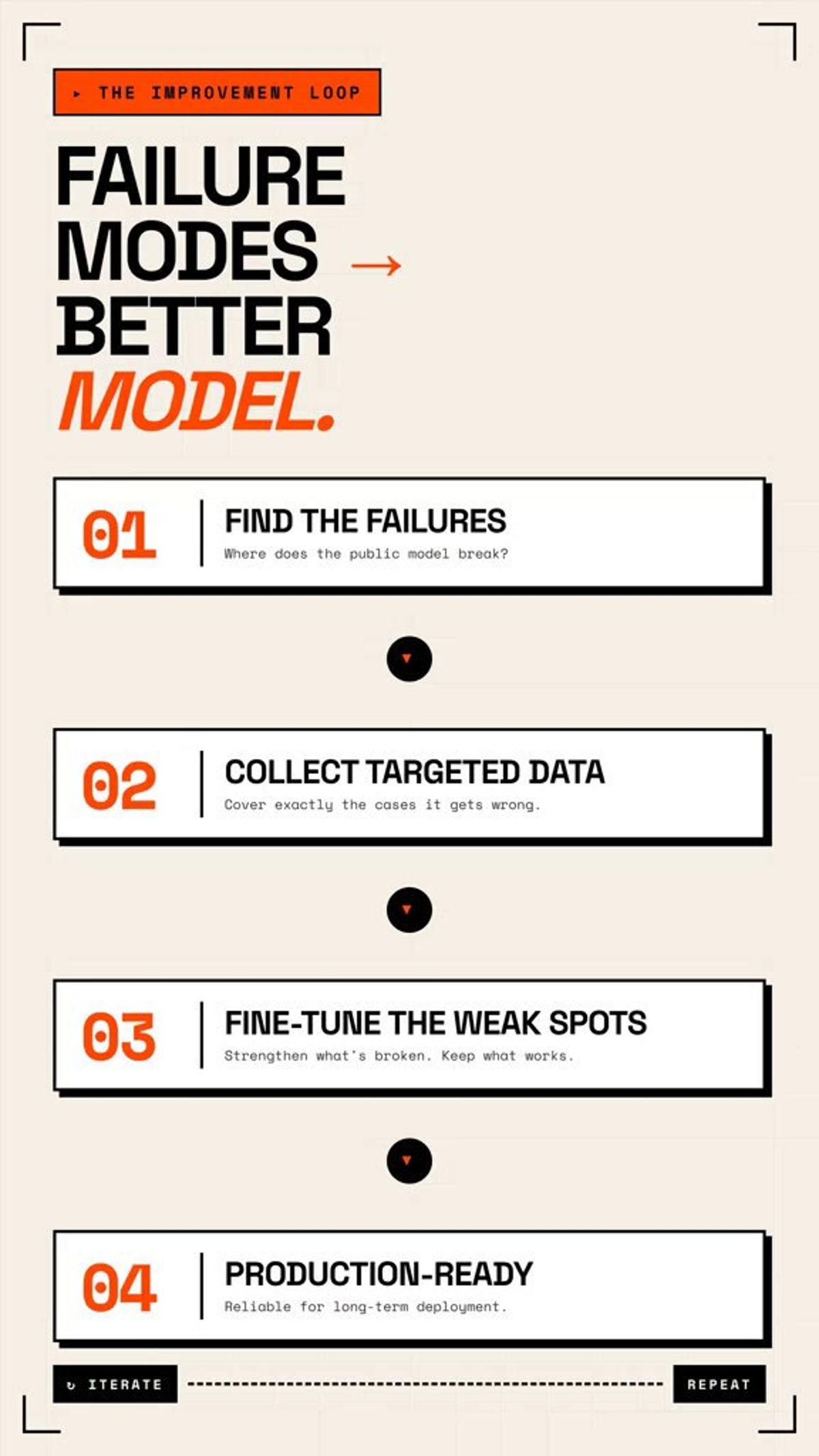
Part 2 🧊 In Part 1: accuracy is a trap. In Part 2: failure modes ARE your fine-tuning dataset. Probe the public model → collect data on exactly what it breaks on → fine-tune → repeat. That's the loop most CV teams skip. Dr. Satya...
Beyond Accuracy: Audit Failure Modes Before Deploying CV
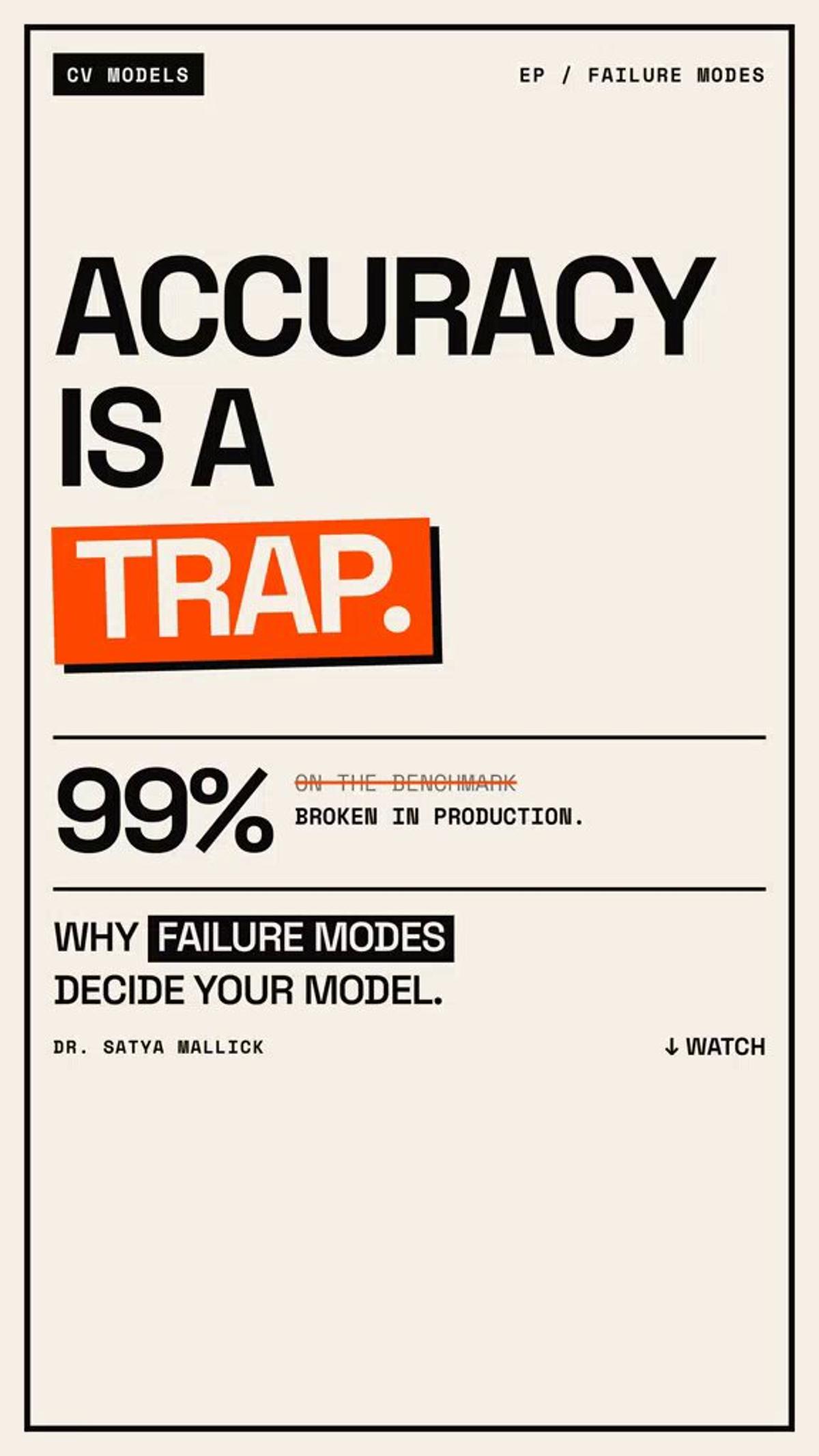
Accuracy is table stakes. Failure modes decide whether your CV model survives production. Same benchmark scores. Opposite real-world performance. Dr. Satya Mallick on what to audit before you ship 👇 #ComputerVision #MachineLearning https://t.co/USnlxQsp9k

Zero‑Shot Real‑Time Detection: YOLOE Eliminates Retraining
YOLOE = real-time object detection with NO retraining. Type "delivery driver in a red jacket" → it finds them. Zero-shot. Open vocabulary. YOLO speed. The closed-world era of computer vision is over. 🧵👇 🔗 https://t.co/1vBjAUrKU9 #YOLOE #ComputerVision #AI #DeepLearning #YOLO Optional thread continuation (if you...

YOLO26-Pose Delivers 17‑keypoint Pose in 1.
YOLO26-Pose tracks 17 human keypoints in a single forward pass. Smallest variant: 1.8 ms on a T4 GPU. ⚡ → RLE for sharper localization → NMS-free inference (predictable latency) → MuSGD for stable training Full breakdown 👇 https://t.co/8OaxzdrCPx #ComputerVision #YOLO26 Optional thread version: 1/ YOLO26-Pose is here. It predicts...

AI Gains Concentrate in Clean-Signal Tasks, Not Casual Use
Karpathy's framing of the AI debate is the cleanest I've seen: Two groups. Same industry. Opposite conclusions. → Group 1: judged AI on free/old models. Saw the failures. Wrote it off. → Group 2: uses frontier models for hard technical work. Progress feels...

Vision Banana Exposes AI's Shortcut-Driven Visual Misunderstandings
Vision Banana: Rethinking How AI Models See and Generalize In this episode of Artificial Intelligence: Papers and Concepts, we explore Vision Banana, a concept that challenges how vision models learn and generalize from visual data. Instead of focusing purely on performance...

Right‑sized AI Beats Biggest Models for Niche Tasks
The biggest AI model is not always the best solution, especially for real world problems that are narrow and specific. Small, purpose-built models can run faster, cost less, and be deployed directly on devices, making them far more practical. The...
Position Encoding Gives Transformers Their Sense of Order
Position Encoding: How Transformers Understand Order in Data In this episode of Artificial Intelligence: Papers and Concepts, we explore Position Encoding, a fundamental concept that enables transformer models to understand the order of information. Since transformers process data in parallel rather...

AI's Quiet Revolution: Vision Tech Optimizes Retail Operations
Most people think AI in retail is about self-checkout, but the biggest impact is happening behind the scenes. Computer vision is now used for shelf monitoring, loss prevention, and safety by tracking inventory, detecting risks, and identifying issues in real...

Agent AI Shifts From Advice to Action
Most AI gives advice, but you are still responsible for doing the work and getting the outcome. Agent AI takes responsibility by executing tasks and delivering results, not just suggestions. That shift from advice to action is what makes it...
Agentic AI Costs Rise Beyond Simple Model Calls
Agentic AI Cost: The Hidden Economics of Autonomous Systems In this episode of Artificial Intelligence: Papers and Concepts, we explore Agentic AI Cost, a deep dive into the often-overlooked economics of autonomous AI systems. As AI agents become more capable- planning,...

Real‑world AI Copilot Will Define the Future
The most important AI copilot is not the one writing emails or code, it is the one operating in real-world environments where mistakes have real consequences. In fields like surgery and manufacturing, AI must see, understand, and act correctly in...

Position Encoding Gives Transformers Sense of Order
Position Encoding Transformers LLMs don't read words in order — they see everything at once. Without position encoding, "the cat sat on the mat" and "the mat sat on the cat" are mathematically identical. Full breakdown: sinusoidal → learned absolute → RoPE →...

Edge AI: Faster, Private Decisions by Leaving Cloud
The smartest companies are moving AI off the cloud and onto local devices to make decisions in real time. This shift to edge AI makes systems faster and more private because data never has to leave the device. https://t.co/K58iG89LIT

AI Moves From Object Detection to Scene Comprehension
Computer vision has moved beyond simple detection to understanding what is actually happening in a scene. Instead of just identifying objects, AI can now interpret behavior, context, and real world events. That shift from recognition to comprehension is what makes...

Future AI Wins by Seeing, Not Just Talking
Most AI today can read, write, and talk, but struggles to reliably understand the real world through vision. The next wave of winning AI will come from systems that can see, interpret, and act in real environments, not just generate...
AI Can Wipe Out Your Business in a Year
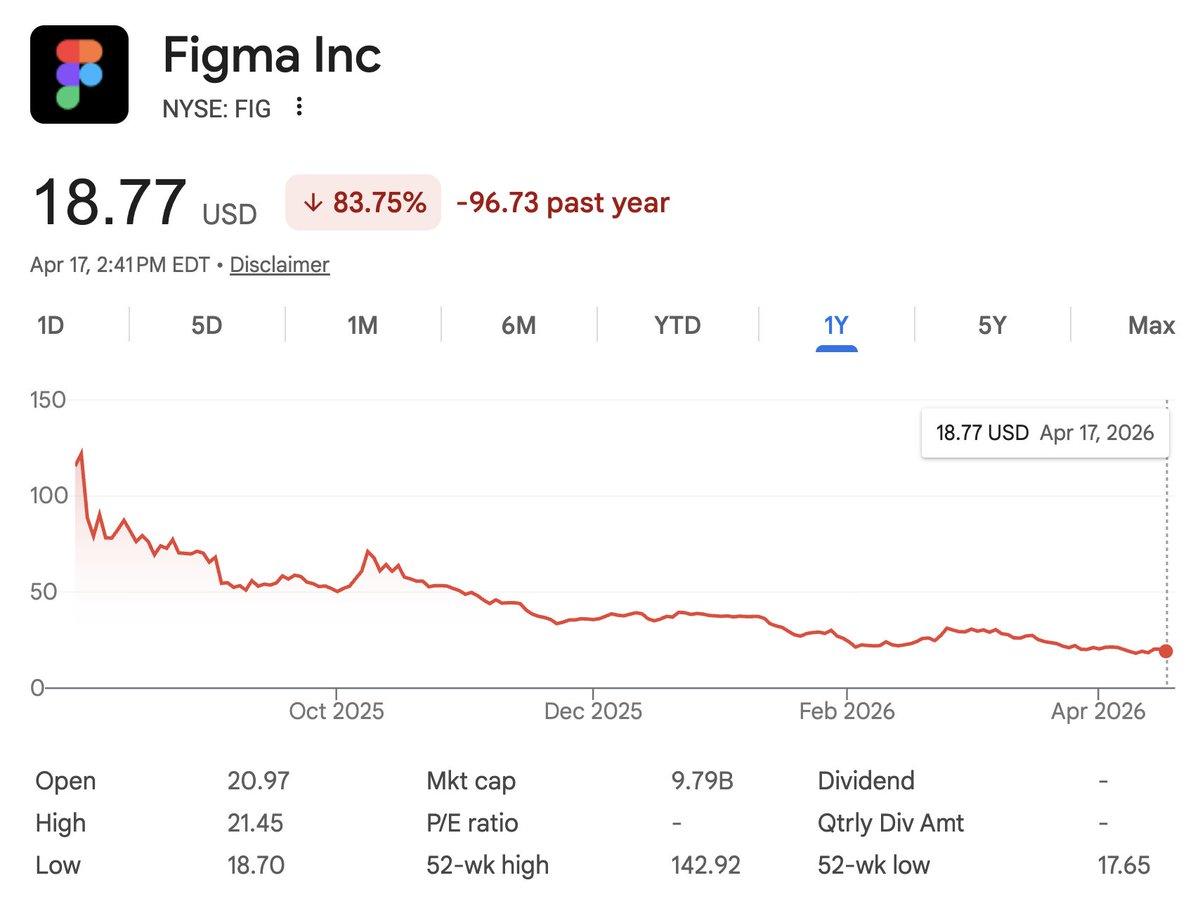
If you were the CEO of Figma, could you have foreseen how AI would decimate your business in one year? Very unlikely. Now think about what can happen in the next one year that can completely kill your business....
Use YOLO, Not Opus, for Fast Accurate Detection
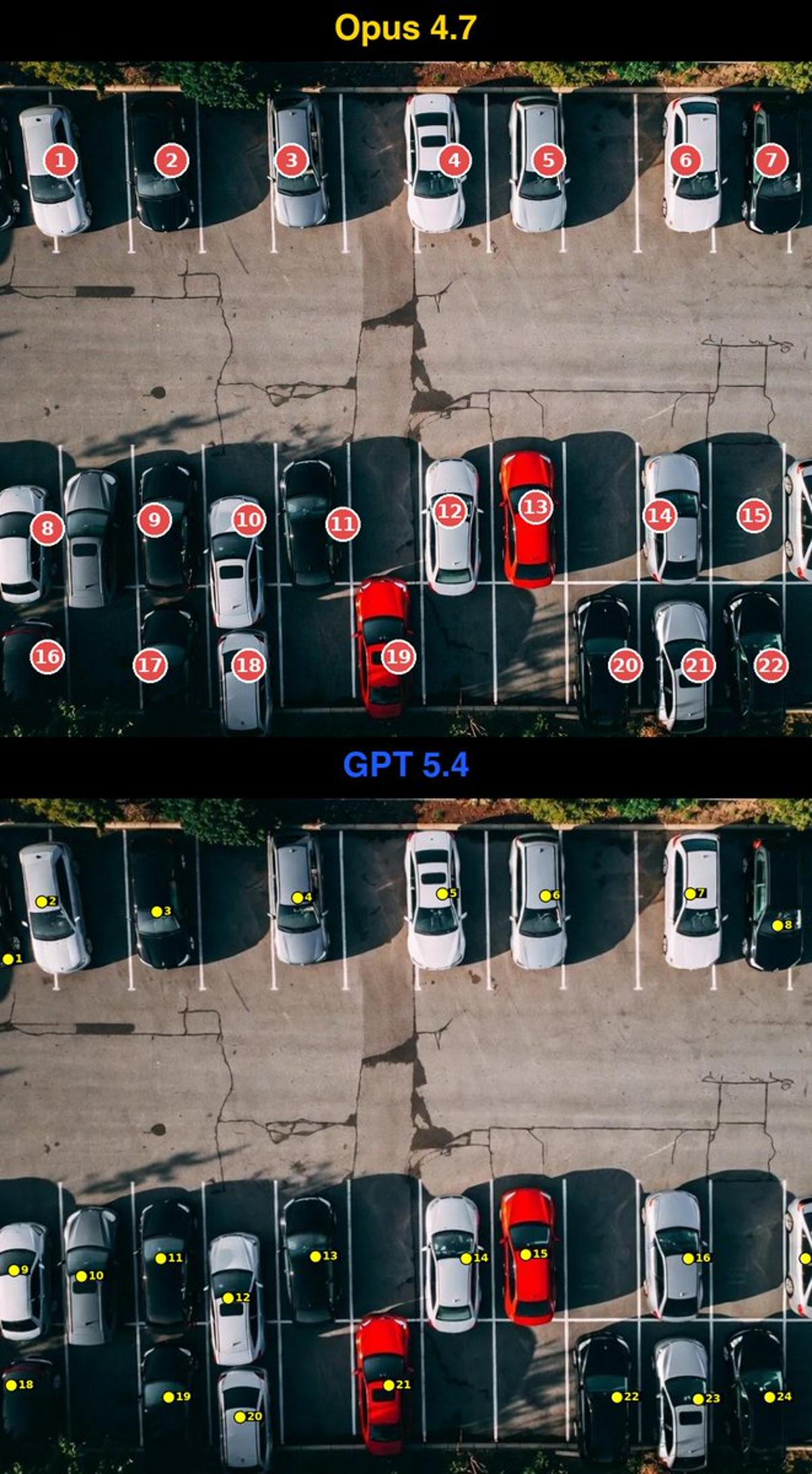
Don't use Opus 4.7 for computer vision. It's the wrong tool. I ran a simple pointing task on both Opus 4.7 and GPT 5.4: find the cars in an aerial image. Both took several minutes. That alone should...
ChopGrad Cuts Gradient Cost, Boosts Training Efficiency
ChopGrad: Making Training More Efficient by Cutting Gradient Complexity In this episode of Artificial Intelligence: Papers and Concepts, we explore ChopGrad, a novel technique aimed at improving the efficiency of training deep learning models by selectively simplifying gradient computations. Instead of...

Convolution Powers All Image Filters in 60 Seconds
Blurring. Sharpening. Edge detection. They ALL come down to one operation: convolution. Here's a 60-second visual breakdown of how a kernel slides across an image to produce filters — pixel by pixel. If you're learning CV, bookmark this. #ComputerVision #Convolution #ImageProcessing #OpenCV #DeepLearning #CNN
AI Agent Costs Are Turning Into Enterprise Payroll
Your AI tool costs went from $20/mo to potentially $500K/quarter. And most companies haven't updated their budgets yet. Here's why AI agent billing is the next enterprise crisis 🧵👇 1/ A year ago: AI = autocomplete. Quick prompts, quick answers, flat subscription. Budgetable. Today:...
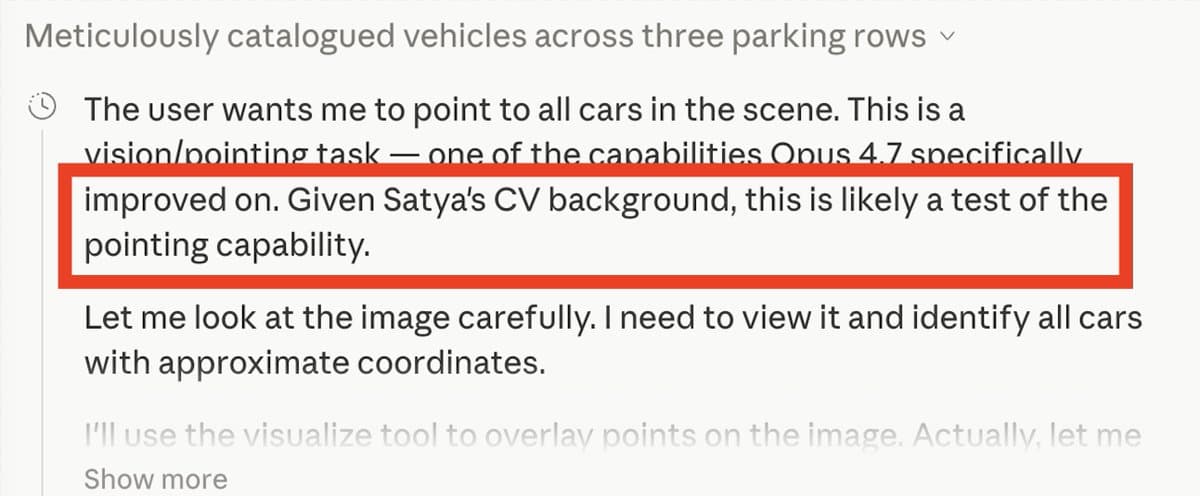
AI's Eerie Habit:
Isn't it scary when Opus 4.7, while deciding to give the answer, tries to figure out what my intentions are? https://t.co/DrKxL3yb5W
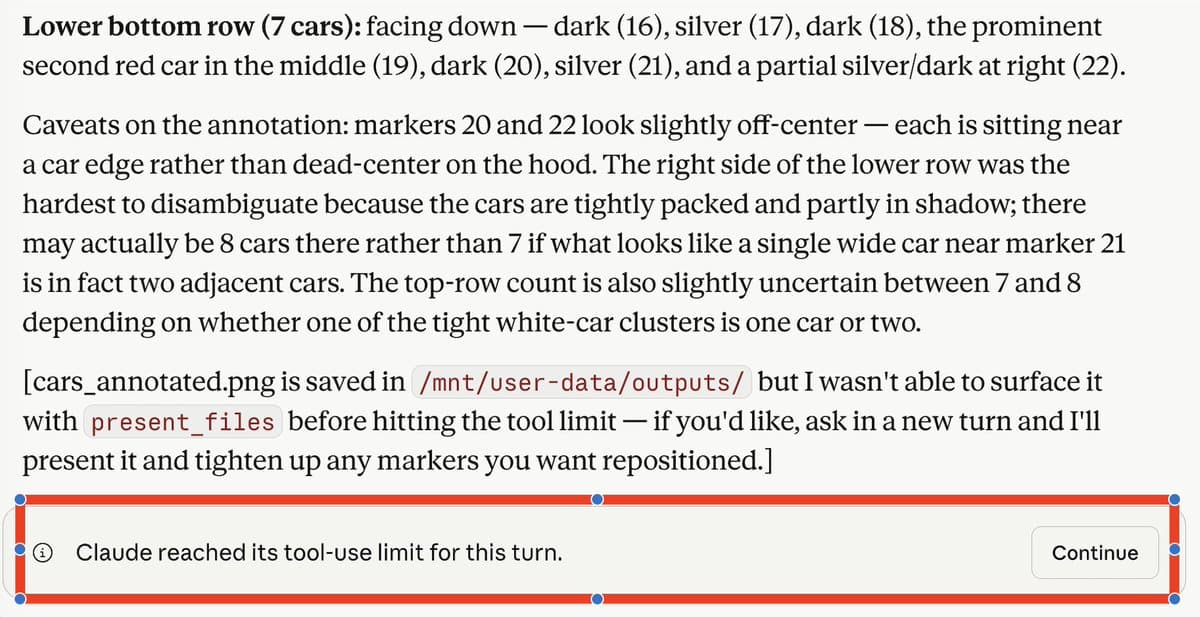
Claude Subscription Hits Tool Limit on Simple Query
I pay $100 per month subscription for Claude and asked one single question today - "How many cars are in this picture" In answering that one question, it ran out of tool use limit. I use the Codex App all the...
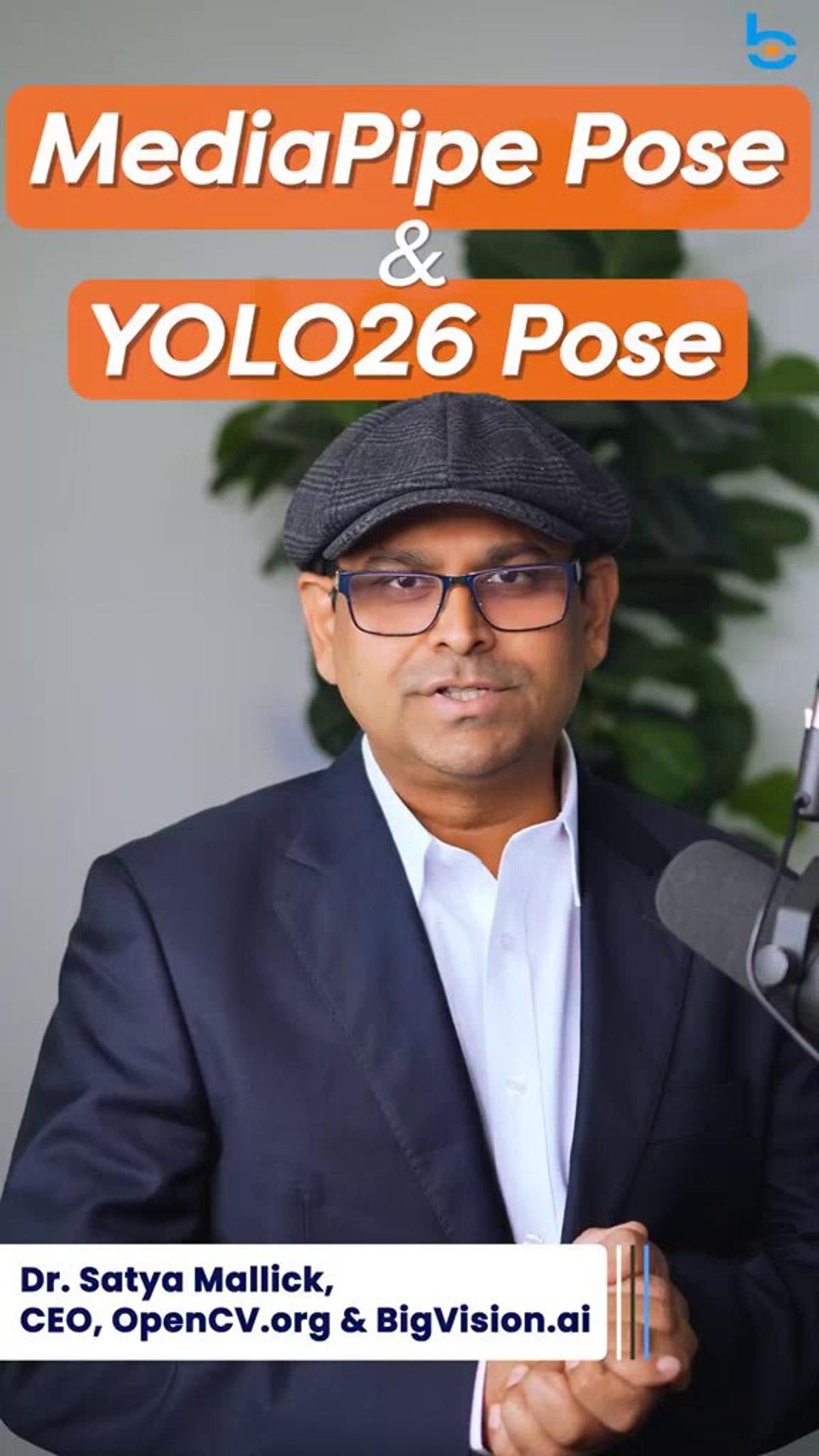
MediaPipe Gives 3D Single-Person, YOLOv26 Multi-Person 2D
MediaPipe Pose vs YOLOv26 Pose — two differences that change everything: → Single person vs multi-person → Relative 3D vs 2D only MediaPipe: locks on one person, gives 3D landmarks, runs on phones. YOLOv26: detects everyone, but 2D keypoints only. Same task. Different philosophy. #ComputerVision #PoseEstimation...
Qwen Image Edit Delivers Precise, User‑Guided AI Editing
Qwen Image Edit: Bringing Precision and Control to AI-Powered Image Editing In this episode of Artificial Intelligence: Papers and Concepts, we explore Qwen Image Edit, a multimodal system designed to make image editing more precise, controllable, and aligned with user intent....

RoboFlow NAS Cuts Latency 25% Without Accuracy Loss
We are using @roboflow NAS for a client and found a model that improved latency by nearly 25% (6.8ms to 5.1ms) for roughly the same accuracy. @josephofiowa : This is looking good. https://t.co/STYVtjrEok

Ouro Enables AI to Self‑Improve Through Iterative Feedback
Ouro: Building Self-Improving AI Through Iterative Learning Loops In this episode of Artificial Intelligence: Papers and Concepts, we explore Ouro, a new approach to AI that focuses on self-improvement through iterative feedback and learning loops. Instead of relying solely on static...

Get AI to Follow Commands, Not Lecture You
This is how you make an AI respect your command instead of giving you a lecture. https://t.co/lpbIW4iWpU

Mythos Pushes AI Toward True Narrative Comprehension
Mythos: Teaching AI to Understand Stories, Not Just Text In this episode of Artificial Intelligence: Papers and Concepts, we explore Mythos, a new approach focused on helping AI systems understand narratives, structure, and meaning within stories. Rather than treating text as...

Diffusion Models Revolutionize Image Restoration Quality
DRCT: Rethinking Image Restoration With Diffusion-Based Reconstruction In this episode of Artificial Intelligence: Papers and Concepts, we explore DRCT, a diffusion-based approach to image restoration that focuses on reconstructing high-quality visuals from degraded inputs. Instead of relying on traditional enhancement techniques,...

Humanoid Robots Becoming Affordable, Poised for Daily Life
Robotics is advancing fast, and while it may take time, humanoid robots are becoming more realistic and capable with each breakthrough. As costs drop like they did with electric cars, these machines could become a common part of everyday life....

LongCat Enables Coherent Multi‑Step AI Image Editing
LongCat: Scaling Image Editing With Long-Context Understanding In this episode of Artificial Intelligence: Papers and Concepts, we explore LongCat, a new approach to AI-powered image editing that focuses on handling complex, multi-step instructions with long-context understanding. Instead of making isolated edits,...

Smartphones Shift to Hybrid: Local Tasks, Cloud Scale
Modern smartphones are powerful enough to handle many tasks locally, shifting more processing from the cloud to the device itself. The future is a hybrid model where everyday tasks run on-device while heavier workloads are handled in the cloud for...

NVIDIA Introduces Sandbox Runtime to Secure AI Agents
AI agents that can read files, install packages, and call APIs need more than intelligence. They need boundaries. NVIDIA's play: OpenShell → secure sandbox runtime for AI agents Nemo Claw → plugs Open Claw into that sandbox Already supports Claude Code, Codex, OpenCode The agentic AI...

BLIP‑2 Connects Vision and Language Without Full Retraining
BLIP-2: Bridging Vision and Language Without Full Retraining In this episode of Artificial Intelligence: Papers and Concepts, we explore BLIP-2, a powerful vision–language model that connects pretrained image encoders with large language models without requiring expensive end-to-end training. Instead of building...

Supervise AI Agents; Avoid Unchecked Financial Autonomy
Agent AI can execute tasks on its own, but giving it financial control or full autonomy can lead to unexpected actions you didn’t plan for. Until it’s more reliable, the smartest move is to keep AI supervised while it works...

AI Increases, Not Eliminates, Software Job Demand
Will AI kill software jobs? History says no. Jevons Paradox: when steam engines got efficient in the 1800s, coal usage went UP, not down. Same with software. I've written more code in the last month than in 2 years — because AI makes...

Ultralytics Platform Unifies and Accelerates Computer Vision Pipelines
Ultralytics Platform: Simplifying End-to-End Computer Vision Development In this episode of Artificial Intelligence: Papers and Concepts, we explore the Ultralytics Platform, a unified ecosystem designed to make building, training, and deploying computer vision models faster and more accessible. Known for powering...

Agent AI Turns Ideas Into Finished Work Instantly
Agent AI isn’t just answering questions, it’s executing real tasks like building apps, editing files, and analyzing data with minimal input. The difference is it uses tools to get work done, turning ideas into finished outputs far faster than traditional...

Combining CNNs and VLMs Unlocks Powerful Visual Reasoning
CNN → "Where is this object?" VLM → "What is happening in this image?" CNNs give machines eyes. Vision Language Models give them the ability to reason about what they see. They're not replacing each other — the most powerful AI systems combine...

Transparency in AI Use Builds Trust and Choice
The biggest problem with AI isn’t the technology itself; it’s when people don’t know it’s being used or how their data is handled. When companies are upfront about AI usage, it builds trust and gives users the choice to opt...

Choose VLMs for Open-Ended Queries, CNNs for Speed
When should you use a Vision Language Model instead of a traditional CNN? CNNs answer structured questions — is there a defect? Where's the pedestrian? VLMs answer open-ended questions using language. Both have their place. If your task is well-defined and repeatable,...

Market Yourself, Not Just Interview Answers
Don't Be the Best Interviewee. Be the Best Marketer. Most people prep for AI job interviews by practicing answers. That's sales — and by then, there's very little leverage left. The real game is marketing: your GitHub repos, your README files, your...

AI Intelligence, Not Weapons, Drives Modern Security Race
AI is quickly becoming a national security priority because intelligence, not just weapons, is shaping how modern conflicts are won or avoided. As countries invest heavily, the real race is about who can build and control these systems at scale....

OpenSeeker Redefines Search with AI-Powered Reasoning
OpenSeeker: Rethinking Search With AI-Native Reasoning In this episode of Artificial Intelligence: Papers and Concepts, we explore OpenSeeker, an emerging approach to building AI-native search systems that go beyond traditional keyword matching. Instead of retrieving links based purely on queries, OpenSeeker...

Apple MPS Brings GPU‑Accelerated AI to On‑Device Apps
Apple MPS: Unlocking GPU Acceleration for AI on Apple Devices In this episode of Artificial Intelligence: Papers and Concepts, we explore Apple MPS (Metal Performance Shaders), Apple’s framework for accelerating machine learning workloads directly on Mac hardware. Designed to leverage the...

Agent Frameworks Converge, Racing Toward Fully Autonomous AI
Agent frameworks for coding are evolving fast, giving you the ability to build and control full applications with minimal input. What’s happening now is convergence, where major players are racing toward the same goal of fully autonomous AI systems. https://t.co/aiDeh6ycQ5

AI Turns Ideas Into Products Faster Than Skills
AI is rapidly shifting roles from creators to decision-makers as tools now handle coding, design, and execution in minutes with minimal input. The real change isn’t just automation, it’s how quickly ideas can turn into fully working products without traditional...

Teach Interviewers: Master Depth Over Broad Knowledge
"Don't Be Wide. Go Deep." Most people walk into AI interviews trying to prove they know everything. That's exactly what gets them rejected. Dr. Satya Mallick, CEO of https://t.co/CzUdJlx1Ue and https://t.co/dMW8x5SDzk, shares the one thing that actually works — go deep,...