
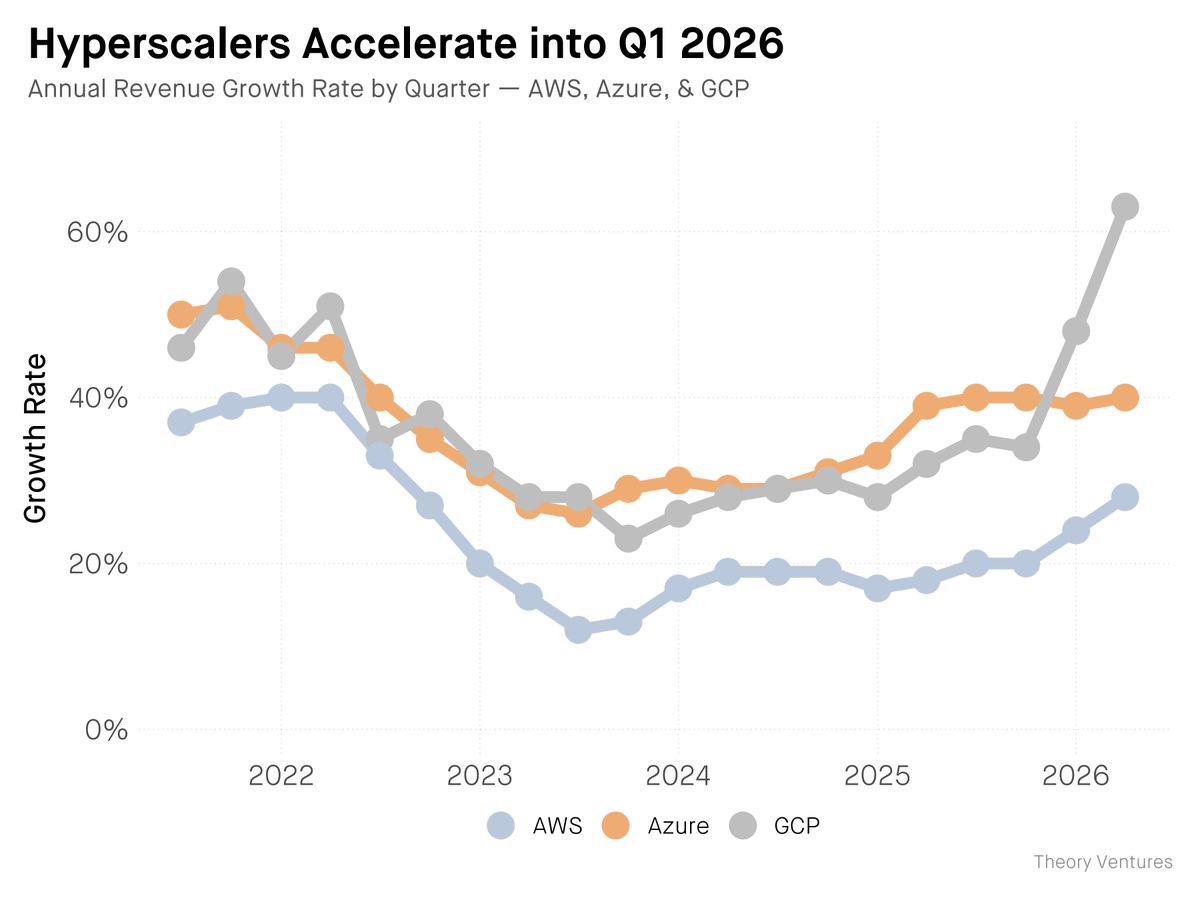
Google Cloud Outpaces AWS, Azure with 63% Growth
Google Cloud grew 63% year-over-year in Q1 2026. Amazon Web Services posted 28%. Microsoft Azure hit 40%. All three are exceptional. Only one hit 63%. https://t.co/zBaeH0tO08
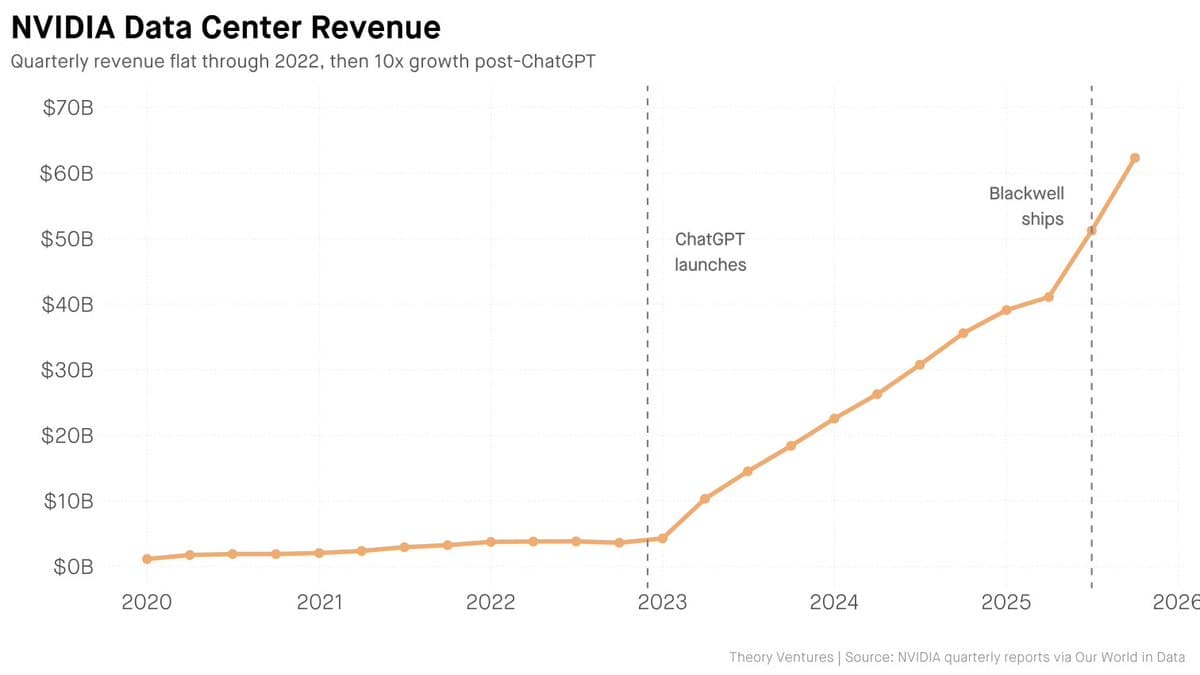
Inference Market Explodes, Driving NVIDIA’s 17‑fold Revenue Surge
The inference market is the fastest growing market in the world & it’s splitting up. Each modality is developing its own inference stack. NVIDIA’s data center revenue was flat through 2022. Then ChatGPT launched. Three years later : 17x growth. https://t.co/wytykE1AWh
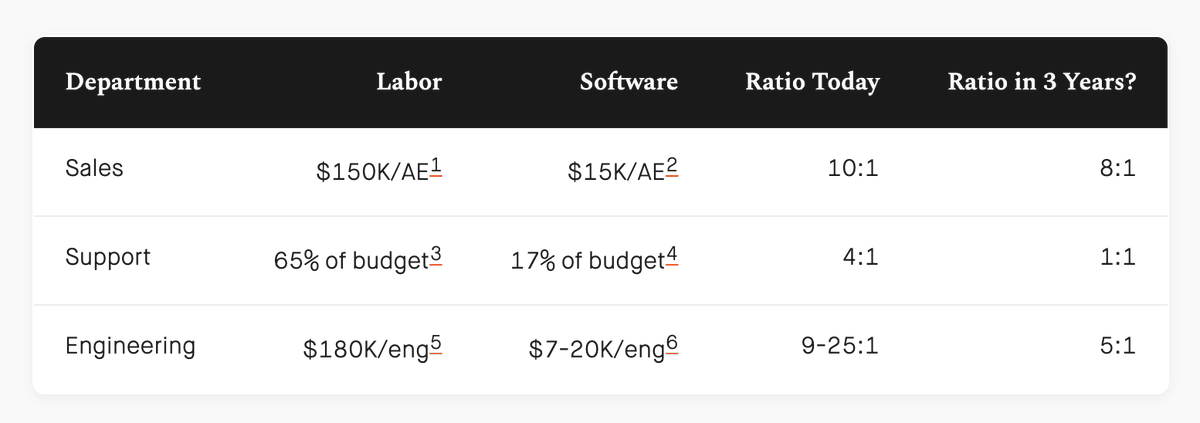
Turn Software Budgets Into Strategic Labor Ratio Planning
The old sales motion asked : what’s your software budget for this category? The new motion asks customers three questions : 1. What’s your software budget? 2. What’s your total labor budget? 3. What do you want that ratio to be in three years? That...
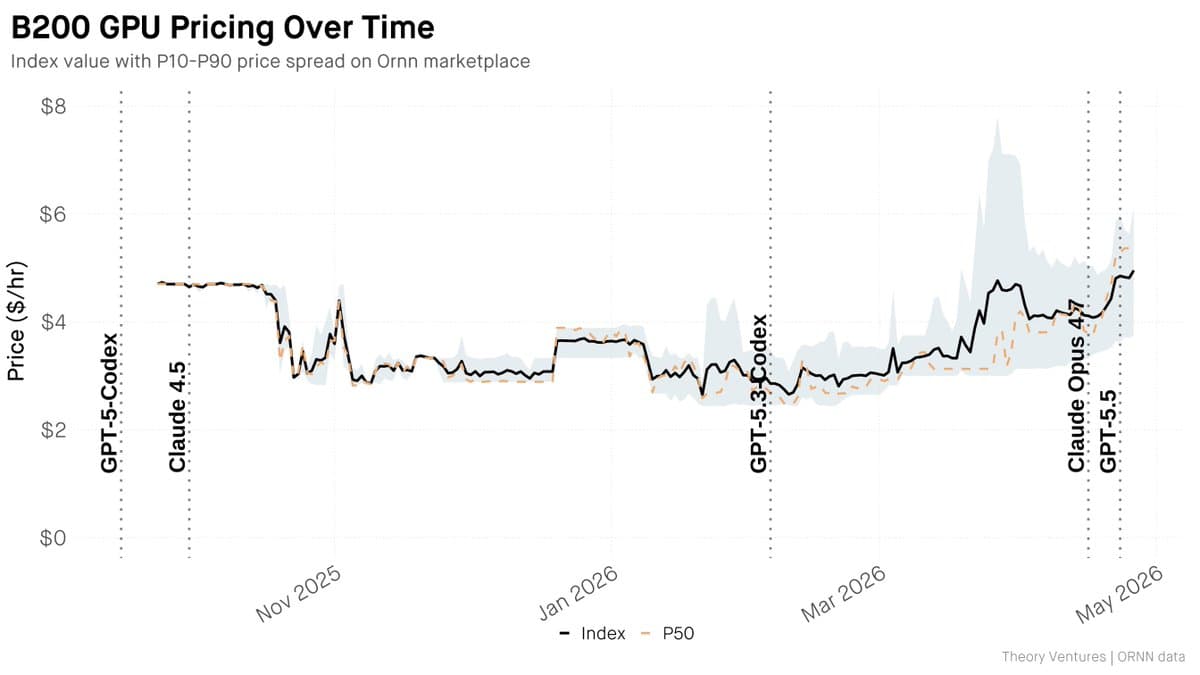
NVIDIA B200 Rental Prices Surge 114% in Six Weeks
NVIDIA’s latest GPU rental prices on the Ornn Compute Price Index hit $4.95 per hour this week, up from $2.31 in early March : a 114% surge in six weeks. The price spread over prior-generation chips doubled from $0.28 to $1.80...

Free Complements Fuel Core Growth, Disrupt Entire Ecosystems
Google commoditized its complements : free maps, free email, free browsers, a free mobile OS. They removed every toll booth between the user & search. Anthropic’s strategy parallels Google’s, a natural extension of the strength of the core product, the...
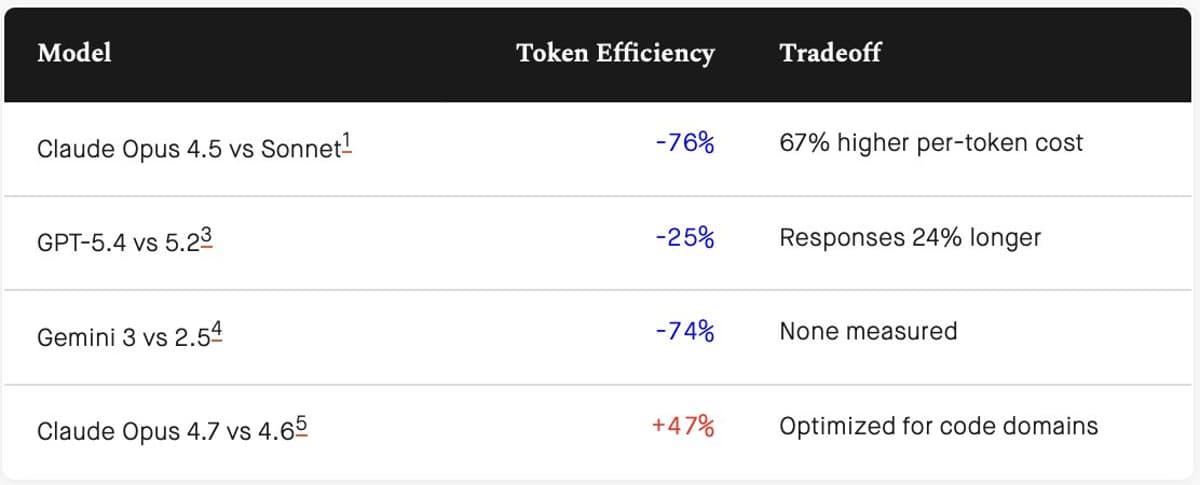
Smarter AI Models Cut Token Usage, Lower Costs
“As models get smarter, they can solve problems in fewer steps : less backtracking, less redundant exploration, less verbose reasoning. Claude Opus 4.5 uses dramatically fewer tokens than its predecessors to reach similar or better outcomes.” When Anthropic launched Opus 4.5...

Join Koah Labs as Founding Head of AI Ads Sales
Come lead the way for the future of AI ads. We're looking for a founding head of sales at @koahlabs ! https://t.co/CBLnBgueW6

AI‑Driven Sales Starts with Fixing Old GTM Debt
No one comes into a sales conversation without first asking an AI. The buyer journey has changed. Lena Waters, marketing leader behind DocuSign’s IPO, Grammarly & Notion, joined me on Office Hours to discuss what this means for your go-to-market. The...

Infinite Software Demand Fuels AI‑closed Loop Growth
The demand for software is infinite. Kyle Daigle, GitHub’s COO, made the case concrete : There were 1 billion commits in 2025. Now, it’s 275 million per week, on pace for 14 billion this year if growth remains linear (spoiler :...

Claude Mythos Uncovers Decades‑Old Bugs, Shows Emergent Hacking Power
A researcher at Anthropic found out about a successful exploit when the model sent him an email. He was eating a sandwich on a bench outside. Anthropic released Claude Mythos yesterday. Beyond the engineer’s lunch, the model has the potential to...

Anthropic Hits $10B Revenue Faster Than Rivals
Anthropic added $10b in revenue in the last month alone, twice Databricks’ annual run rate. Crossing $10b is a milestone few software companies ever reach: ServiceNow took 20 years, Shopify took 18, Palo Alto Networks took 19, & Anthropic crossed that...

When Will Anthropic Surpass NVIDIA?
Anthropic reported an additional $10 billion in revenue last month, putting its annual run rate at roughly $10 billion—achieved in under four years, far faster than traditional SaaS firms. By contrast, NVIDIA generates $215 billion in annual revenue and trades at a 22‑times...

Pocket Power : From State of the Art to Your Phone in 23 Months
Google unveiled Gemma 4 E4B, a free AI model that matches GPT‑4o performance while running entirely on a smartphone. The model exemplifies a 450‑fold compression, shrinking from 1.8 trillion to 4 billion parameters in just 23 months. This rapid downsizing signals that today’s frontier...

Parallel Planning Enables 20x Token Consumption Growth
Two days ago, I burnt 250 million tokens in a single day. That’s up 20x in six weeks. This idea, called tokenmaxxing, is the deliberate practice of maximizing token consumption. The question : how much electricity can we turn into useful...

Tokenmaxxing
The author reports burning 250 million AI tokens in a single day, a 20‑fold jump over six weeks, through a practice dubbed tokenmaxxing. By orchestrating multiple autonomous agents, each handling tasks like code analysis, log parsing, fact‑checking, and presentation building, the...

Marketing in the Agentic Era
On April 9 at 10:00 AM PDT, former CMO Lena Waters will host a new version of Theory Ventures’ Office Hours. Waters, who led marketing at Notion, Grammarly and DocuSign, will discuss how companies can redesign their marketing organizations for an AI‑driven world. The...

Rust Powers Ultra-Fast AI Automation for VC Workflow
I needed AI-powered automation that could actually keep up with my day. Existing tools were too slow, too error-prone. So I rewrote everything in Rust — 45+ APIs that Claude Code uses to run my VC workflow end-to-end. I'm presenting the architecture...
Veblen & Jevon Walk Into a Data Center
The AI market is shifting from Jevons paradox—where cheaper compute fuels demand—to a Veblen‑good dynamic as premium models like Anthropic’s rumored Mythos command steep token prices. Mythos is expected to cost $150 per million output tokens, roughly six times current...

AI's Rapid Evolution Demands Enduring, Unified Platforms
The SaaS era was defined by unbundling : find a workflow, optimize it, own it. Salesforce chose sales automation. Slack chose chat. Dropbox chose file sharing. Point solutions won by perfecting single workflows. The playbook : own one pain point,...

AI Agents Matching Human Salaries Cut Costs Dramatically
In 2025, we predicted that 2026 would be the year agents would earn as much as a person. It’s already happening. In markets where there’s a labor shortage and an urgent need to hire people, we are seeing agents command 75%, 85%,...

Opus 4.5 Beats Qwen 35B in Stripe Tempo Build
I set up a race today between two robots. ...
Hyperscalers Bet $575B on AI, Need Explosive Revenue
For every dollar hyperscalers earn from AI today, they’re spending twelve dollars to build more capacity. That’s the bet embedded in $575 billion of capital expenditure this year. How fast does AI revenue need to grow to pay back this...

You Are Responsible for Your Agent
The post warns that employees will soon bring personal generative‑AI agents to work, turning them into corporate liabilities much like early BYOD devices. Amazon’s recent $6.3 million loss from AI‑driven order‑processing failures illustrates the operational risk, prompting a 90‑day safety reset...
Inference Scarcity Will Force Rationing and Smaller Models
Everything is in short supply. It’s no longer just GPUs. It’s power. Data centers. Memory. CPUs. If there’s no relief for six more quarters, perhaps it’s time to plan for a world where inference isn’t freely available on-demand. Inference prices,...

Hello, Claude? Are You There?
A wave of AI‑infrastructure shortages is gripping the tech sector, with CEOs from OpenAI, Oracle, Microsoft, Alphabet and Intel all flagging severe constraints on GPUs, power, memory and data‑center capacity. The scarcity, first noted in early 2025, is projected to...

One Billion Lost Packages
In September 2024 Hurricane Helene flooded Baxter International’s Marion, NC plant, halting 60% of U.S. IV‑fluid output and triggering nationwide shortages. The same month, 85 million U.S. packages arrived damaged—a 30% jump that cost roughly $4 billion. To address the chronic fragmentation...

AI Cuts Marginal Tech Hires Amid Fluctuating Job Market
AI eliminates the marginal hire. Tech job openings are down 45% from the 2022 peak, but up 16% since the start of 2026 - from 227k to 264k. Why the narrative violation? https://t.co/3QUv8XdkD4

AI Cuts Marginal Hires, Flattening Tech Workforce
AI eliminates the marginal hire. Tech job openings are down 45% from the 2022 peak, but up 16% since the start of 2026 - from 227k to 264k. Why the narrative violation? Companies are hiring again, just fewer people than...

The Org Chart Math Behind AI-Native Speed
AI code‑generation tools like Claude Code enable engineers to ship 20‑30 pull requests daily, a 30‑fold increase over the typical three per week for a conventional developer. This productivity boost translates into revenue per employee figures of $2‑5 million for AI‑centric...

The Sword of Damocles in Software
GitHub Copilot’s early dominance eroded as Claude Code and OpenAI Codex entered the market, causing Copilot’s daily installs to peak and then decline within six months. Across 25 public software firms, net dollar retention (NDR) slipped from 125% in 2022...

Serverless AI Cuts Token Costs Compared to Claude/OpenAI
I burned 84 million tokens on February 28th. Researching companies, drafting memos, running agents. That’s running Kimi K2.5, a serverless model via API. At Claude or OpenAI rates — roughly $9 per million tokens blended — equivalent usage would cost $756...

Data Center Intelligence at the Price of a Laptop
Alibaba’s Qwen3.5-9B open‑source model can run on a standard 12 GB RAM laptop, delivering performance comparable to Claude Opus 4.1. The author’s token‑usage analysis shows that a $5,000 laptop pays for itself after processing roughly 556 million tokens—about a month of typical workload—making...
Databricks Overtakes Snowflake
Databricks has overtaken Snowflake in quarterly revenue, now leading by $120 million after a $220 million gap two years ago. The shift is driven by AI’s demand for unstructured data, which Databricks processes directly from object storage without migration. Databricks SQL grew...

Efficiency Revolution: Companies Will Trim Workforce by Half
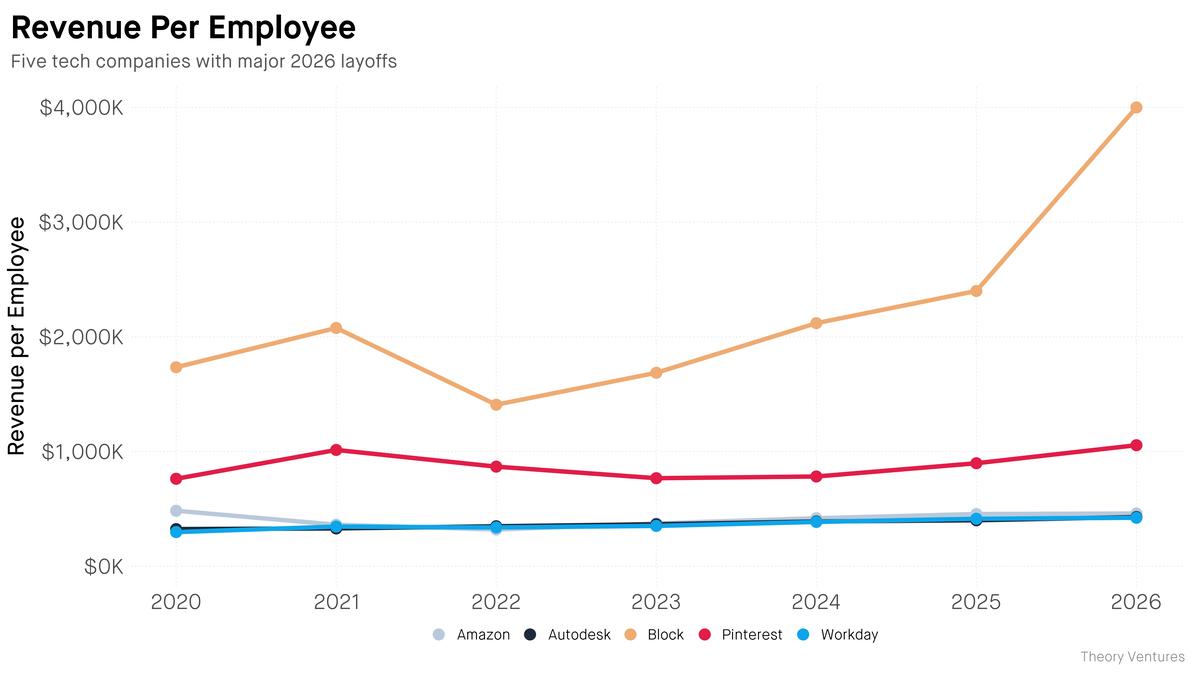
Could you operate your company with half the people? Jack Dorsey’s announcement yesterday, reducing Block’s headcount from 10,000 to 6,000, should provoke this question in every management team. The stock surged 24%. Dorsey’s memo framed it as inevitable : Within...
The Game on the Field Has Changed
Jack Dorsey announced Block will slash its workforce from 10,000 to 6,000, sending the stock up 24% and signaling a broader efficiency push. Tech layoffs in February total 23,000 and, if the trend continues, could annualize to 153,000 by year‑end,...

FIXED: Empty Response Issue with Fireworks.ai Tasks
The Julius Agent using Fireworks.ai’s Kimi K2.5 model returned empty final responses after successful tool execution, confusing users into thinking tasks failed. The root cause was the model’s FinishReason::Stop state delivering an empty response.text field while earlier assistant messages contained...

Can You Fly That Thing?
The post argues that AI "skills"—executable English‑written programs—transform conversational agents into operators capable of performing specific tasks. It highlights the rapid growth of public skill repositories, with tens of thousands of community‑built skills amassing thousands of GitHub stars. For consumers,...
AI Optimism Splits: Vertical Software Drops 43%, DevTools 21%
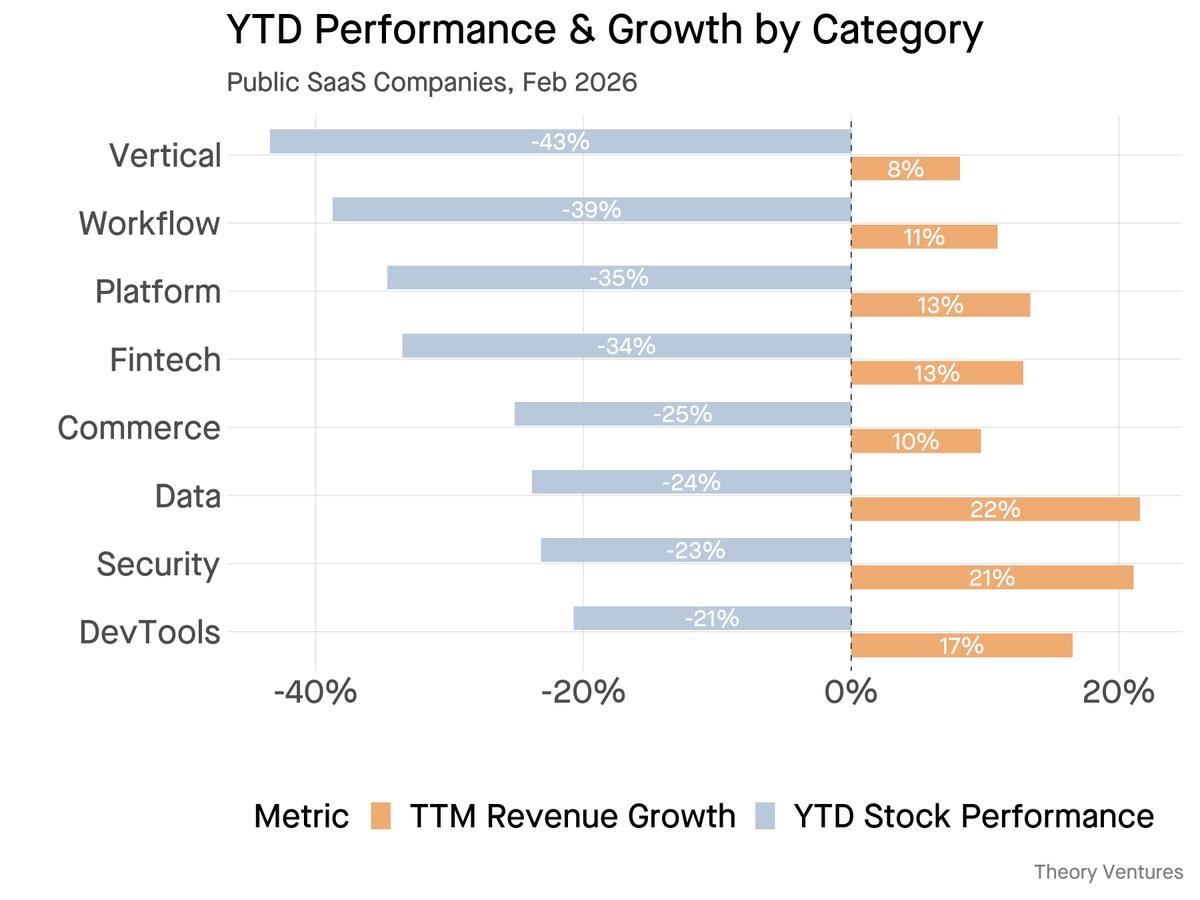
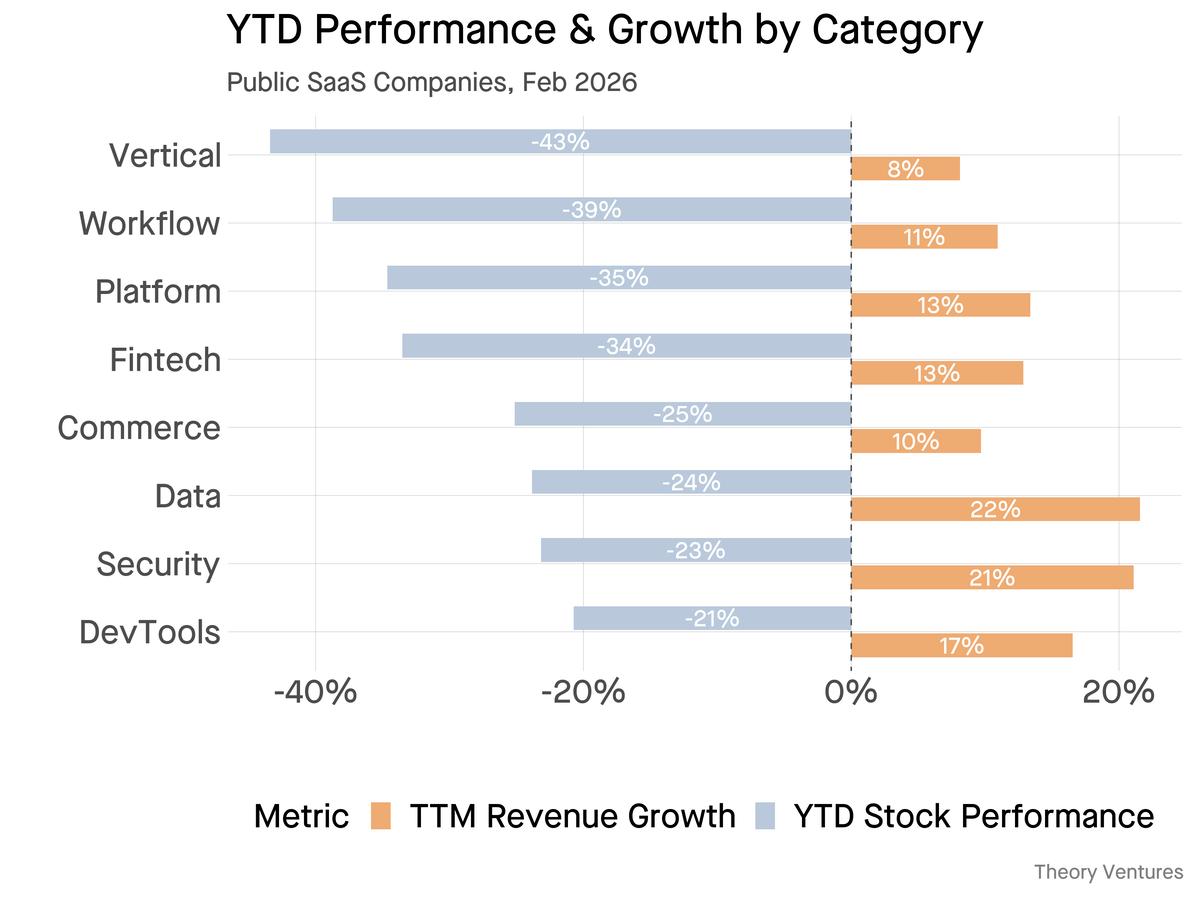
Vertical software has fallen 43% this year. DevTools, just 21%. The gap between them, twenty-two percentage points, tells you what markets actually believe about AI. https://t.co/D8KOXY1iu6
How Markets Price AI Risk
The post highlights a stark valuation split in software stocks as vertical SaaS companies plunge 43% YTD while dev‑tools decline only 21%, reflecting market pricing of AI risk. It argues that despite strong moats, vertical firms’ slower 8% growth triggers...

Google's 52x AI Growth
Google’s Q4 2025 earnings call highlighted a dramatic AI surge, with Gemini processing over 10 billion tokens per minute—a 52‑fold year‑over‑year rise to an annualized 430 trillion tokens. Serving costs fell 78%, delivering a 4.5× efficiency gain per GPU hour. Cloud revenue...
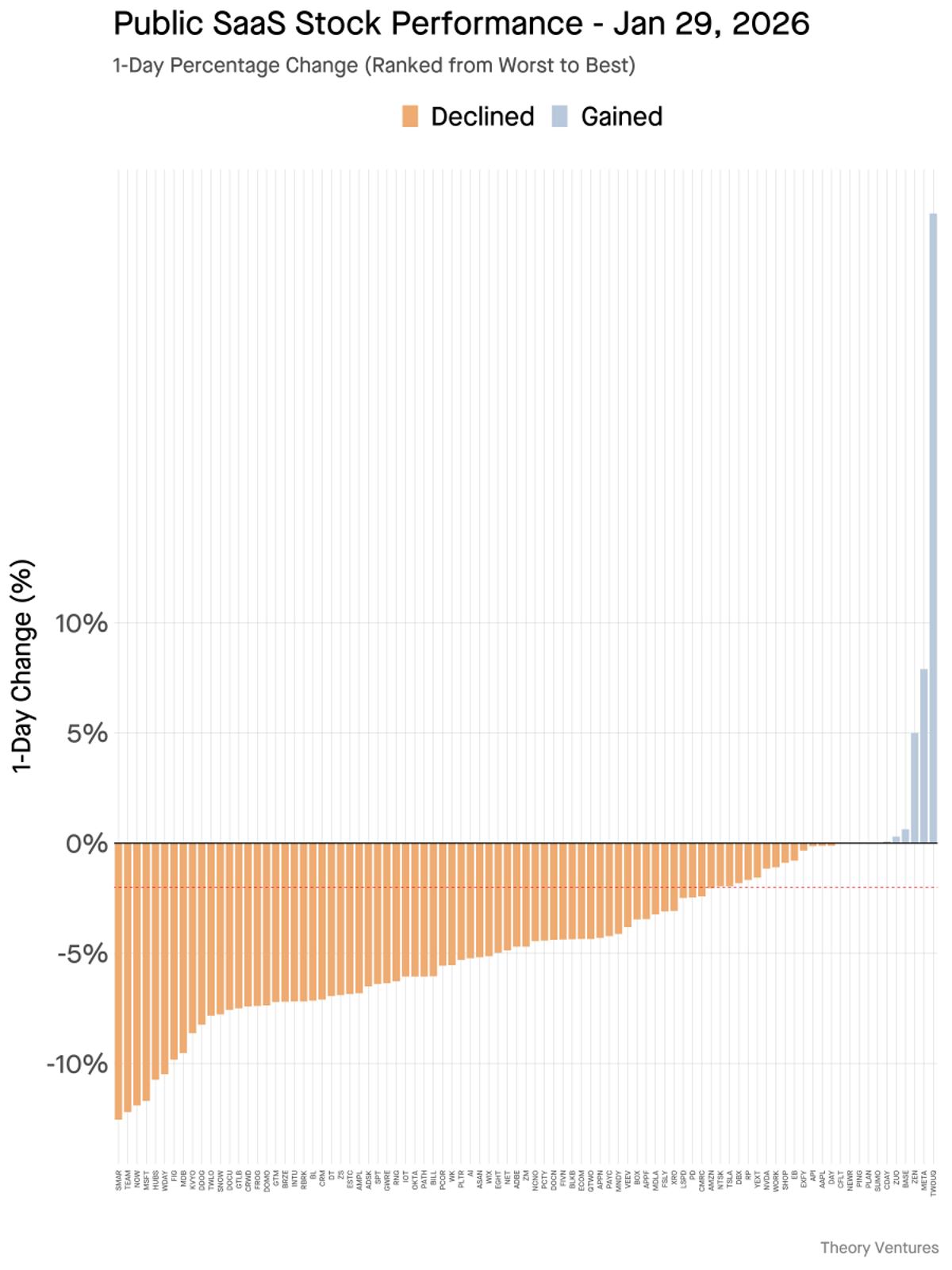
Software Sector Sees Broad Sell‑off, 73% Down
Is there a broad cycling out of software? 73% of public software companies fell today. Median decline: -4.7%. Biggest drops: - Smartsheet -12.6% - Atlassian -12.2% - ServiceNow -11.9% - Microsoft -11.7% - HubSpot -10.7% https://t.co/cLD4hrhCg2

Scaling AI Developer Infrastructure: Lessons From Meta’s Internal Agent
Office Hours: Building Developer Infrastructure at Scale with Jim Everingham In the world of AI, how do the very best companies build their developer infrastructure? To answer that question : On Tuesday, February 24, I’ll be hosting an in-person fireside...

Software and AI Profit From Margins, Not Price
Jeff Bezos said, "Your margin is my opportunity." Does this apply in software & AI? Yes—but not on price. 🧵

A Coxswain on Your Shoulder
Tom Tunguz created an AI meeting‑review agent that acts like a coxswain, silently analyzing recordings of pitch meetings, one‑on‑ones and investor calls. The system scores each conversation on a five‑point rubric—active listening, empathy, questioning, clarity and technical depth—providing concrete feedback...

The Model T Comes to Silicon Valley
The early 20th‑century assembly line slashed Model T production time by 90%, triggering a wave of consolidation that left only 44 automakers by 1929. Today, AI‑driven coding assistants are delivering comparable productivity gains—55‑81% faster development—in roughly five years. The auto boom...
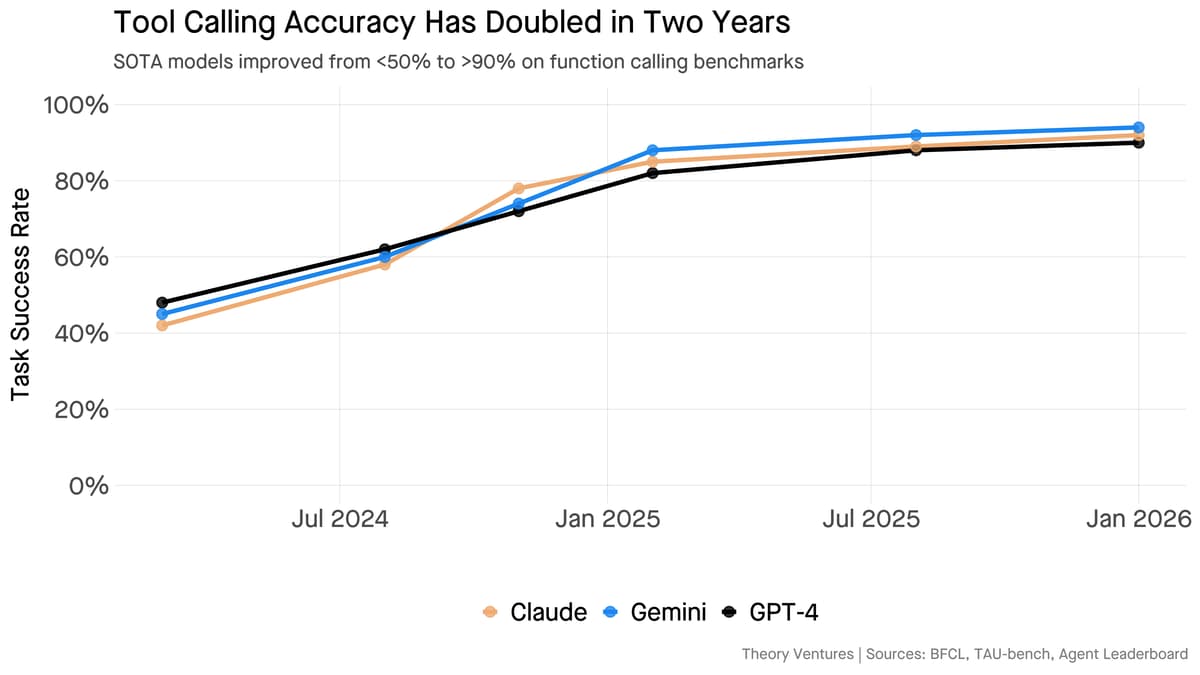
AI Managing AI
Recent advances have pushed tool‑calling accuracy for large language models past the 90% mark, a dramatic leap from the sub‑50% success rates seen two years ago. This improvement is driven by trillion‑parameter models that excel at context‑rich orchestration, while smaller...

High‑growth SaaS Firms Thrive While Low‑growth Tumble
Will designers design first in a world where AI can code software immediately, or just describe the design? Will large enterprises pay for premium observability when AI can migrate & monitor open source competitors? As Michael Mauboussin writes , there’s...
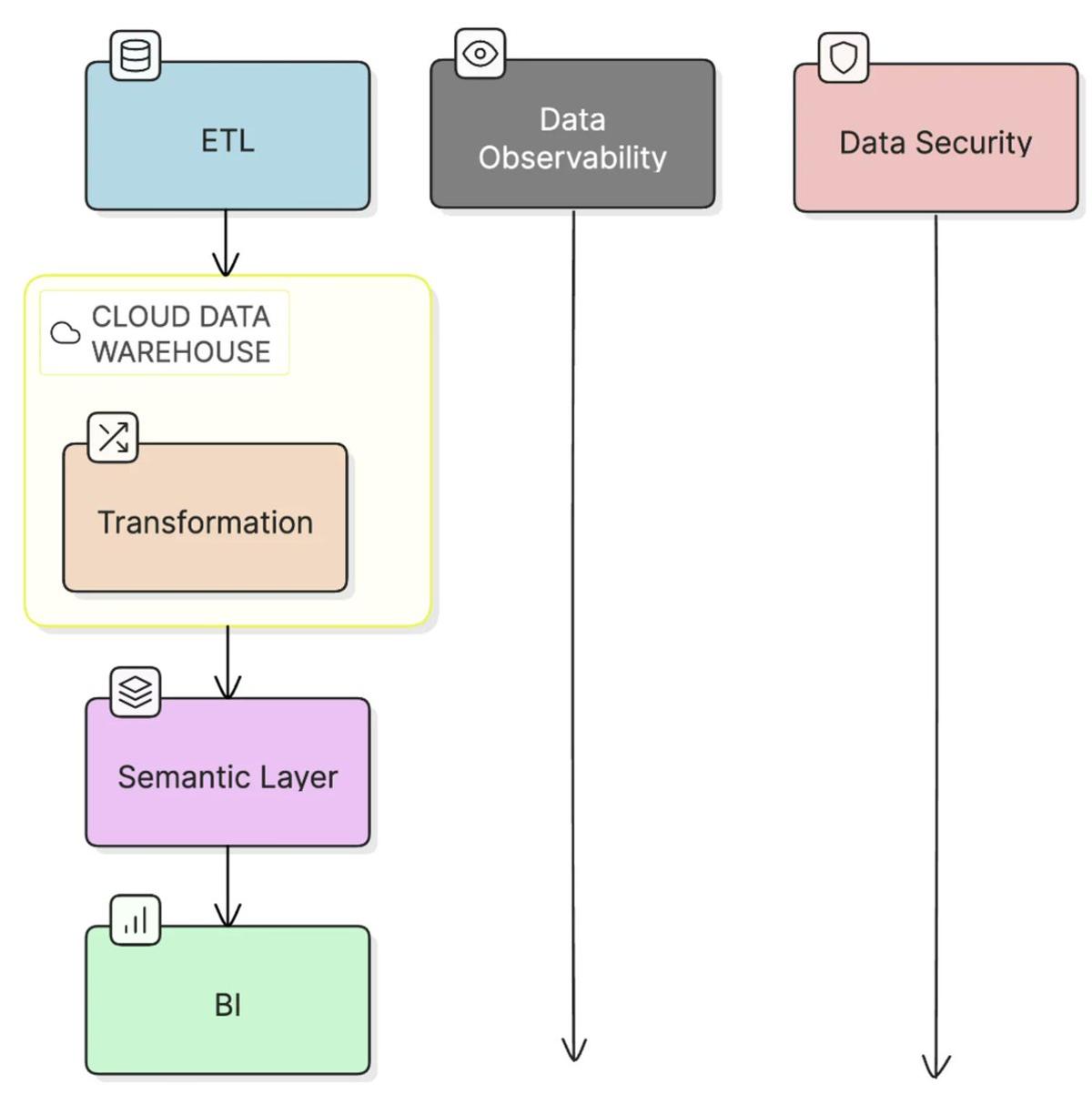
AI Powers the Next Evolution of Data Stacks
After a decade of success, the modern data stack has entered consolidation. What comes next? The postmodern data stack is AI. The modern data stack created more than $100 billion in market cap with a simple promise : move the data via...
![Eleven Steps to the Epiphany[^1]](/cdn-cgi/image/width=1200,quality=75,format=auto,fit=cover/https://res.cloudinary.com/dzawgnnlr/image/upload/w8txbopuyfkpsbw6rwka)
Eleven Steps to the Epiphany[^1]
The author describes how Anthropic’s Claude Cowork scanned a personal folder of scripts—email, CRM, research, and drafting tools—and incorporated them into its memory, enabling the same capabilities through a conversational interface. This transformation turns static, terminal‑bound utilities into a portable...

Incumbents Shift From Open APIs to Closed Walls
Salesforce, Datadog & Epic are building walls. After two decades of flourishing through open APIs & data portability, the software industry's largest incumbents are locking down. https://t.co/7n6Tio3aJK