IMF Warns Venezuela’s Economy and Humanitarian Situation Is ‘Quite Fragile’
•February 20, 2026
0
Companies Mentioned
Why It Matters
The IMF’s assessment signals that without renewed financing and policy reforms, Venezuela’s economic collapse could deepen, threatening regional stability and global oil markets.
Key Takeaways
- •Public debt at 180% of GDP
- •Triple‑digit inflation persists, currency sharply depreciating
- •8 million citizens emigrated since 2014
- •IMF ties severed since 2019, last assessment 2004
- •Potential $4.9 bn SDRs unlocked if relations restored
Pulse Analysis
The International Monetary Fund’s latest briefing underscored how fragile Venezuela’s economy remains, with public debt soaring to roughly 180 percent of GDP and inflation still in triple‑digit territory. Currency depreciation has eroded purchasing power, while basic services are scarce and poverty rates stay high. The IMF, which has not maintained formal relations with Caracas since 2019, warned that the humanitarian situation could deteriorate further if macro‑stability is not achieved. These metrics place Venezuela among the world’s most distressed economies. Without external financing, the government struggles to meet basic budgetary obligations.
The political landscape shifted dramatically after U.S. forces detained former President Nicolás Maduro, leaving interim President Delcy Rodríguez to steer a rapid stabilization plan. IMF officials said any re‑engagement would depend on member‑state consensus, but the prospect of unlocking about $4.9 billion in frozen Special Drawing Rights offers a tangible incentive. Restoring ties could provide the foreign‑exchange buffer needed to service debt and support essential imports, while also signaling to investors that Venezuela is moving toward a more predictable policy environment.
Washington has begun easing energy sanctions, granting general licences to major oil firms such as Chevron, BP, Eni, Shell and Repsol. The move reflects a strategic calculation that Venezuela’s vast hydrocarbon reserves are too valuable to remain idle, especially as global oil markets tighten. If foreign capital re‑enters the PDVSA‑led sector, production could rebound, generating export revenues that help stabilize the balance of payments. Nonetheless, the country’s structural challenges—hyperinflation, institutional weakness, and a fragmented legal system—mean that sustainable recovery will require coordinated IMF support, credible reforms, and long‑term political stability.
IMF warns Venezuela’s economy and humanitarian situation is ‘quite fragile’
By Reuters · Published On 20 Feb 2026
The International Monetary Fund (IMF) has described Venezuela’s economic and humanitarian situation as “quite fragile”, pointing to an estimated triple‑digit inflation and a sharply depreciating currency.
In a briefing on Thursday with reporters, spokeswoman Julie Kozack said the organisation continues to closely monitor developments in the South American nation, even though the IMF has had no formal relations with the Venezuelan government since 2019.
Kozack emphasised that any decision to re‑engage would depend on guidance from the IMF’s member countries and the broader international community.
Economic and political crises in Venezuela have driven massive emigration: since 2014, roughly a quarter of Venezuela’s population – about 8 million people – has left the country, creating one of the largest displacement crises in recent history.
The Venezuelan economy in 2026 remains in a state of deep structural crisis. It is currently navigating a period of unprecedented volatility and rapid policy shifts, following years of hyperinflation and a contraction of its gross domestic product (GDP).
The United States military’s abduction of former President Nicolas Maduro last month has triggered a seismic shift in both the political and economic landscape. While Maduro remains in US custody facing narco‑trafficking charges, the acting administration under interim President Delcy Rodriguez has moved swiftly to implement a plan for stabilisation, recovery and transition.
“Venezuela is undergoing a severe and prolonged economic and humanitarian crisis,” Kozack said during Thursday’s briefing. “Socioeconomic conditions remain very difficult. Poverty is high, inequality is high, and there’s widespread shortages of basic services. The situation overall is quite fragile.”
The IMF figures show Venezuela’s public debt sitting at roughly 180 percent of its GDP right now, before factoring in any court rulings or arbitration payouts from old defaults.
Kozack said the global lender was still gathering information and facts on the best way to proceed with the South American country.
The IMF hasn’t had any formal dealings with Venezuela in more than 20 years. Its last official assessment of the country came in 2004. In 2007, Venezuela paid off its last World Bank loan under Maduro’s predecessor, the late Hugo Chávez.
If the IMF restores ties with Venezuela, the South American oil exporter would have access to about $4.9 billion worth of Special Drawing Rights (SDRs) that were frozen seven years ago, after the IMF refused to recognise Maduro’s leadership. SDRs are reserve assets whose values are tied to five currencies: the US dollar, the euro, the Chinese renminbi, the Japanese yen and the British pound sterling.
US Treasury Secretary Scott Bessent said last month that the administration of President Donald Trump would be willing to convert Venezuela’s SDRs to dollars to help rebuild the country’s economy. Last week, the US Department of the Treasury announced it was easing some sanctions on Venezuela’s energy sector.
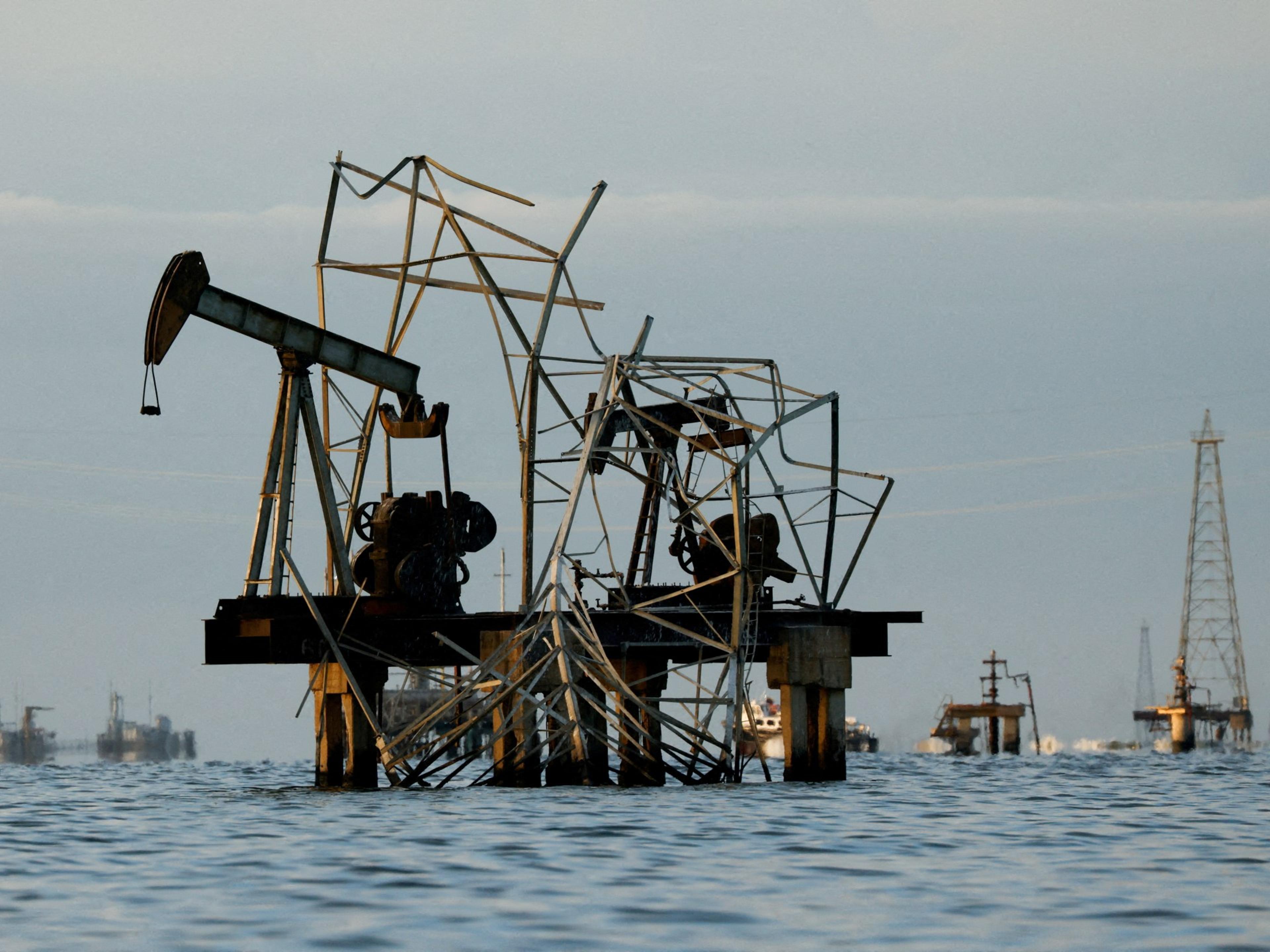
The Trump administration has placed a heavy focus on Venezuela’s vast oil reserves, even going so far as to claim that the natural resource rightfully belonged to the US. Citing US oil exploration in the area in the 20th century, Trump has called Venezuela’s decision to nationalise the oil sector the “largest theft of property in the history” of the US. His government has encouraged foreign investment in Venezuela’s oil sector since Maduro’s removal.
It has also issued two general licences, including one that allows energy companies Chevron, BP, Eni, Shell and Repsol to conduct further oil and gas operations in Venezuela. Those companies already have offices in the country and are among the main partners of state‑run oil company PDVSA. The second licence allows foreign companies to enter new oil and gas investment contracts with PDVSA.
0
Comments
Want to join the conversation?
Loading comments...