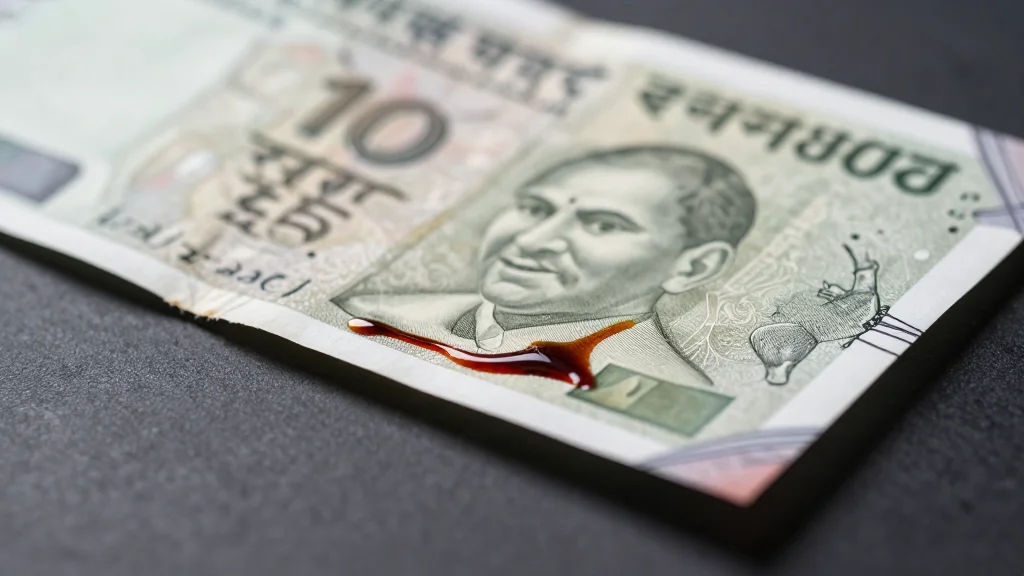
Indian Rupee Hits Record Low 95.33 as Oil Prices Surge Amid US‑Iran Stalemate

Companies Mentioned
Why It Matters
The rupee’s record low underscores how geopolitical flashpoints can quickly translate into currency volatility for oil‑importing economies. A weaker rupee raises import costs, fuels inflationary pressures, and can erode investor confidence in sovereign debt, prompting higher yields on government bonds. For multinational firms with exposure to India, the move affects earnings forecasts and hedging strategies. Beyond India, the episode highlights the interconnectedness of global commodity markets and emerging‑market currencies. Persistent high oil prices can strain balance sheets across the region, prompting coordinated policy responses and potentially reshaping capital‑flow dynamics in the coming months.
Key Takeaways
- •Indian rupee fell to a record 95.33 per dollar on May 4, 2026.
- •Oil prices stayed above $80 a barrel amid a stalled U.S.-Iran conflict.
- •MUFG warned the rupee could slide to 97‑98 if tensions persist.
- •Japan intervened to support the yen; other oil‑importers saw currency weakness.
- •Indian government bond yields rose as investors demanded higher risk premiums.
Pulse Analysis
The rupee’s plunge is a textbook case of how external shocks—geopolitical or commodity‑driven—can override domestic fundamentals. Historically, India’s currency has shown resilience during oil price spikes, thanks to a sizable current‑account surplus and RBI’s willingness to intervene. However, the current environment is different: the U.S.-Iran stalemate is not a short‑lived flare‑up but a protracted conflict that keeps oil prices in a higher band for an indeterminate period. This sustained pressure erodes the rupee’s buffer and forces the RBI into a tighter policy stance, potentially curbing the country’s growth trajectory.
From a market‑structure perspective, the episode may accelerate a shift toward more active hedging by corporates and investors. Companies with exposure to imported fuel or raw materials will likely increase forward contracts, while foreign investors may demand higher yields to compensate for currency risk. The RBI’s next move—whether a direct market intervention or a signaling of tighter monetary policy—will be pivotal. A decisive dollar‑selling operation could temporarily stabilize the rupee but may also deplete foreign‑exchange reserves, limiting future flexibility.
Looking ahead, the rupee’s path will be a barometer for how emerging markets navigate the twin challenges of geopolitical uncertainty and global monetary tightening. If the Fed leans toward a more hawkish stance while oil prices remain elevated, we could see a cascade of currency depreciations across the region, prompting coordinated central‑bank actions. Conversely, any breakthrough in the U.S.-Iran dialogue could quickly reverse the trend, underscoring the razor‑thin margin on which emerging‑market currencies now operate.
Indian Rupee Hits Record Low 95.33 as Oil Prices Surge Amid US‑Iran Stalemate
Comments
Want to join the conversation?
Loading comments...