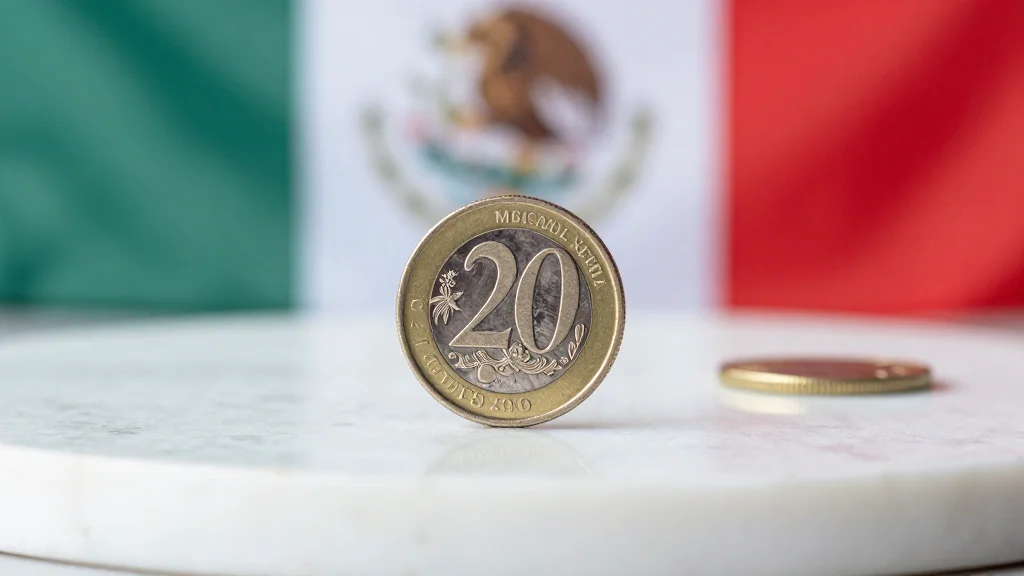
Mexican Peso Slides to Multi‑Month Lows as Dollar Gains on Fed Rate Hike Odds

Companies Mentioned

Why It Matters
The peso’s slide underscores how tightly emerging‑market currencies are linked to U.S. monetary policy and global risk sentiment. A weaker peso raises inflationary pressures in Mexico, potentially prompting the Bank of Mexico to adjust its own rates, which could affect capital flows across the region. Moreover, the currency’s movement influences trade balances, foreign‑direct investment decisions, and the cost of remittances that support millions of Mexican households. For investors, the peso’s volatility offers both risk and opportunity. Hedge funds and corporates may seek currency hedges or look for arbitrage in the FX market, while exporters could benefit from a more competitive pricing environment. The episode also highlights the importance of monitoring political signals, such as President Trump’s remarks on Iran, which can quickly shift market sentiment.
Key Takeaways
- •Peso closed at 17.3428 per dollar, down 0.67% from the previous session.
- •Weekly loss of 14.94 centavos (0.87%) marks the steepest slide in months.
- •U.S. Dollar Index rose 0.49% to 99.30 points; WTI crude above $105 per barrel.
- •FedWatch tool shows a 38% chance of a 25‑bp rate hike in December.
- •Analysts project the peso to trade within 17.35‑17.50 if risk aversion persists.
Pulse Analysis
The peso’s recent weakness is a textbook case of how emerging‑market currencies react to a confluence of external shocks. Higher U.S. inflation has forced the Fed to keep the policy rate higher for longer, and the market’s pricing of a December hike reflects a shift from the earlier narrative of a possible rate cut. For Mexico, a commodity‑exporter, the simultaneous rise in oil prices provides a fiscal cushion, but it also amplifies the dollar’s safe‑haven appeal, as investors chase higher‑yielding assets.
Historically, Mexican policymakers have used interest‑rate adjustments to counteract currency depreciation, but the Bank of Mexico now faces a delicate balancing act. Raising rates could defend the peso but risk slowing domestic growth, especially as consumer inflation climbs on imported goods. The upcoming minutes from the Fed and BoM will be scrutinized for any hints of policy divergence, which could either stabilize the peso or deepen its slide.
Looking ahead, the peso’s trajectory will likely hinge on three variables: the resolution of geopolitical tensions in the Middle East, the Fed’s actual policy moves in December, and Mexico’s own fiscal response to higher oil revenues. Traders should monitor the 17.35‑17.50 band as a potential support zone, but be prepared for a breach toward 17.70 if risk aversion spikes. For corporates and investors, the current environment underscores the value of dynamic hedging strategies and a keen eye on policy signals from both Washington and Mexico City.
Mexican Peso Slides to Multi‑Month Lows as Dollar Gains on Fed Rate Hike Odds
Comments
Want to join the conversation?
Loading comments...