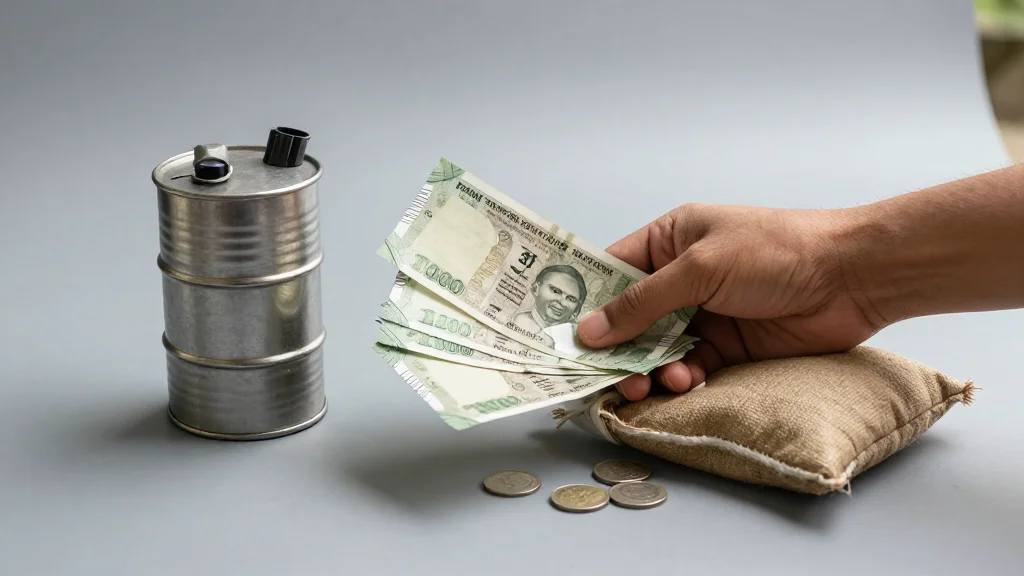
Rupee to Hit 99, Fiscal Deficit at 5%: Rahul Bajoria Sees Deeper Pain Ahead for India
Companies Mentioned
Bank of America

Reserve Bank of India
Why It Matters
A higher deficit and a weaker rupee raise financing costs and could dampen foreign investment, tightening India’s fiscal space and external balances. Policymakers must address structural trade and capital‑flow issues to avoid a prolonged slowdown.
Key Takeaways
- •Rupee expected at ₹98‑99 within 12 months, near historic lows.
- •FY27 fiscal deficit projected at 5% of GDP, 70 bps above target.
- •Fertiliser subsidies and fuel excise cuts drive deficit widening.
- •Additional ₹5‑7 per litre fuel hike needed to balance macro.
- •RBI dividend ~₹2.87 lakh crore (~$35 bn) insufficient to close gap.
Pulse Analysis
The latest BofA outlook underscores a tightening macro environment for India, where the rupee is projected to breach the ₹98‑99 threshold by year‑end. This depreciation reflects a confluence of factors: a persistent negative balance of payments, elevated commodity prices, and limited foreign‑direct inflows despite recent reforms such as the removal of the 20% tax on foreign portfolio investment bonds. For investors, a weaker currency erodes real returns on Indian assets and raises the cost of external debt, prompting a reassessment of exposure to emerging‑market equities and bonds.
Fiscal dynamics compound the currency challenge. With the FY27 deficit likely to hit 5% of GDP—about 150 basis points above the budgeted figure—the government faces a sizable financing gap. The surge in fertiliser subsidies, driven by global price spikes, and a recent ₹10‑per‑litre excise‑duty cut on fuel have amplified fiscal pressure, while tax collections have softened amid cooling consumer demand. The RBI’s record dividend of roughly $35 billion provides a modest buffer, but it falls short of offsetting the widening gap, signaling that additional fiscal consolidation measures may be required.
Energy pricing emerges as a critical lever for macro stability. BofA estimates India will need to raise fuel prices by another ₹5‑7 per litre (approximately $0.06‑$0.08) to align domestic costs with global oil benchmarks of $95‑$100 per barrel. Such hikes, though politically sensitive, could help curb inflationary pressures and support the rupee by improving the trade balance. However, without broader structural reforms—particularly in the capital account and tax base—the economy may continue to grapple with embedded inflation and external financing strains, even after the geopolitical tensions subside.
Rupee to hit 99, fiscal deficit at 5%: Rahul Bajoria sees deeper pain ahead for India
Comments
Want to join the conversation?
Loading comments...