AiFWall Emerges From Stealth With an AI Firewall
•January 21, 2026
0
Companies Mentioned


Why It Matters
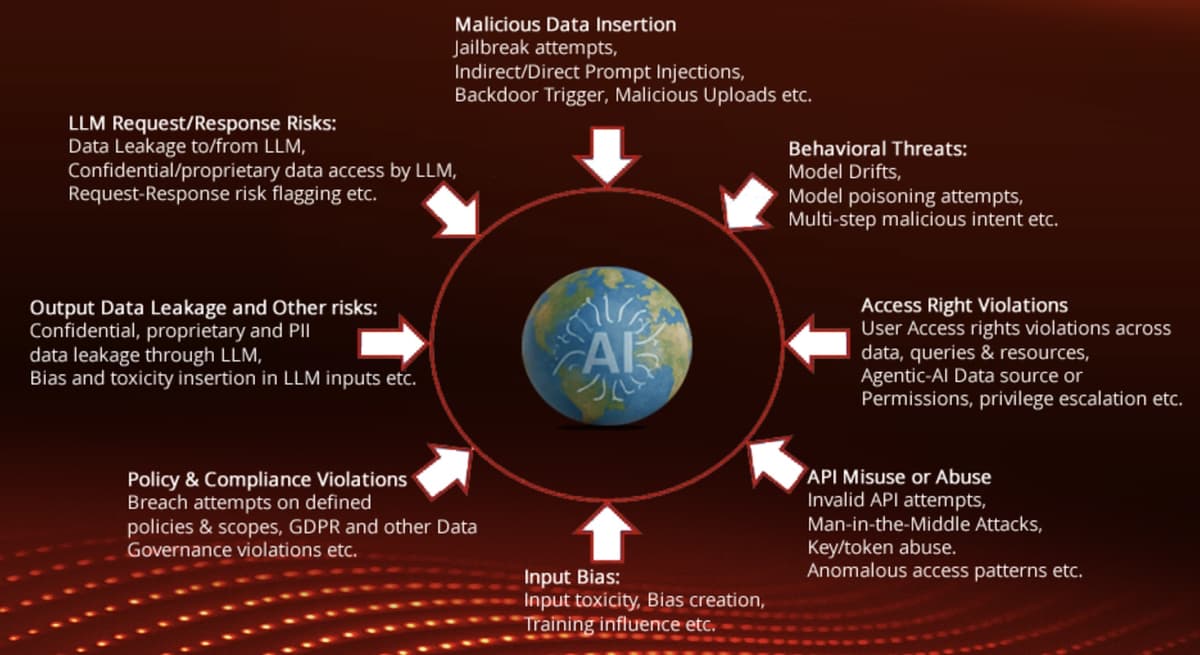
Targeted AI malware and prompt‑injection attacks are rising as enterprises embed agentic models, and aiFWall’s two‑way, context‑aware protection fills a critical gap left by traditional firewalls, helping firms reduce breach risk and meet compliance mandates.
Key Takeaways
- •aiFWall offers free two-way AI firewall for agentic systems
- •Provides contextual input filtering using historical user behavior
- •Generates threat markers from malicious prompts via central AI engine
- •Detects AI-specific viruses and distributes signatures across installations
- •Filters outbound AI responses for toxicity, bias, and compliance
Pulse Analysis
The rapid adoption of agentic artificial intelligence across enterprises has introduced a new attack surface that conventional network security tools were never designed to defend. Prompt‑injection, data‑poisoning, and AI‑specific malware—often termed "AI viruses"—can bypass traditional firewalls by exploiting the very language models they aim to protect. As illustrated by incidents like PromptLock and state‑sponsored manipulations of Claude Code, these threats are evolving in sophistication, prompting a market need for dedicated AI‑centric safeguards.
aiFWall’s approach differentiates itself through a two‑way, context‑rich architecture. By analyzing historical user interactions, the firewall can discern intent that static, real‑time filters miss, while a central AI engine aggregates malicious prompts into threat markers that are instantly propagated to all deployments. This just‑in‑time sharing mirrors the signature‑based updates of legacy network firewalls but is tuned for the nuances of AI behavior. Additionally, the system self‑learns from emerging AI viruses, creating a feedback loop that continuously hardens defenses against novel exploits.
For businesses, the implications are twofold: enhanced security posture and streamlined compliance. Outbound filtering ensures AI‑generated content adheres to GDPR, CCPA, HIPAA, and PCI standards, reducing regulatory exposure. As AI workloads become mission‑critical, vendors offering integrated, AI‑aware firewalls like aiFWall are likely to see accelerated adoption, especially among organizations with stringent data‑privacy requirements. However, success will depend on seamless integration with existing security stacks and the ability to scale threat‑marker distribution without latency, factors that will shape the competitive landscape in the coming years.
aiFWall Emerges from Stealth With an AI Firewall
0
Comments
Want to join the conversation?
Loading comments...