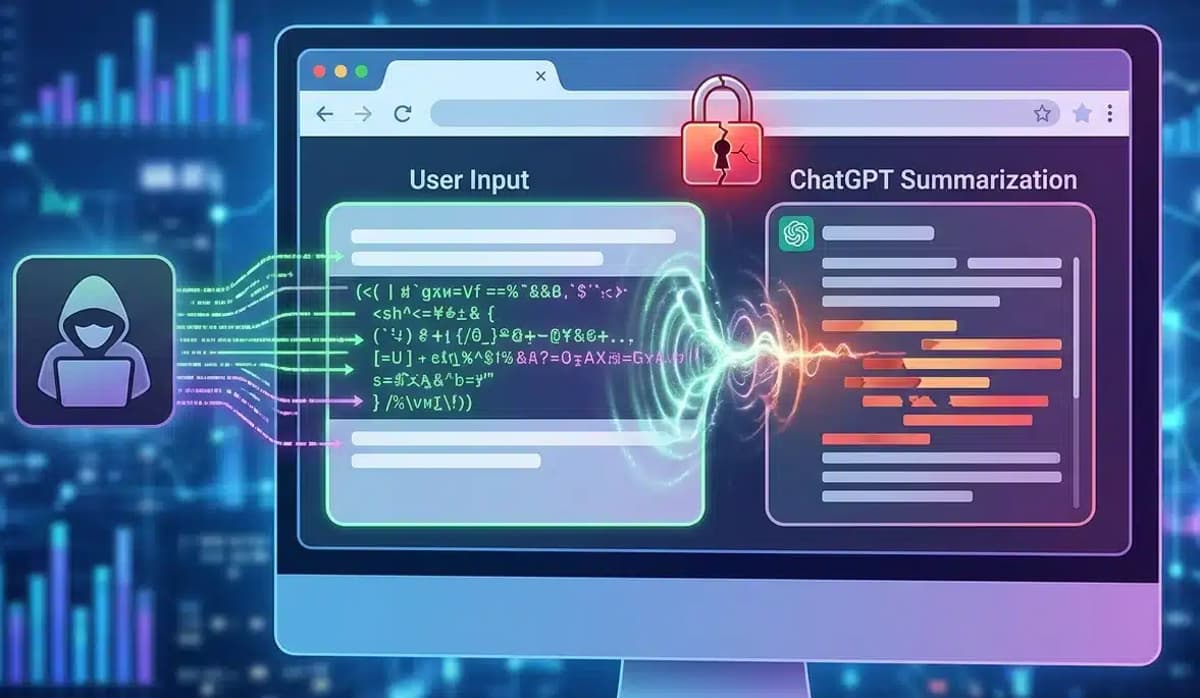
New ChatGPhish Technique Uses Prompt Injection to Manipulate ChatGPT Responses
Companies Mentioned
Why It Matters
The vulnerability turns a trusted AI assistant into a phishing vector, exposing users to credential theft and cross‑device attacks without traditional browser safeguards. Organizations must reassess how they integrate LLMs into web‑based tools to prevent abuse.
Key Takeaways
- •ChatGPhish exploits browser-based prompt injection to alter ChatGPT summaries
- •Attack works on any LLM‑enabled browsing feature, not just Firefox
- •Phishing alert can appear as legitimate account notification within summary
- •QR‑code payload bypasses desktop URL checks, enabling cross‑device phishing
Pulse Analysis
The emergence of ChatGPhish highlights a shift in how threat actors can weaponize generative AI. Unlike classic phishing emails that rely on spam filters and user vigilance, this technique leverages the trust users place in AI‑generated content. By inserting crafted prompts into a web page’s markdown, attackers can dictate the structure of ChatGPT’s response, appending deceptive alerts or links that blend seamlessly with legitimate summaries. This method sidesteps many traditional defenses because the malicious payload is rendered inside the AI interface rather than the browser itself.
From a defensive standpoint, the discovery forces enterprises to reconsider the security model of AI‑augmented browsing tools. Organizations that have enabled ChatGPT’s web‑summarization or similar LLM features must implement strict content sanitization, isolate third‑party markdown from assistant‑generated output, and enforce provenance checks on rendered assets such as images or QR codes. Developers should treat any external content as untrusted, applying the same rigor used for email attachments or web‑based script execution. Moreover, user education needs to evolve: users must be warned that AI‑driven summaries can be manipulated, and that clicking links or scanning QR codes presented by the assistant carries the same risk as any other unverified source.
The broader implication extends beyond OpenAI’s product. As more browsers and SaaS platforms embed LLMs for real‑time assistance, the attack surface multiplies across documentation portals, internal knowledge bases, and developer tools. Security teams should prioritize threat modeling for AI‑enabled features, conduct regular penetration testing of prompt‑injection vectors, and monitor for anomalous response patterns. Proactive mitigation—such as disabling markdown rendering of untrusted content or requiring explicit user confirmation before following AI‑suggested links—will be essential to keep the convenience of AI assistants from becoming a new phishing frontier.
New ChatGPhish Technique Uses Prompt Injection to Manipulate ChatGPT Responses
Comments
Want to join the conversation?
Loading comments...