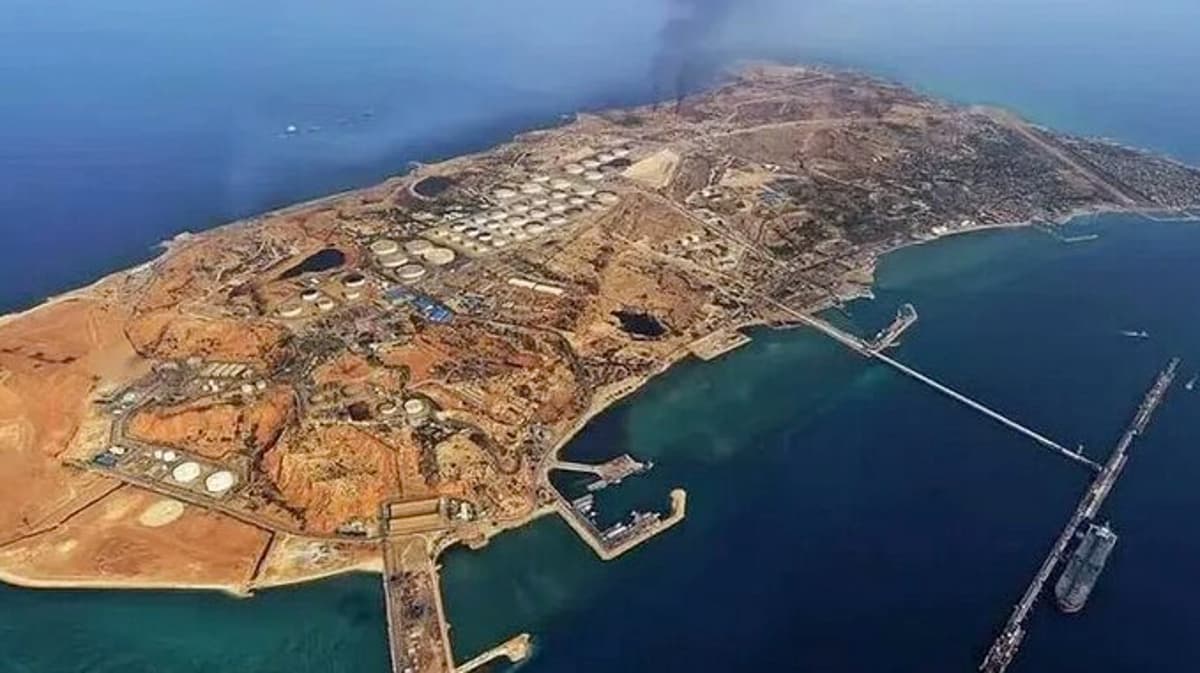
US Destroys All Military Targets on Kharg Island Which Is Iran’s Oil Export Hub

Key Takeaways
- •US airstrike eliminated every military target on Iran's Kharg Island.
- •Oil facilities left intact to avoid global supply disruption.
- •Strike signals heightened US willingness to control Hormuz corridor.
- •Brent crude surged 50% amid escalating Middle East tensions.
- •Analysts forecast Democratic gains in 2026 midterm elections.
Summary
The United States Central Command carried out a large‑scale airstrike that eliminated every military installation on Iran’s Kharg Island, the nation’s primary oil‑export hub. While the strike wiped out Iran’s defensive assets, the United States deliberately spared the island’s oil processing and loading facilities to avoid disrupting global oil supplies. The operation underscores Washington’s intent to enforce free navigation through the Strait of Hormuz amid rising regional tensions, as Brent crude prices have surged roughly 50 % in the past month. Analysts also note that the geopolitical flare‑up may influence the political landscape, with Democratic prospects in the 2026 midterms gaining traction.
Pulse Analysis
The United States’ decision to bomb Kharg Island marks one of the most extensive aerial campaigns in the Middle East since the early 2000s. Kharg hosts Iran’s main oil‑export terminal, but the target list was limited to radar sites, missile batteries, and command bunkers that protect the island’s maritime approaches. By eradicating every military asset while leaving the refinery and loading infrastructure untouched, Washington aimed to cripple Iran’s defensive posture without triggering an immediate oil‑supply shock. Officials framed the operation as a warning to any actor threatening free passage through the Strait of Hormuz.
The strike arrived as Brent crude surged more than 50 % over the previous month, reflecting investor anxiety over supply disruptions in the Persian Gulf. By sparing the oil loading facilities, the United States mitigated the risk of a sudden price spike that could reverberate through global manufacturing and transportation costs. Nevertheless, the removal of Iran’s coastal air‑defenses raises the likelihood of retaliatory missile launches aimed at commercial shipping, prompting insurers to reassess freight premiums. Energy analysts warn that even a brief escalation could push oil benchmarks above $80 per barrel, tightening fiscal margins for oil‑dependent economies.
Beyond the immediate security calculus, the Kharg operation reverberates in Washington’s domestic political arena. A surge in oil prices traditionally benefits incumbent administrations, yet the heightened tension may also fuel criticism of U.S. foreign policy, influencing voter registration trends that analysts like Seth Keshel track closely. Projections from prediction markets now show a modest Democratic advantage in the 2026 midterms, suggesting that economic uncertainty could translate into electoral gains for the opposition. As the United States balances deterrence with market stability, the episode underscores how geopolitical flashpoints can reshape both energy markets and political fortunes.


Comments
Want to join the conversation?