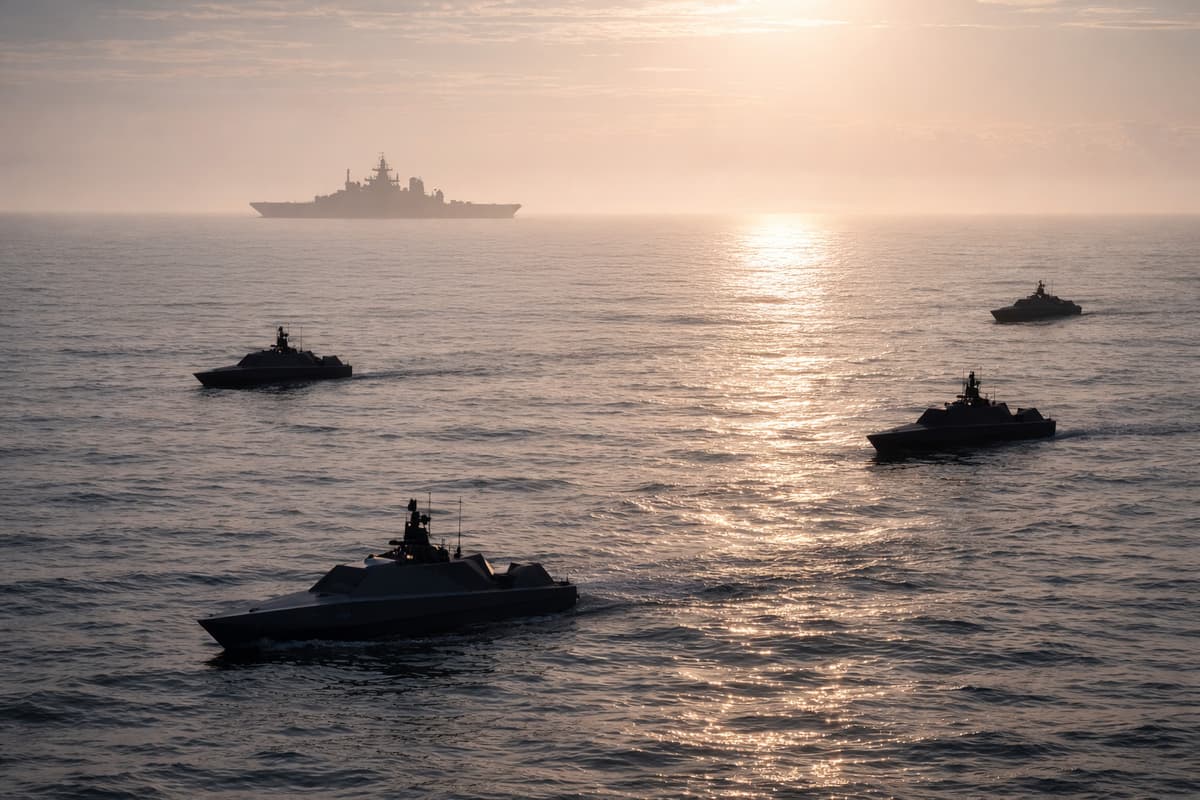
World’s Largest Drone Fleet Deployed to Deter Russia
Key Takeaways
- •NATO formalized Task Force X Baltic second phase, eight allies.
- •50+ commercial drones deployed in Baltic Sea within month.
- •Initiative aims rapid acquisition, integration, cost‑effective maritime ISR.
- •New procurement models explore leasing and rapid refresh cycles.
- •Lessons will feed a scalable playbook for future unmanned fleets.
Pulse Analysis
The Baltic Sea has become a flashpoint for critical infrastructure, highlighted by the 2024 cable‑cut incidents that disrupted communications across the region. NATO’s response—deploying a swarm of unmanned surface vessels and aerial drones—offers a persistent surveillance layer that can detect, attribute, and deter hostile actions in real time. By leveraging commercially available platforms, the alliance sidestepped lengthy development cycles, aligning with its Digital Ocean vision to secure undersea cables and maritime approaches with affordable, scalable technology.
Beyond the immediate security gains, the Task Force X Baltic experiment reshapes defence procurement. NATO officials are testing leasing, hire‑fire, and rapid‑refresh models that treat drones as software‑driven capabilities rather than static hardware. This approach dramatically cuts the per‑day cost compared with a traditional frigate, which can exceed $5 million, while allowing sensor and command‑and‑control upgrades every one to two years. The emphasis on fast integration and de‑risking through shared testing lowers barriers for industry participation and accelerates the delivery of next‑generation ISR tools.
Looking forward, the playbook emerging from the Baltic effort is set to inform similar projects in the Arctic and Eastern European theatres. The alliance’s focus on AI‑enhanced sensor fusion, modular payloads, and rapid obsolescence cycles positions unmanned fleets as a cornerstone of future deterrence strategy. For defence contractors, the shift creates a market for adaptable, lease‑based solutions, while NATO allies gain a flexible, cost‑effective means to maintain maritime dominance in contested waters. This paradigm could redefine how collective security is achieved in the age of autonomous warfare.
World’s largest drone fleet deployed to deter Russia


Comments
Want to join the conversation?