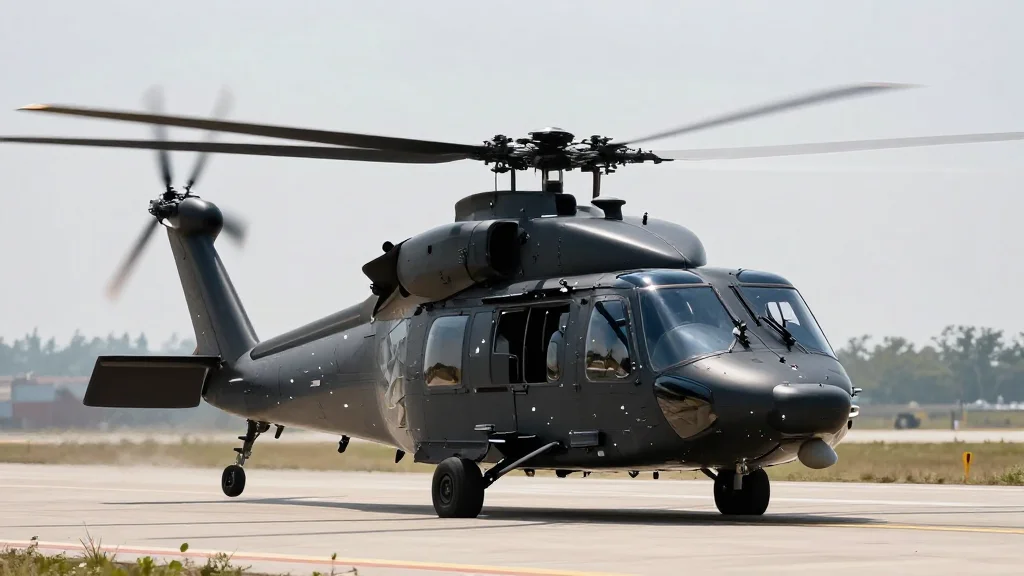
Army’s Work With OPV Black Hawk To Inform Bringing Autonomy To MV-75 FLRAA
Companies Mentioned
Why It Matters
Accelerating autonomy on the MV‑75 will give the Army faster, safer long‑range assault capabilities while reducing crew risk and operational costs, positioning the service ahead of peer competitors.
Key Takeaways
- •H‑60Mx OPV Black Hawk accepted, testing autonomy for MV‑75
- •Sikorsky’s MATRIX suite enables tablet‑controlled, optionally unmanned flights
- •Army plans to spend >$2 billion FY27 to accelerate FLRAA fielding
- •Bell’s V‑280 Valor completed autonomous test flight in 2019
- •Autonomy expected to reduce risk and cut costs within a decade
Pulse Analysis
The push toward autonomous rotorcraft has moved from experimental labs to operational testbeds in just a few years. Originating from DARPA’s Aircrew Labor In‑Cockpit Automation System (ALIAS), Sikorsky’s MATRIX suite enabled the first fully unmanned Black Hawk flight in February 2022 and a tablet‑controlled logistics sortie in late 2025. By integrating these capabilities into the H‑60Mx OPV Black Hawk, the Army now possesses a proven platform to evaluate sensor fusion, flight‑control interfaces, and human‑machine teaming before committing to larger, more complex aircraft.
That groundwork directly feeds the Future Long‑Range Assault Aircraft (FLRAA) program, now branded the Cheyenne II MV‑75. The Army’s FY27 budget earmarks more than $2 billion to fast‑track the tilt‑rotor’s entry into service, and autonomy testing on the OPV is slated to shape the aircraft’s tactics, techniques, and procedures. Bell’s V‑280 Valor already logged an autonomous test flight in 2019, demonstrating that the technology can be scaled. The Army is also assessing how many legacy Black Hawks could be retrofitted to an OPV configuration, extending the benefits across its fleet.
Beyond speed and survivability, autonomous operations promise significant cost savings. Reducing crew exposure lowers training and casualty expenses, while automated flight paths can optimize fuel use and mission planning. As near‑peer competitors invest heavily in unmanned aerial systems, the U.S. Army’s accelerated timeline positions it to field a safer, more capable long‑range assault platform before adversaries field comparable capabilities. Over the next decade, missions traditionally performed by manned helicopters are likely to shift toward autonomous aircraft, reshaping logistics, reconnaissance, and strike doctrines across the joint force.
Army’s Work With OPV Black Hawk To Inform Bringing Autonomy To MV-75 FLRAA
Comments
Want to join the conversation?
Loading comments...