Defense News and Headlines
  • All Technology
  • AI
  • Autonomy
  • B2B Growth
  • Big Data
  • BioTech
  • ClimateTech
  • Consumer Tech
  • Crypto
  • Cybersecurity
  • DevOps
  • Digital Marketing
  • Ecommerce
  • EdTech
  • Enterprise
  • FinTech
  • GovTech
  • Hardware
  • HealthTech
  • HRTech
  • LegalTech
  • Nanotech
  • PropTech
  • Quantum
  • Robotics
  • SaaS
  • SpaceTech
AllNewsDealsSocialBlogsVideosPodcastsDigests

Defense Pulse

EMAIL DIGESTS

Daily

Every morning

Weekly

Sunday recap

NewsDealsSocialBlogsVideosPodcasts
DefenseNewsConnecticut Guard Joint Staff Trains for Emergency Response as Winter Storm Arrives
Connecticut Guard Joint Staff Trains for Emergency Response as Winter Storm Arrives
Defense

Connecticut Guard Joint Staff Trains for Emergency Response as Winter Storm Arrives

•January 23, 2026
0
U.S. Army – News
U.S. Army – News•Jan 23, 2026

Why It Matters

The training directly enhances the Guard’s capacity to assist state authorities during disasters, reducing response gaps and improving public safety. Consistent, specialized instruction ensures that rotating staff maintain a unified, effective emergency‑response framework.

Key Takeaways

  • •Five‑day course enhances Guard joint staff emergency coordination.
  • •Training coincided with real winter‑storm scenario for practical learning.
  • •High staff turnover addressed through baseline joint‑staff instruction.
  • •Course prepares Guard to support governor during disasters.
  • •Biennial training proposal aims to maintain long‑term readiness.

Pulse Analysis

The Connecticut National Guard’s recent Joint Task Force Staff Training (JSTC) reflects a growing emphasis on state‑level resilience amid increasingly volatile weather patterns. By situating the five‑day course at Camp Nett during an approaching winter storm, the Guard provided participants with a realistic operational backdrop, allowing them to apply the military decision‑making process to a live‑like scenario. This hands‑on approach not only reinforces theoretical knowledge but also cultivates rapid decision‑making skills essential for coordinating personnel, logistics, and resources when the governor calls on the Guard for assistance.

Beyond the immediate training, the JSTC underscores the importance of integrated civil‑military collaboration. Instructors from Western Hemisphere Command highlighted coordination with the Department of Emergency Services and Public Protection, the Division of Emergency Management and Homeland Security, and the Emergency Management Assistance Compact (EMAC). Such partnerships enable the Guard to seamlessly receive, stage, and integrate additional forces from neighboring states during large‑scale events. Complementary courses like the Joint Planner’s Course and the JRSO (Joint Reception, Staging, Onward Movement and Integration) further expand the Guard’s strategic toolkit, ensuring that Connecticut can respond effectively to anything from wildfires to pandemics.

Looking ahead, Maj. Lee Lukas’s push for a biennial JSTC schedule aims to institutionalize readiness despite the Guard’s high staff turnover. Regular, specialized training will keep joint‑staff members proficient in evolving best practices and emerging threats, positioning Connecticut as a model for other state National Guards. As climate change intensifies the frequency of extreme weather, such proactive preparedness not only safeguards local communities but also strengthens the broader national emergency‑response architecture.

Connecticut Guard Joint Staff Trains for Emergency Response as Winter Storm Arrives

By Timothy Koster · January 23, 2026

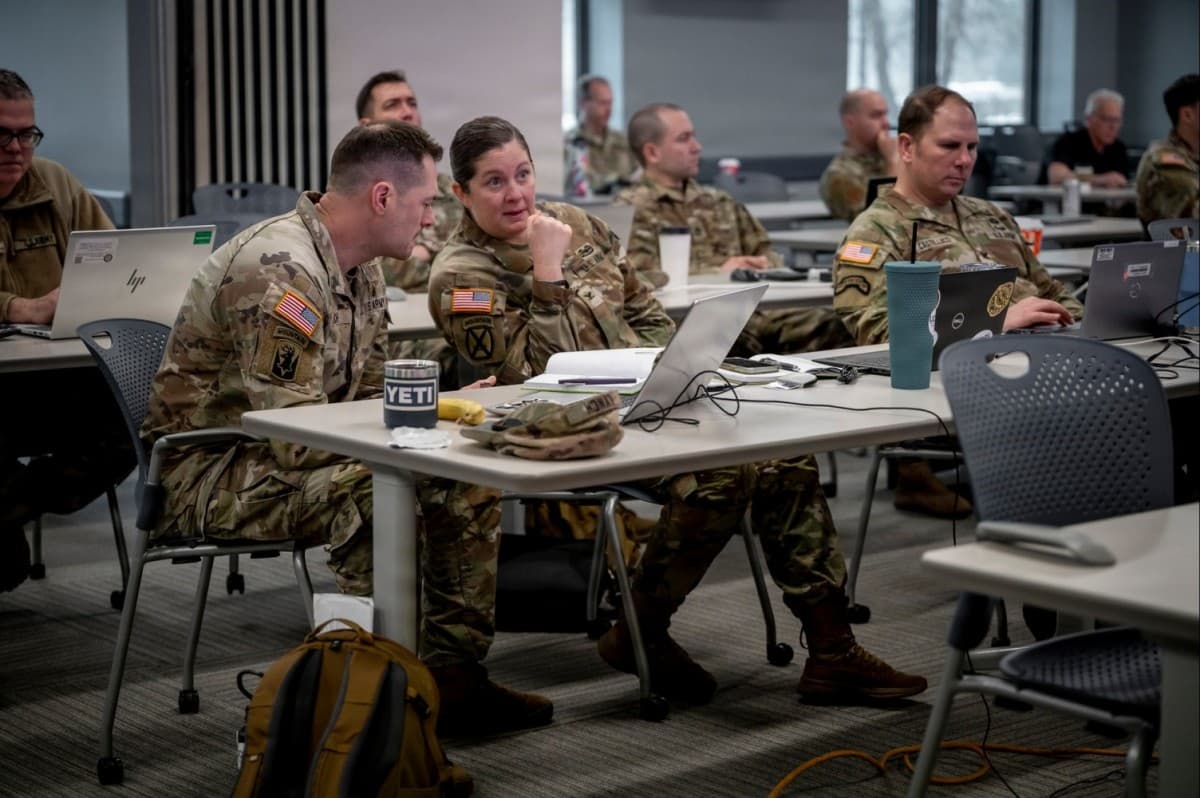
Students of the Connecticut National Guard's Joint Task Force Staff Training Course converse about topics being taught at the Regional Training Institute, Jan. 7, 2026. (Photo Credit: Timothy Koster)

U.S. Army Maj. Lee Lukas, domestic operations officer in the Connecticut National Guard’s Joint Operations Center, gives instruction during Joint Task Force Staff Training at the Regional Training Institute, Camp Nett, Niantic, Connecticut, Jan. 7, 2026. (Photo Credit: Timothy Koster)

CAMP NETT, Conn. — Members of the Connecticut National Guard’s Joint Force Headquarters joint staff completed a five‑day Joint Task Force Staff Training Course at Camp Nett, strengthening their ability to plan and coordinate National Guard support during domestic emergency operations as a major winter storm threatened parts of the region.

The course provided baseline training for joint‑staff members responsible for organizing personnel, logistics and resources when the Connecticut National Guard is called upon to support state and civil authorities during natural disasters, public‑health emergencies and other governor‑declared events. The timing of the training coincided with forecasted winter weather, giving participants an opportunity to apply planning concepts in a realistic emergency‑response scenario.

“The joint staff has a high level of turnover,” said Maj. Lee Lukas, a domestic operations officer in the Connecticut National Guard’s Joint Operations Center. “It’s like a revolving door, with new staff rotating in every couple of years. The JSTC is an introductory course that helps lay the groundwork for a good team.”

This baseline training is critical for the joint staff to be successful in its mission because the work is highly specialized and not something the Army typically teaches, according to Lukas.

When the state faces an emergency—whether a natural disaster such as the Hawthorne Brush Fire that burned more than 127 acres of woodlands several years ago; a pandemic such as COVID‑19; or another declared emergency in which the governor calls upon the National Guard to assist—it is the joint staff’s job to provide logistical support and manpower for the mission.

It is an important mission with real‑world consequences, which makes the training all the more important.

Over the three days of the course, students taught by instructors from Western Hemisphere Command learned the nuances associated with operating a joint staff during an emergency. This included coordinating with other civil authorities, such as the Department of Emergency Services and Public Protection and the Division of Emergency Management and Homeland Security.

The course culminated with a practical exercise in which the team responded to a simulated winter‑storm emergency.

“In the practical exercise, we used the military decision‑making process to create a common operational picture for the adjutant general for a winter‑storm response,” Lukas said. “With that, he can better advise the governor on how the National Guard can help during the emergency.”

New England is no stranger to winter storms, but with a major storm forecast to affect much of the country, the training coincided with heightened winter‑weather awareness.

While the training will be beneficial in the near term, Lukas is working to make it a biennial requirement to ensure future joint staffs remain proficient and ready to support the state when called upon.

The training also serves as a prerequisite for additional courses designed to prepare the organization for emergencies and operations beyond routine support missions.

One example is the Joint Planner’s Course, which trains students in strategic planning for large‑scale events, such as Hurricane Katrina, should a similar disaster occur in Connecticut.

Another is the Joint Reception, Staging, Onward Movement and Integration (JRSO) course, which teaches students how to ensure forces are effectively received, prepared and deployed during emergencies, particularly during large‑scale events that require support through the Emergency Management Assistance Compact. An EMAC is a formal request for additional equipment or personnel from other states when local resources are insufficient.

With the potential for future disasters always present, the Connecticut National Guard continues to take a proactive approach to readiness to ensure it is prepared to support the state when needed.

Read Original Article
0

Comments

Want to join the conversation?

Loading comments...