A diluted Article 5 undermines NATO’s credibility, risking weaker collective defense against Russian aggression in Europe.
Article 5 remains NATO’s cornerstone, promising collective defense when a member is attacked. The current discourse stems from Finland’s concern that applying the clause to Ukraine—a non‑member embroiled in a full‑scale war—could lower the bar for future triggers, such as drone incursions or cyber‑attacks. By pre‑emptively stretching the provision, allies fear the original deterrent signal to Moscow may become ambiguous, weakening the alliance’s strategic posture.
The Baltic region amplifies these worries. Estonia, Latvia and Lithuania sit on the alliance’s eastern flank, making them prime targets for hybrid aggression. Finland and Sweden, fresh NATO entrants, have already supplied Ukraine with artillery, air‑defence and reconnaissance gear, yet they remain acutely aware of their proximity to Russia. Poland, facing a barrage of cyber‑attacks, energy sabotage and airspace violations, opts for Article 4 consultations and national resilience rather than invoking the ultimate collective defense guarantee. This cautious stance underscores a broader reluctance to set a precedent that could obligate NATO to intervene in conflicts beyond its membership.
Beyond the immediate security calculus, the United States’ increasingly transactional approach to transatlantic ties adds another layer of uncertainty. While Washington continues to back Ukraine materially, it hesitates to formalize that support under Article 5, fearing long‑term erosion of the clause’s credibility. As negotiations with Russia evolve, NATO must balance short‑term assistance with preserving the deterrent value of Article 5, ensuring that the alliance remains a credible shield for its members in an era of hybrid warfare.
Aleksander Olech · 10 February 2026, 09:50
NATO countries, particularly those on the Alliance’s eastern flank, are concerned that invoking Article 5 in relation to Ukraine could, over the longer term, weaken the significance of this provision. In the background lies the risk that subsequent incidents — including hybrid actions such as drone incursions, border violations or espionage activities — might no longer trigger an adequate Alliance response, as the threshold for invoking Article 5 would have been blurred in advance.
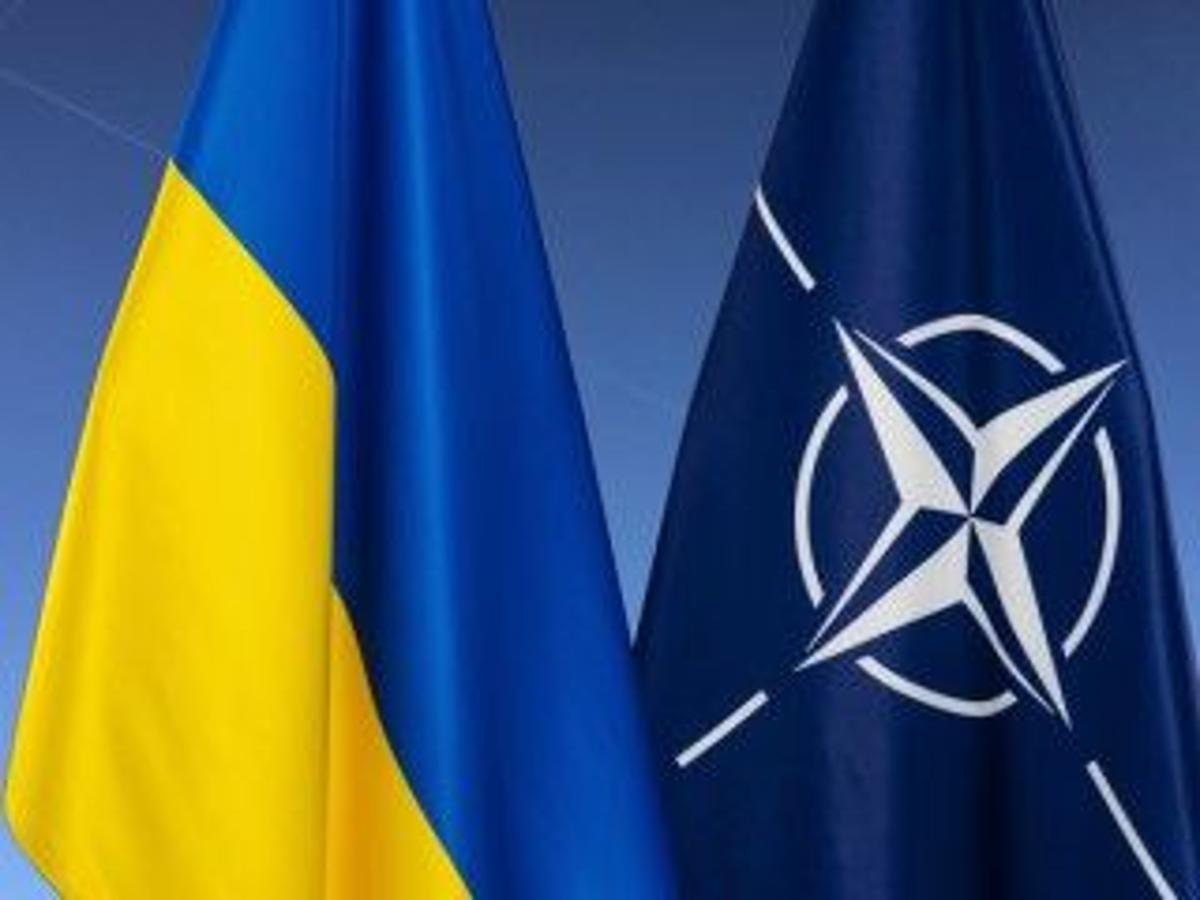
![Ukrainian and NATO flag]
As Politico has noted, Finland is at the forefront of the countries expressing such concerns. In Helsinki, there is a prevailing view that applying Article 5 in the context of Ukraine — a state that remains outside the Alliance and is already engaged in an active war — could undermine the deterrent value of this clause. This concern is reinforced by the fact that ongoing negotiations involving the United States and Russia are creating a new and highly dynamic political environment in which the credibility of allied security guarantees will be crucial, particularly those associated with Washington.
In this context, it is worth noting that Finland and Sweden, as NATO’s newest members, are today among Ukraine’s key supporters. In recent years, both countries have supplied substantial quantities of military equipment, including artillery systems, ammunition, armoured vehicles, as well as advanced reconnaissance and air‑defence capabilities. At the same time, both states assess their own strategic position in a highly realistic manner, fully aware of the risks stemming from their direct proximity to Russia.
Concerns surrounding NATO’s Article 5 also reflect Finnish awareness of the particular vulnerability of the Baltic states to pressure from Moscow. Within this framework, Estonia is perceived as one of the most exposed potential targets of Russian action. For Helsinki, this translates into tangible allied responsibility: in the event of an incident in Estonia, Finland would be among the states expected to respond. Latvia and Lithuania possess more limited capabilities, and the presence of allied troops there — including contingents from countries such as France — is widely regarded as insufficient on its own.
For this reason, any prior “political” or “extra‑NATO” use of Article 5, including on behalf of Ukraine, could undermine its credibility precisely in a scenario where a NATO member state is subjected to an attack.
It should therefore be stated that most — if not all — NATO member states are likely to oppose extending Article 5 protection to Ukraine. The war in Ukraine is already ongoing, and from the outset the Alliance has adopted a model of indirect support, deliberately avoiding formal entry into a direct conflict with Russia. From the perspective of many capitals, invoking Article 5 under such circumstances would constitute a dangerous precedent.
From Warsaw’s perspective, this issue has an additional dimension. Poland is currently among the European states most exposed to hybrid activities. These challenges include cyber‑attacks, sabotage of energy and transport infrastructure, arson, diversionary actions, drone and balloon incidents, airspace violations by helicopters and fighter aircraft, and sustained intelligence pressure. Despite this, Warsaw remains far from seeking the activation of Article 5, focusing instead on the consultation mechanisms provided for under Article 4 and on strengthening national resilience in line with Article 3.
In this sense, Article 5 remains the Alliance’s “ultimate weapon”. It is an instrument that requires particular care, as its premature or inappropriate use could lead to a situation in which it no longer fulfils its core deterrent function.
I assess that debates surrounding Article 5 will continue to intensify; however, until it is actually invoked, no one can be fully certain how it would function in practice — especially in an environment marked by an increasingly transactional approach by the United States to transatlantic relations.
Comments
Want to join the conversation?
Loading comments...