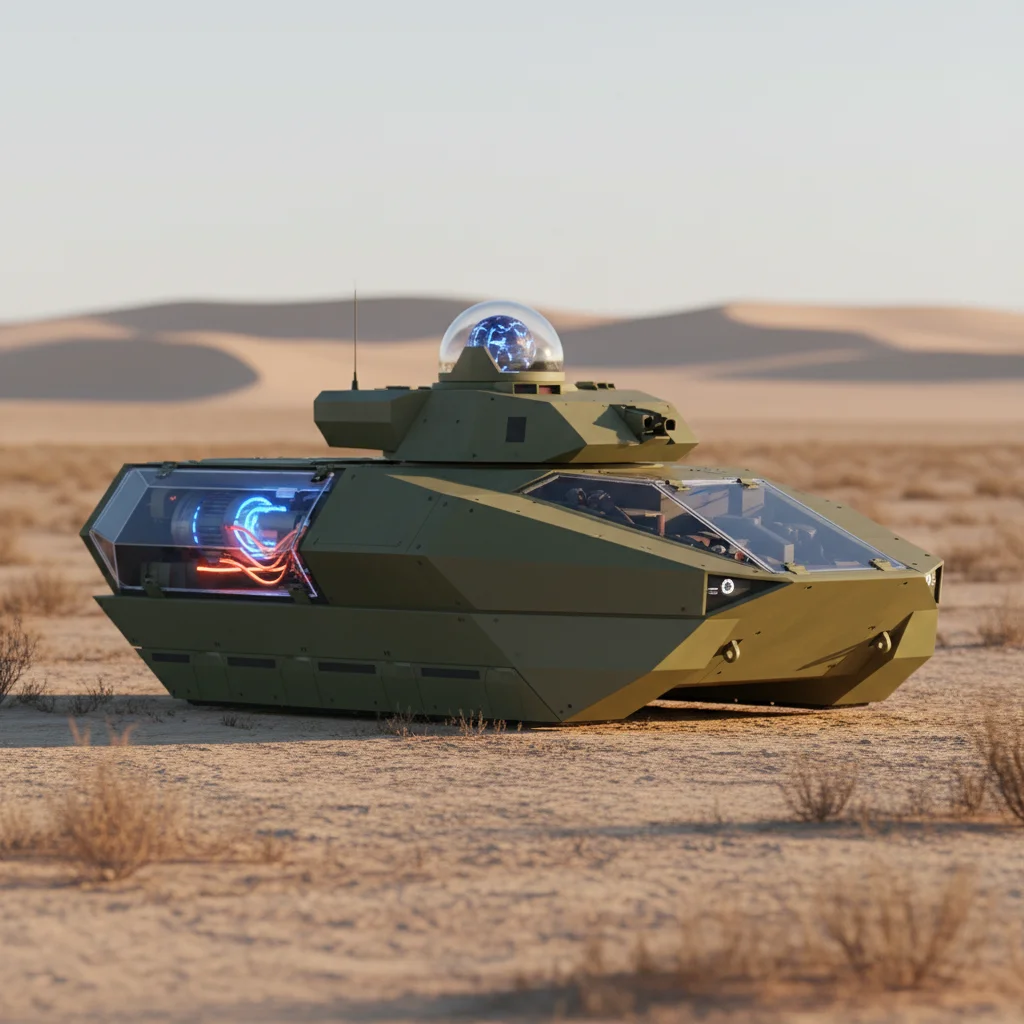
Marines Begin Advanced Reconnaissance Vehicle Pre-Production
Why It Matters
The contract accelerates the Marine Corps’ shift to more survivable, data‑rich reconnaissance platforms, enhancing expeditionary situational awareness. It also secures a major revenue stream for GDLS amid intense competition in the defense vehicle market.
Key Takeaways
- •USMC awards GDLS $450M for ARV pre‑production phase
- •ARV aims to replace aging LAV‑25 reconnaissance platform
- •Vehicle features hybrid powertrain, autonomous navigation, and enhanced sensor suite
- •Production slated for 2028, supporting Marine Expeditionary Forces worldwide
Pulse Analysis
The Marine Corps’ decision to fund the Advanced Reconnaissance Vehicle reflects a broader push to modernize its ground‑based intelligence assets. The legacy LAV‑25, first fielded in the 1980s, struggles to keep pace with the data‑intensive battlefield of today. By introducing a purpose‑built platform that blends mobility with high‑resolution ISR capabilities, the service aims to close the gap between tactical observation and real‑time decision making, a critical need as near‑peer competitors field increasingly sophisticated anti‑access weapons.
Technologically, the ARV marks a significant leap forward. Its hybrid powertrain promises lower acoustic and thermal signatures while extending operational range, a boon for stealthy reconnaissance missions. Integrated autonomous navigation allows the vehicle to conduct pre‑planned routes or react to emerging threats with minimal crew input, reducing exposure to hostile fire. A modular sensor suite—combining lidar, synthetic‑aperture radar, and AI‑driven analytics—feeds fused data directly into the Marine Corps’ Joint All‑Domain Command and Control (JADC2) network, enabling commanders to visualize the battlespace with unprecedented clarity.
From a business perspective, the $450 million award secures a foothold for General Dynamics Land Systems in the next generation of combat vehicles, a segment traditionally dominated by a handful of large defense contractors. The contract not only funds critical engineering and testing but also signals confidence in GDLS’s ability to deliver cutting‑edge solutions under tight timelines. As the ARV moves toward full‑rate production in 2028, the program will likely spur ancillary opportunities for subcontractors in electronics, software, and advanced materials, reinforcing the U.S. defense industrial base and shaping future procurement strategies across the services.
Marines Begin Advanced Reconnaissance Vehicle Pre-Production
Comments
Want to join the conversation?
Loading comments...