Defense News and Headlines
  • All Technology
  • AI
  • Autonomy
  • B2B Growth
  • Big Data
  • BioTech
  • ClimateTech
  • Consumer Tech
  • Crypto
  • Cybersecurity
  • DevOps
  • Digital Marketing
  • Ecommerce
  • EdTech
  • Enterprise
  • FinTech
  • GovTech
  • Hardware
  • HealthTech
  • HRTech
  • LegalTech
  • Nanotech
  • PropTech
  • Quantum
  • Robotics
  • SaaS
  • SpaceTech
AllNewsDealsSocialBlogsVideosPodcastsDigests

Defense Pulse

EMAIL DIGESTS

Daily

Every morning

Weekly

Sunday recap

NewsDealsSocialBlogsVideosPodcasts
DefenseNewsSecurity Measures Undertaken by International Organizations with Regard to Central and Eastern Europe - Part I
Security Measures Undertaken by International Organizations with Regard to Central and Eastern Europe - Part I
Defense

Security Measures Undertaken by International Organizations with Regard to Central and Eastern Europe - Part I

•February 7, 2026
0
Defence24 (Poland)
Defence24 (Poland)•Feb 7, 2026

Why It Matters

The measures shape the region’s defence posture against Russian threats and influence the strategic cohesion of Western security institutions.

Key Takeaways

  • •NATO added nine Central/Eastern European members 1999‑2004.
  • •EU's CFSP coordinates diplomatic and sanction tools regionally.
  • •Eleven EU sanction packages target Russia since 2022.
  • •NATO eastern flank faces member stance inconsistencies.
  • •OSCE and UN support security through monitoring and missions.

Pulse Analysis

The post‑Cold War security architecture in Central and Eastern Europe rests on a layered partnership between NATO and the European Union. NATO’s rapid enlargement between 1999 and 2004 integrated Poland, the Czech Republic, Hungary, Slovakia, Romania, Bulgaria, Estonia, Latvia and Lithuania, extending collective defence guarantees to the region’s borders. This expansion not only deterred overt aggression but also enabled the Alliance to launch stabilisation missions, from Kosovo to counter‑terrorism operations, reinforcing a Western security umbrella.

Within the EU, the Common Foreign and Security Policy (CFSP) serves as the diplomatic backbone, coordinating sanctions, political dialogue and crisis‑management missions. Complementary civilian and military operations, funded by the European Internal Security Fund, build institutional capacity in partner states. The Eastern Partnership further extends this reach, offering reform assistance to Ukraine, Moldova, Georgia and others. Since February 2022, the EU has rolled out eleven sanction packages aimed at crippling Russia’s access to advanced technologies and financial markets, illustrating the Union’s willingness to leverage economic tools alongside military deterrence.

Despite these coordinated efforts, the alliance faces internal friction. NATO’s eastern flank displays a split between staunchly anti‑Russian members—Estonia, Latvia, Lithuania, the Czech Republic and Romania—and more conciliatory states such as Hungary, Slovakia and Bulgaria. This divergence threatens operational cohesion at a time when Russian aggression remains the dominant security challenge. Continued alignment between NATO and EU strategies, reinforced by transparent threat assessments and shared funding mechanisms, will be crucial to preserving stability and deterring further destabilisation in Central and Eastern Europe.

Security measures undertaken by international organizations with regard to Central and Eastern Europe - Part I

By Agnieszka Rogozińska · 7 February 2026, 09:00

Over the years, international organizations have undertaken a wide range of security‑related measures with regard to the region of Central and Eastern Europe. The key institutions involved in this process are NATO, the European Union, the United Nations, and the Organization for Security and Co‑operation in Europe (OSCE).

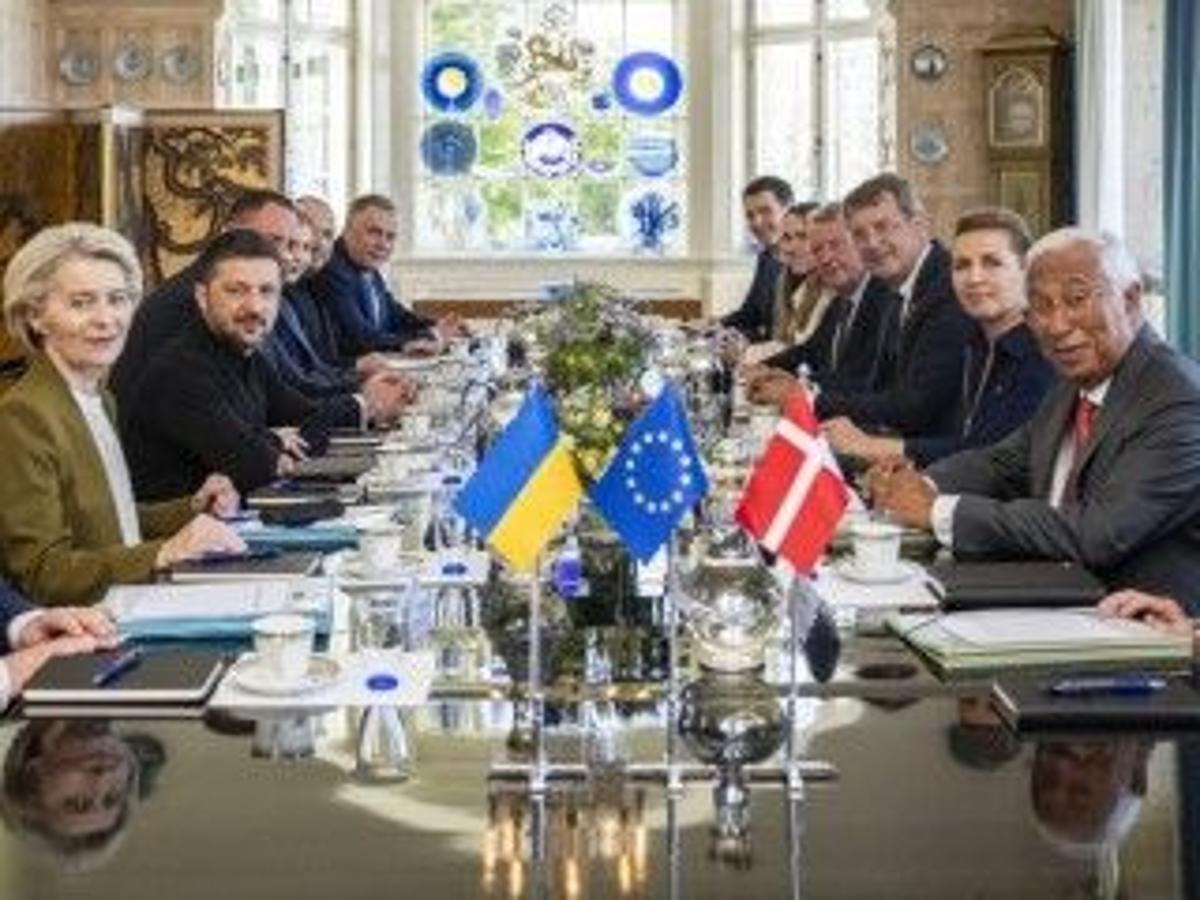
Ursula von der Leyen, Volodymyr Zelenskyy, and Mette Frederiksen with other political leaders, sitting around a table with Ukrainian, EU and Danish flags in front of them

Photo. President of Ukraine

With the end of the Cold War, the states of Central and Eastern Europe faced the necessity of defining their place within the international security environment. Most countries in the region chose to anchor their security within international organizations operating in the West. Belarus remained within the sphere of influence of the Russian Federation as a member of the Collective Security Treaty Organization, while Ukraine remained in the Kremlin’s direct sphere of influence until 2004; between 2004 and 2014, Kyiv’s pro‑Western orientation ultimately crystallized.

The process of NATO enlargement to include Central and Eastern European countries was a fundamental step toward increasing regional security. The accession of Poland, the Czech Republic, Hungary, Slovakia, Romania, Bulgaria, Estonia, Latvia, and Lithuania in 1999–2004 to the North Atlantic Treaty Organization enhanced their security and provided collective defence in the event of aggression. NATO also conducted various military operations and stabilisation missions in the Central and Eastern European region, including efforts aimed at stabilisation in Kosovo and support for counter‑terrorism activities. In response to security concerns related to the actions of the Russian Federation—particularly in the context of measures taken against Ukraine since 2014—NATO strengthened its eastern flank through the deployment of rotational military forces, the conduct of joint exercises, and the reinforcement of defensive infrastructure.

These actions constitute a comprehensive set of measures designed both to ensure military security and to promote political, economic, and social stability in Central and Eastern Europe. It should be noted that the political and security situation is subject to change, and international organisations adapt their strategies in response to new challenges and threats, inter alia through decisions taken at successive NATO summits. The Russian Federation’s aggression against Ukraine in 2022 confirmed that the principal threat to the states of Central and Eastern Europe is the Russian Federation.

In the context of NATO activities, however, an inconsistent stance among the member states of the Alliance’s eastern flank has become apparent. This is reflected either in a coherent anti‑Russian position (Estonia, Lithuania, Latvia, the Czech Republic, Romania) or in a more conciliatory approach toward Moscow (Bulgaria, Slovakia, Hungary), which may raise concerns regarding the organisation’s future unity.

EU security measures in Central and Eastern Europe

A variety of safeguarding measures are being undertaken with the aim of maintaining stability, promoting cooperation, and ensuring security in both military and civilian dimensions.

The most important initiatives in this area include:

  1. The Common Foreign and Security Policy (CFSP) – introduced by the Maastricht Treaty in 1993. The EU uses CFSP instruments to coordinate its security‑related activities in the fields of diplomacy, sanctions, political dialogue, and other tools designed to maintain peace and stability.

  2. Civilian and military missions and operations – the EU conducts various missions focused on peace‑keeping, crisis management, and strengthening the institutional capacities of state authorities in Central and Eastern Europe (e.g., observation, training, and policing missions).

  3. Financial instruments – the EU provides financial support for security in the region through mechanisms such as the European Internal Security Fund and technical‑assistance programmes.

  4. Collaboration with NATO – the EU cooperates with NATO to strengthen collective security in Central and Eastern Europe; mechanisms for cooperation exist, and member states often participate simultaneously in both EU and NATO activities.

  5. The Eastern Partnership – an EU policy covering Ukraine, Belarus, Moldova, Georgia, Armenia, and Azerbaijan, aimed at supporting political, economic, and social reforms and promoting regional cooperation and security. International organisations also employ measures such as economic sanctions and political dialogue to influence states that violate international norms.

  6. Monitoring and situation analysis – EU agencies maintain systems for monitoring and analysing the regional situation, helping to identify potential threats and enabling the adoption of effective preventive measures.

In response to the Russian Federation’s aggression against Ukraine, since February 2022 the European Union has introduced eleven packages of economic sanctions intended to weaken Russia’s economic position and resource base by denying Moscow access to modern technologies and markets, thereby limiting its ability to wage war.

Read Original Article
0

Comments

Want to join the conversation?

Loading comments...