Defense News and Headlines
  • All Technology
  • AI
  • Autonomy
  • B2B Growth
  • Big Data
  • BioTech
  • ClimateTech
  • Consumer Tech
  • Crypto
  • Cybersecurity
  • DevOps
  • Digital Marketing
  • Ecommerce
  • EdTech
  • Enterprise
  • FinTech
  • GovTech
  • Hardware
  • HealthTech
  • HRTech
  • LegalTech
  • Nanotech
  • PropTech
  • Quantum
  • Robotics
  • SaaS
  • SpaceTech
AllNewsDealsSocialBlogsVideosPodcastsDigests

Defense Pulse

EMAIL DIGESTS

Daily

Every morning

Weekly

Sunday recap

NewsDealsSocialBlogsVideosPodcasts
DefenseNewsSouth Korea’s Dilemma over Access to North Korean Media
South Korea’s Dilemma over Access to North Korean Media
Defense

South Korea’s Dilemma over Access to North Korean Media

•January 28, 2026
0
Defence24 (Poland)
Defence24 (Poland)•Jan 28, 2026

Why It Matters

Easing print‑media restrictions tests the relevance of Cold‑War‑era censorship and could reshape South Korea’s balance between security and democratic openness. The outcome will influence future reforms of the National Security Act and the country’s information‑war strategy.

Key Takeaways

  • •Rodong Sinmun reclassified to general material
  • •Access limited to 181 institutions, few copies available
  • •Online North Korean sites remain blocked by law
  • •VPNs enable citizens to bypass censorship easily
  • •Debate focuses on updating National Security Act

Pulse Analysis

For decades South Korea’s information policy has been anchored in the National Security Act, a Cold‑War relic that criminalizes possession of any material praising North Korea. The law was designed to shield the public from propaganda, granting the state tight control over both print and digital content. Over time, the rise of the internet and sophisticated VPN services eroded the practical enforceability of these bans, creating a growing gap between statutory language and everyday reality.

The December 2025 decision to reclassify Rodong Sinmun as general material represents a cautious, symbolic step toward liberalisation. By permitting the newspaper’s physical copies to be displayed in libraries and other public venues, the Lee Jae‑myung administration signals confidence in citizens’ ability to critically assess hostile narratives. Yet the reform is limited—only a handful of locations carry up‑to‑date issues, and the change does not extend to the online sphere, where North Korean sites remain inaccessible under the Information and Communications Network Act.

In an era where information flows primarily through digital channels, the coexistence of open‑shelf print access and strict web blocks appears increasingly anachronistic. Policymakers face pressure to modernise the National Security Act, distinguishing between passive consumption and active dissemination of hostile content. A nuanced framework could preserve security safeguards while restoring trust between the state and its populace, positioning South Korea as a mature democracy capable of confronting information warfare without resorting to blanket censorship.

South Korea’s dilemma over access to North Korean media

Natalia Matiaszczyk · 28 January 2026, 11:02 · 5 min read

South Korea is easing access to North Korean media, raising a key question: do Cold War era censorship laws still make sense in a digital, VPN‑driven reality?

A woman with light brown hair and wearing a light blue blazer smiles gently

For decades, South Korea has treated information from North Korea not merely as news, but as a potential security threat. Access to North Korean media has been tightly controlled under Cold War‑era laws designed to prevent propaganda from undermining the South’s political system. Yet recent policy changes signal that Seoul is cautiously rethinking this approach. The question is whether South Korea’s legal framework has begun to reflect contemporary realities, or whether it remains trapped in a logic that citizens can already bypass with a few clicks.

A longstanding regime of information control

Since the Korean War, South Korea has operated under the assumption that North Korean media constitutes psychological warfare rather than journalism. The cornerstone of this system is the National Security Act, particularly Article 7, which criminalizes the production, possession, or distribution of materials that praise or promote an “anti‑state organization”, a category that explicitly includes North Korea.

In practice, this has meant that ordinary citizens were prohibited from freely accessing North Korean newspapers, broadcasts, or other media content. Exceptions were made for journalists, researchers, and government officials, but even they were required to undergo identity checks and justify their purpose. The underlying logic was paternalistic: the state positioned itself as the gatekeeper, protecting citizens from exposure to hostile propaganda.

This logic extended into the digital age. Under the Information and Communications Network Act, South Korea’s media regulators can order Internet service providers to block websites deemed illegal under the NSA. As a result, North Korean sites such as the Rodong Sinmun or the Korean Central News Agency (KCNA) remain inaccessible from South Korean IP addresses to this day.

Image 3

The December 2025 shift: symbolic or substantive?

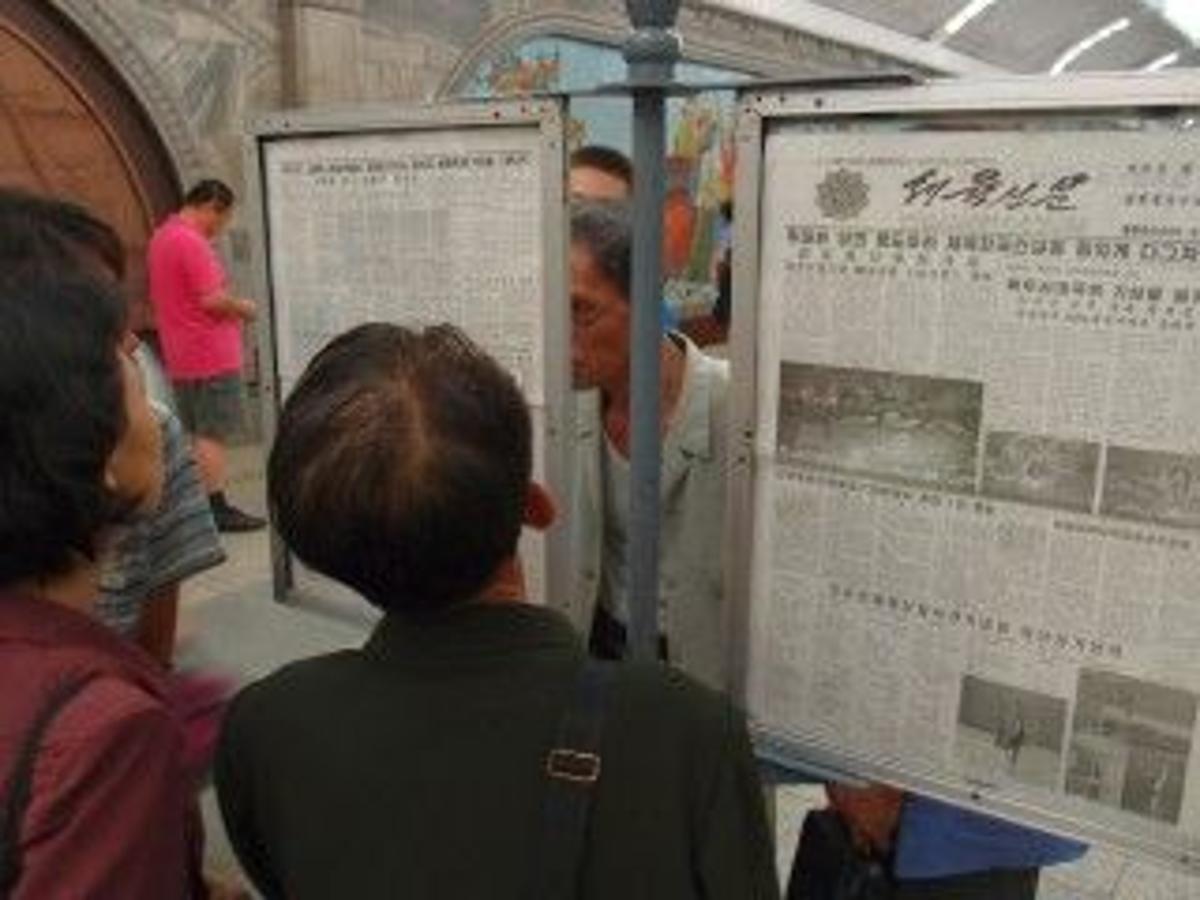
In late December 2025, the Lee Jae‑myung administration introduced a notable and historic change. North Korea’s main party newspaper, Rodong Sinmun, was reclassified from “special material” to “general material”. This administrative decision allows South Korean citizens to read the printed edition of the newspaper at 181 designated institutions, without prior approval, identity checks, or a declared research purpose – although only around 20 of these locations currently hold the most recent issues, including the National Library of Korea.

Officials framed the move as an acknowledgment of South Korea’s democratic maturity. President Lee openly criticized the previous system, arguing that it treated citizens as incapable of recognizing propaganda. The Ministry of Unification echoed this view, stating that there is now a “significant gap between current regulations and reality” in accessing the North Korean media.

Yet the practical impact remains limited. Only physical copies are affected, access is confined to specific institutions, and many libraries have yet to fully implement open‑shelf availability. In this sense, the change is as much symbolic as it is substantive: a signal of intent rather than a full liberalisation.

Law vs. Reality

Despite the easing of print‑media restrictions, South Korea’s broader censorship regime remains firmly in place. Online access to North Korean websites is still blocked, and bypassing these restrictions can carry legal risks under the National Security Act. Any expansion of access into the digital realm would require legislative amendments to the existing laws, which would be a politically sensitive and legally complex process. The ruling Democratic Party of Korea has proposed allowing South Koreans to view (but not redistribute) North Korean websites, yet this remains only an initiative.

One of the central contradictions in South Korea’s information policy is that it is increasingly unenforceable. In practice, South Koreans can already access North Korean websites using VPNs, which mask their location and bypass domestic blocks. This reality has fueled criticism that the current system is outdated, selectively enforced, and more symbolic than effective.

The law no longer serves its original purpose. Rather than undermining security, allowing direct yet controlled access to North Korean media could actually promote critical thinking and informed debate within South Korean democratic society. Historical precedent supports this stance: during the 1990s, when North Korean media was partially introduced through South Korean outlets, it did not lead to social destabilisation or political radicalisation.

Hyunki Cho, Wiceminister obrony Republiki Korei

Toward a new paradigm?

The reclassification of Rodong Sinmun suggests a subtle but important shift in how the South Korean national government views its citizens. Instead of being seen as passive audiences that must be shielded from propaganda, citizens are increasingly viewed as capable of judging hostile messages on their own. However, the coexistence of liberalised print access and restricted digital access exposes the inconsistency of the current approach. In an era where information flows are overwhelmingly online, allowing physical access while blocking websites risks rendering policy obsolete.

Revising the law does not mean abandoning security concerns. North Korea continues to engage in information warfare, and safeguards against coordinated propaganda campaigns remain necessary. But a more targeted, transparent framework – one that distinguishes between access, intent, and active dissemination – may better reflect both democratic norms and technological reality.

South Korea’s recent decision to ease access to North Korean print media marks an important psychological and political shift, even if its immediate impact is limited. It acknowledges that a confident democracy does not need to fear exposure to hostile narratives. Yet as long as online access remains banned (and easily circumvented) the legal framework will remain misaligned with reality.

The debate over North Korean media access is no longer just about security; it is about trust between the state and its citizens. Whether Seoul chooses to modernise its laws accordingly will shape not only information policy, but also the future of democracy’s condition in South Korea.

Read Original Article
0

Comments

Want to join the conversation?

Loading comments...