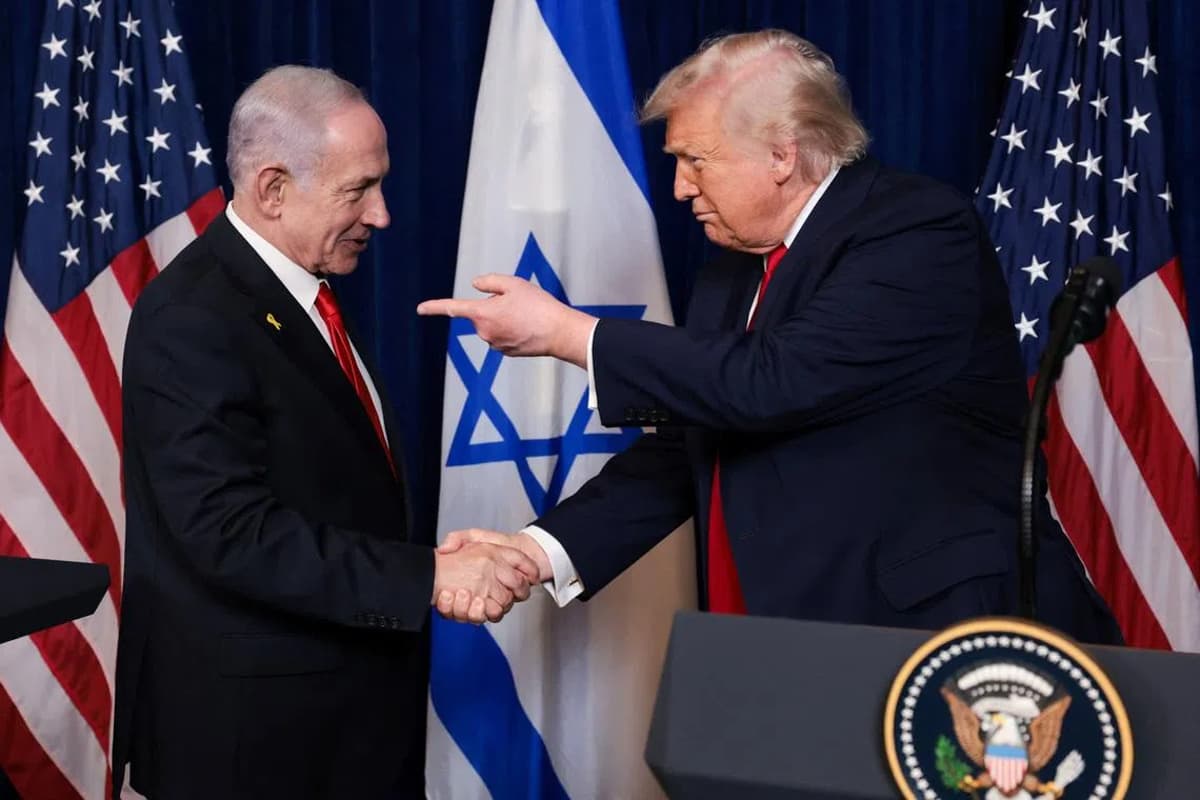
Trump Approved Iran Operation After Netanyahu Argued for Joint Killing of Khamenei, Sources Say
Why It Matters
The decision demonstrates how Israeli advocacy can shape U.S. military action, while the operation’s fallout reshapes regional security and global energy markets.
Key Takeaways
- •Trump approved US strike after Netanyahu urged killing Khamenei
- •Decapitation window moved to morning, prompting rapid decision
- •Operation aimed to cripple Iran's missile, naval, nuclear capabilities
- •Iran's leadership change uncertain; CIA predicts hardliner successor
- •Conflict caused 2,300 Iranian civilian, 13 US service deaths
Pulse Analysis
The February 27 call between President Donald Trump and Israeli Prime Minister Benjamin Netanyahu marked a rare moment of direct coordination on a high‑stakes decapitation strike. Netanyahu framed the imminent meeting of Ayatollah Ali Khamenei and his inner circle as a fleeting opportunity to eliminate Tehran’s supreme leader, linking it to past Iranian plots against Trump. Armed with fresh intelligence that the gathering had been moved forward, the president gave the green light for Operation Epic Fury, a joint U.S.–Israeli assault that would soon test the limits of his “America First” doctrine.
Strategically, the strike aimed to dismantle Iran’s ballistic‑missile infrastructure, neutralize its navy, and cripple the nuclear‑weapons pathway that Washington has long deemed an existential threat. While Israeli planners hoped the removal of Khamenei might trigger a more moderate regime, CIA analysts warned a hard‑line successor would likely consolidate power, preserving Tehran’s regional proxy network. The operation therefore balances two competing objectives: degrading Iran’s war‑fighting capacity and shaping a political outcome that could either open diplomatic channels or entrench a new generation of hardliners.
The immediate fallout reverberated through global markets, with oil prices spiking and shipping through the Strait of Hormuz briefly disrupted, adding pressure to U.S. consumers already coping with elevated fuel costs. Militarily, the United States suffered 13 service‑member fatalities and over 2,300 Iranian civilian casualties, underscoring the human toll of a limited yet intense campaign. Politically, the episode fuels debate in Washington over the prudence of unilateral strikes, the role of allied persuasion, and the long‑term strategy for containing Iran’s influence without igniting a broader regional war.


Comments
Want to join the conversation?
Loading comments...