Defense News and Headlines
  • All Technology
  • AI
  • Autonomy
  • B2B Growth
  • Big Data
  • BioTech
  • ClimateTech
  • Consumer Tech
  • Crypto
  • Cybersecurity
  • DevOps
  • Digital Marketing
  • Ecommerce
  • EdTech
  • Enterprise
  • FinTech
  • GovTech
  • Hardware
  • HealthTech
  • HRTech
  • LegalTech
  • Nanotech
  • PropTech
  • Quantum
  • Robotics
  • SaaS
  • SpaceTech
AllNewsDealsSocialBlogsVideosPodcastsDigests

Defense Pulse

EMAIL DIGESTS

Daily

Every morning

Weekly

Sunday recap

NewsDealsSocialBlogsVideosPodcasts
DefenseNewsWhat to Know About the Strait of Hormuz as Iran Plans Military Drill
What to Know About the Strait of Hormuz as Iran Plans Military Drill
DefenseGlobal Economy

What to Know About the Strait of Hormuz as Iran Plans Military Drill

•January 31, 2026
0
Military.com (Navy News)
Military.com (Navy News)•Jan 31, 2026

Why It Matters

Disruptions in the Hormuz corridor can spike oil prices and amplify geopolitical risk for global trade, prompting firms to reassess supply‑chain and security strategies.

Key Takeaways

  • •Iran plans live‑fire drill in Hormuz traffic lane.
  • •Strait handles ~5% of world oil shipments.
  • •US Central Command warns against unsafe actions near its forces.
  • •Drill could disrupt northbound commercial traffic.
  • •Regional tensions rise amid Iran’s protest crackdown.

Pulse Analysis

The Strait of Hormuz remains a chokepoint for energy logistics, funneling about five percent of the world’s oil and a larger share of Asian‑bound petroleum products. Its narrow 33‑kilometre bottleneck forces super‑tankers into a tightly regulated traffic separation scheme, making any maritime disturbance instantly visible to global markets. Analysts watch the waterway closely because even brief interruptions can reverberate through futures contracts and freight rates, underscoring the strategic value of secure passage.

Iran’s scheduled live‑fire exercise, likely conducted by the Islamic Revolutionary Guard Corps, targets the northern lane of the separation scheme where outbound vessels travel toward the Gulf of Oman. By broadcasting coordinates to mariners, Tehran signals intent while testing its naval capabilities in a high‑stakes environment. The U.S. Central Command’s stern warning highlights the risk of accidental collisions or deliberate provocations that could draw U.S. Fifth Fleet assets into a confrontational posture. Such drills test the limits of international maritime law and raise the probability of miscalculation.

For investors and policymakers, the drill amplifies existing geopolitical risk premiums. Energy traders may hedge against potential supply shocks, while shipping firms could reroute vessels, incurring higher fuel costs and longer transit times. The broader context—Iran’s internal unrest and nuclear negotiations—means the Hormuz episode could serve as a barometer for future escalation. Companies with exposure to Middle‑East oil supply chains should monitor diplomatic channels and contingency plans, as even a short‑lived disruption can reshape market dynamics for weeks.

What to Know About the Strait of Hormuz as Iran Plans Military Drill

Associated Press · By Jon Gambrell · Published January 31, 2026 at 8:06 am EDT

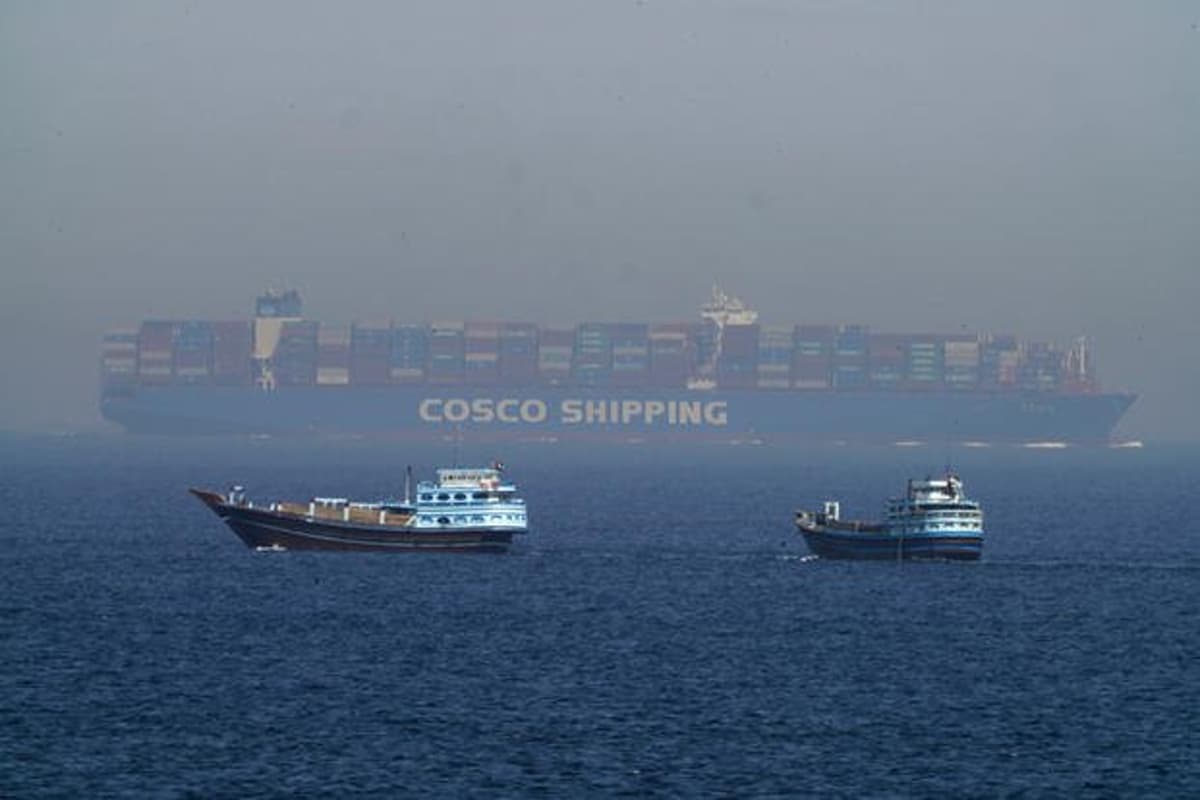
Two boats are on the water with a large cargo ship labeled COSCO SHIPPING in the background

FILE – Two traditional dhows sail by a large container ship in the Strait of Hormuz, May 19, 2023. (AP Photo/Jon Gambrell, File)

DUBAI, United Arab Emirates (AP) — The Strait of Hormuz, the narrow mouth of the Persian Gulf, again has become a focus of tensions as Iran prepares to launch a military drill that could see fire into a lane crucial for global shipping.

Iran has warned ships that it will conduct a live‑fire drill Sunday and Monday in the strait, which sees a fifth of all oil traded pass through the tight corridor between the Islamic Republic and Oman.

The U.S. military’s Central Command issued its own warning early Saturday, telling Tehran that any “unsafe and unprofessional behavior near U.S. forces, regional partners or commercial vessels increases risks of collision, escalation and destabilization.”

Here’s what to know about the drill, the U.S. warning, what caused the tensions and what might happen next in the Strait of Hormuz.

A key waterway for global shipping

The Strait of Hormuz resembles a bend looking down from space. Its narrowest point is just 33 kilometers (21 miles) wide. It flows from the Persian Gulf into the Gulf of Oman, from where ships can travel to the rest of the world. While Iran and Oman have territorial waters in the strait, it is viewed as an international waterway that all ships can ply. The United Arab Emirates, home to the skyscraper‑studded city of Dubai, also sits near the waterway.

The strait long has been important for trade

The Strait of Hormuz through history has been important for trade, with ceramics, ivory, silk and textiles moving from China through the region. In the modern era of super‑tankers, the narrow strait proved deep and wide enough to allow oil to pass through it.

While there are pipelines in Saudi Arabia and the UAE that can avoid the passage, the U.S. Energy Information Administration says “most volumes that transit the strait have no alternative means of exiting the region.” The vast majority of the oil and gas moving through the strait goes to markets in Asia. Threats to the route have spiked global energy prices in the past, including during the 12‑day war Israel launched against Iran in June.

Iran plans drill that could enter trade route

A notice to mariners sent Thursday by radio warned that Iran planned to conduct “naval shooting” in the Strait of Hormuz on Sunday and Monday. The coordinates provided by the message put the drill potentially going into what is known as the Traffic Separation Scheme — a 3.2‑kilometer‑ (2‑mile‑) wide, two‑lane system in which ships coming into the Persian Gulf go north and ships exiting onto the Gulf of Oman go south. That northern lane is within the coordinates of the drill.

While Iran has provided no other public details about the drills, it will likely involve the country’s paramilitary Revolutionary Guard. The Guard operates a fleet of small fast‑attack vessels in the strait that routinely have tense encounters with the U.S. Navy.

US issues warning over the Iranian drill

Early Saturday, the U.S. military’s Central Command issued a strongly worded warning to Iran and the Revolutionary Guard over the drill. While acknowledging Iran’s “right to operate professionally in international airspace and waters,” it warned against interfering with or threatening American warships or passing commercial vessels. The command, which oversees the U.S. Navy’s Bahrain‑based 5th Fleet, said it “will not tolerate unsafe (Guard) actions” that could include its aircraft or vessels getting too close to American warships or pointing weapons toward them.

The command added that “the U.S. military has the most highly trained and lethal force in the world.”

Tensions high over Iran’s protest crackdown, nuclear program

U.S. President Donald Trump has threatened to launch a military strike against Iran after its bloody crackdown on nationwide protests. He has laid down two red lines — the killing of peaceful protesters and Iran launching a wave of mass executions of those held.

In recent days, he has also highlighted the fate of Iran’s nuclear program. The USS Abraham Lincoln aircraft carrier and supporting guided‑missile destroyers are now in the Arabian Sea where they could launch an attack if Trump calls for it.

Iran has warned it could launch its own pre‑emptive strike or target American interests across the Middle East and Israel. While the 12‑day war saw Iran fire ballistic missiles and Israel target its stockpile, Tehran maintains an arsenal of short‑ and medium‑range missiles that could hit surrounding Gulf Arab states.

Read Original Article
0

Comments

Want to join the conversation?

Loading comments...