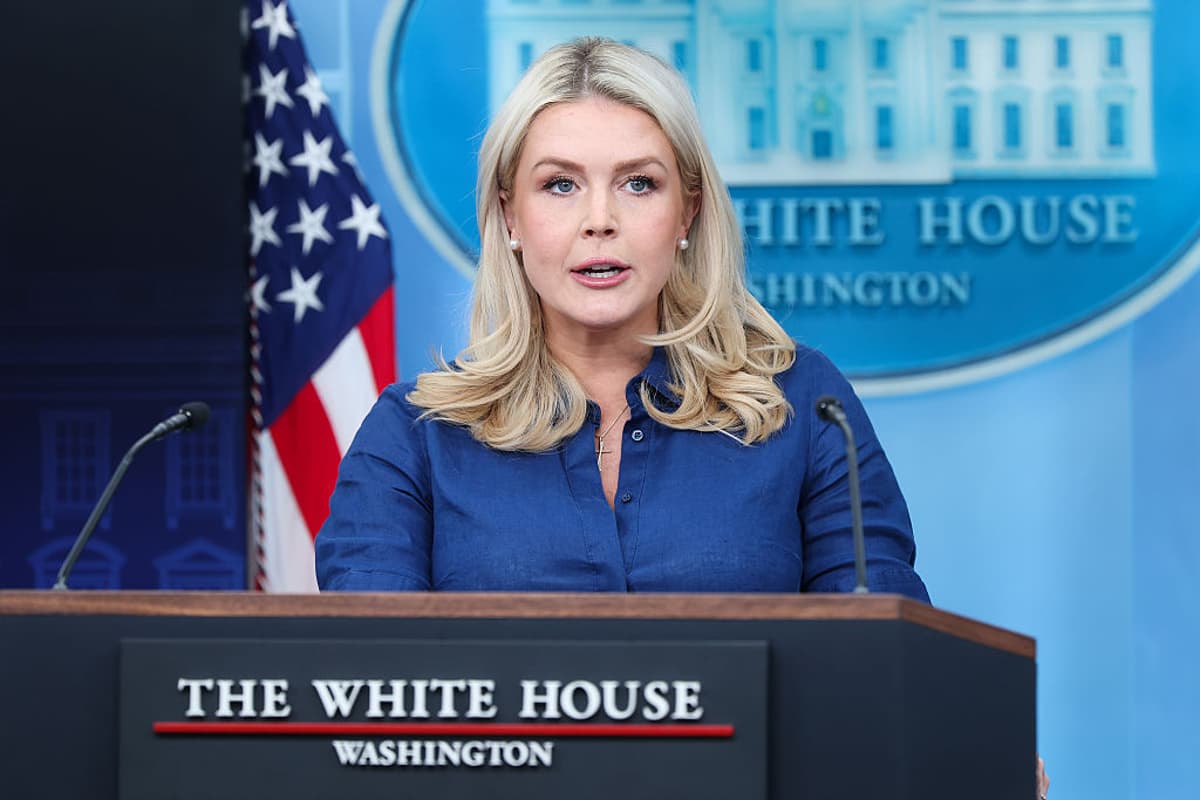
White House: Strait of Hormuz Closure 'Completely Unacceptable' Under Ceasefire
Why It Matters
Keeping the Strait of Hormuz open is vital for global oil flow; a U.S.‑Iran ceasefire that restores free passage could stabilize energy markets and reduce escalation risk.
Key Takeaways
- •Leavitt labeled any Iranian closure of the Strait 'completely unacceptable'
- •U.S. negotiators, including JD Vance and Jared Kushner, to meet in Islamabad
- •Trump claims U.S. bombardments forced Iran into ceasefire agreement
- •Iran rejected initial 10‑point ceasefire, offered revised, more reasonable proposal
- •President Trump floated idea of joint tolls for Strait passage
Pulse Analysis
The Strait of Hormuz, a chokepoint through which roughly a fifth of the world’s oil passes, has re‑emerged as a flashpoint in the latest U.S.–Iran confrontation. After weeks of intensive aerial campaigns that the White House claims crippled Iran’s missile and drone capabilities, Tehran announced a cease‑fire that the administration framed as a diplomatic win. Leavitt’s remarks underscore Washington’s strategic priority: preventing any Iranian move that could block the waterway, which would trigger sharp spikes in crude prices and force shipping reroutes.
Negotiations are now shifting from the battlefield to the conference table. A high‑profile U.S. team—Vice President JD Vance, former president’s son‑in‑law Jared Kushner, and Middle‑East envoy Steve Witkoff—will convene with Iranian officials in Islamabad. While Iran’s first 10‑point cease‑fire draft was rejected, a second, more flexible proposal has been labeled “workable” by the Trump administration. The dynamics reveal a blend of hard‑line pressure and diplomatic outreach, with the president still weighing unconventional ideas such as joint tolls for strait passage, even as he publicly insists on unrestricted access.
The outcome of these talks carries weight far beyond the immediate region. An open Hormuz corridor reassures global energy traders, curbs speculative price surges, and reduces the risk of naval incidents that could draw NATO or other powers into a broader conflict. For U.S. businesses, a stable strait means predictable shipping costs and supply‑chain continuity. Conversely, any renewed closure or toll regime could reshape freight routes, elevate insurance premiums, and prompt a reevaluation of energy‑security strategies across the Atlantic and Pacific markets.
White House: Strait of Hormuz Closure 'Completely Unacceptable' Under Ceasefire
Comments
Want to join the conversation?
Loading comments...