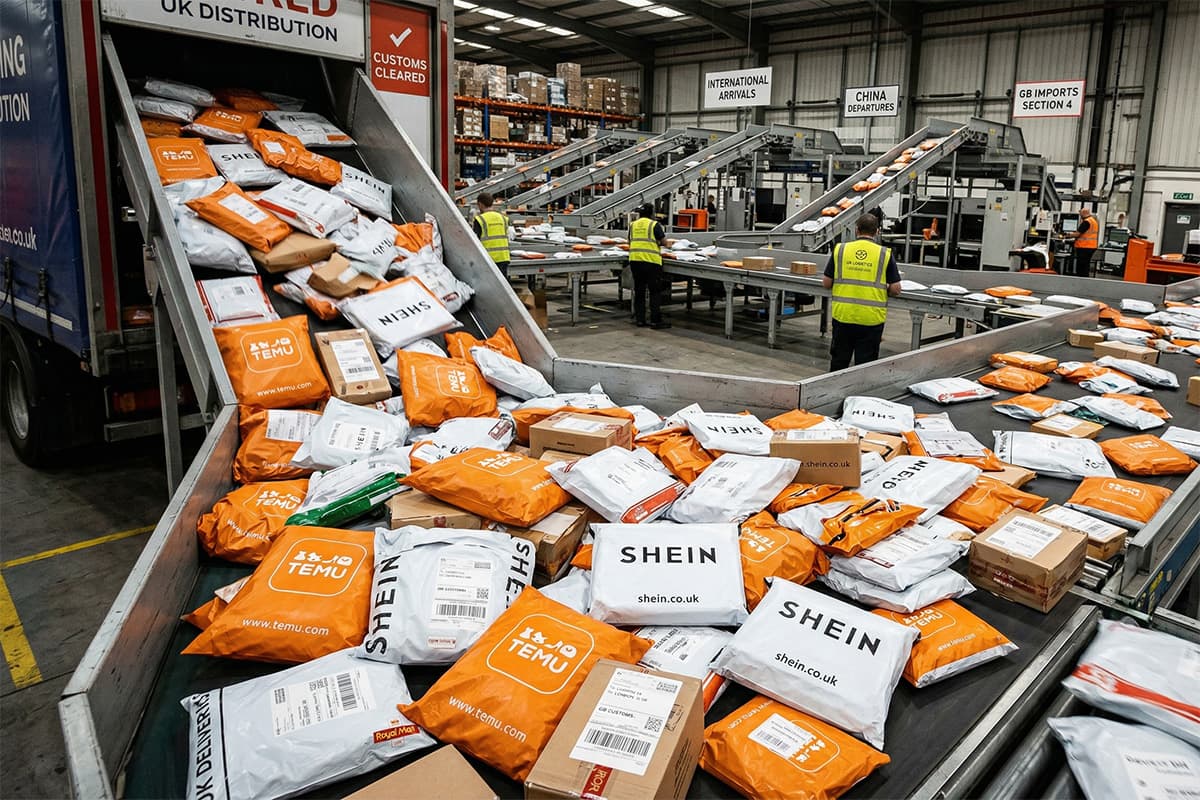
50% Shoppers Back Regulations to Stop Cheap Online Goods Flooding the UK
Why It Matters
The rule’s continuation threatens domestic retailers’ margins and could keep low‑price imports suppressing UK high‑street recovery, while stricter regulation could rebalance competition and protect local jobs.
Key Takeaways
- •Over half of UK shoppers want de‑minimis rule changed
- •68% of Gen Z support stricter low‑value import limits
- •Temu US daily active users fell 52% after rule removal
- •SHEIN UK sales exceed £2bn (~$2.5bn), overtaking Boohoo
- •De‑minimis exemption stays until 2029, despite retailer pressure
Pulse Analysis
The surge of ultra‑cheap platforms such as Temu and SHEIN has reshaped European e‑commerce, exploiting the de‑minimis exemption that lets parcels under £135 enter duty‑free. While price‑sensitive consumers welcome sub‑£20 items, the policy creates an uneven playing field for home‑grown retailers who must shoulder higher import costs and compliance burdens. Recent RTS polling reveals a clear consumer split: more than half demand regulatory action, and Gen Z—who account for the bulk of cross‑border purchases—are the most vocal.
In the United States, the abrupt removal of the de‑minimis loophole caused Temu’s daily active users to tumble 52% and SHEIN’s by 25%, illustrating how quickly demand can contract when price advantages evaporate. UK retailers fear a similar backlash; the exemption, slated to remain until 2029, shields low‑value imports that undercut domestic pricing, eroding margins for chains like Primark, Currys, and Next. If the UK follows the U.S. path, it could spur a recalibration of pricing strategies, encourage investment in local supply chains, and reduce the flood of low‑quality, fast‑fashion goods that strain sustainability goals.
Policymakers now face a balancing act: protect consumers from inflationary pressures while safeguarding the high street’s long‑term viability. Tightening the de‑minimis threshold or introducing tiered duties could level the competitive landscape without dramatically raising consumer prices. Retailers, meanwhile, should diversify sourcing, enhance omnichannel experiences, and leverage data‑driven personalization to retain price‑sensitive shoppers. As the debate unfolds at RTS 2026, the outcome will signal whether the UK will prioritize market fairness and domestic employment over the allure of ultra‑low‑cost imports.
50% Shoppers back regulations to stop cheap online goods flooding the UK
Comments
Want to join the conversation?
Loading comments...