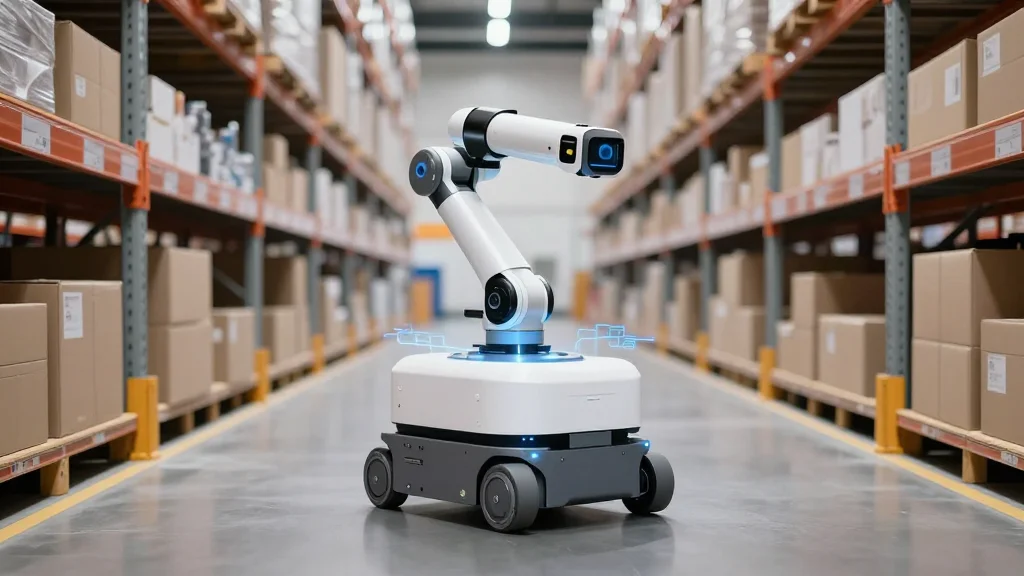
SAP and Cyberwave Deploy Fully Autonomous AI Robots in Live German Warehouse

Companies Mentioned
Why It Matters
The deployment illustrates how AI‑driven robotics can move beyond controlled labs into the unpredictable reality of e‑commerce fulfillment. By cutting training time to hours, retailers can react faster to seasonal demand spikes, new product launches, and supply‑chain disruptions. Moreover, the partnership leverages SAP’s extensive enterprise customer base, potentially accelerating adoption across thousands of warehouses worldwide. For the broader e‑commerce ecosystem, the technology promises to reshape labor dynamics, reduce error rates, and improve sustainability through optimized packaging and reduced waste. As retailers chase ever‑shorter delivery windows, autonomous robots that learn on the fly could become a cornerstone of next‑generation logistics strategies.
Key Takeaways
- •SAP and Cyberwave deployed fully autonomous AI robots in a live warehouse in St. Leon‑Rot, Germany.
- •Robots perform box folding, packaging, labeling and shipping without hand‑coded instructions.
- •Cyberwave’s platform cuts robot‑training time from weeks to hours, enabling non‑expert operators.
- •Integration uses SAP Logistics Management, SAP Embodied AI Service and SAP Business Technology Platform.
- •No specific throughput or cost‑saving figures were disclosed; analysts expect measurable efficiency gains.
Pulse Analysis
SAP’s entry into Physical AI marks a strategic pivot from pure software to integrated hardware solutions, echoing moves by rivals like Amazon and Alibaba that have long invested in warehouse robotics. By embedding AI capabilities within its logistics suite, SAP can offer a turnkey automation layer to its massive enterprise client base, effectively lowering the barrier to entry for mid‑size retailers that lack in‑house robotics expertise.
Historically, warehouse automation has been dominated by point solutions that require extensive custom engineering. Cyberwave’s claim of hour‑long training represents a potential disruption to that model, shifting value from engineering hours to data collection and model refinement. If the technology delivers on its promise at scale, it could compress the total cost of ownership for robotic fleets, making them viable for a broader segment of the market.
Looking ahead, the partnership’s success will hinge on measurable performance data. Retailers will demand proof of ROI in terms of order‑throughput, labor cost reduction and error mitigation. Should SAP and Cyberwave publish robust metrics, the solution could become a de‑facto standard for enterprise fulfillment, prompting competitors to accelerate their own AI‑robotics roadmaps. Conversely, any integration hiccups or under‑performance could reinforce skepticism around fully autonomous systems in high‑variability environments, slowing broader adoption.
SAP and Cyberwave Deploy Fully Autonomous AI Robots in Live German Warehouse
Comments
Want to join the conversation?
Loading comments...