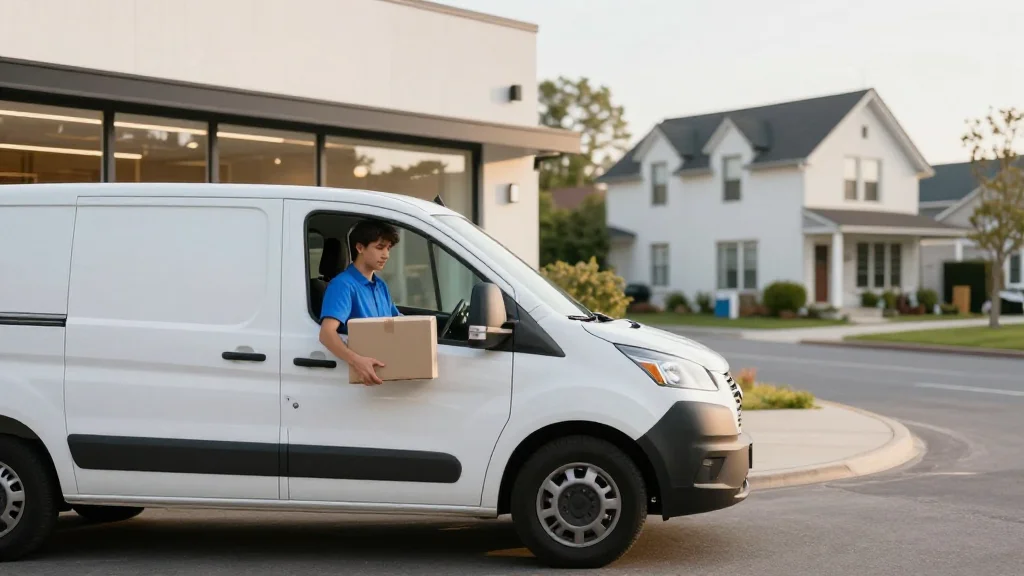
Target Expands Last‑Mile Delivery Direct with Shipt, Targeting 100 Stores by 2026

Companies Mentioned
Why It Matters
The expansion signals a shift toward store‑based fulfillment as a viable alternative to building new warehouses, potentially reshaping the economics of fast delivery. By cutting per‑package costs, Target can improve margins while offering consumers the convenience that has become a baseline expectation. If successful, the model could pressure Amazon and Walmart to further integrate their brick‑and‑mortar assets into last‑mile logistics, intensifying competition for driver talent and accelerating the gig‑economy’s role in retail supply chains.
Key Takeaways
- •Target will grow Last Mile Delivery Direct from 6 to >100 stores by end‑2026.
- •Program will operate in roughly 50 U.S. markets, adding 20 metro areas this spring.
- •Using Shipt drivers cuts Target’s cost per package by about $2.50.
- •Coverage of next‑day shipments expected to rise from 50% to over 60% of U.S. households.
- •Pilot in Chicago showed a five‑fold increase in local order capacity.
Pulse Analysis
Target’s decision to lean on Shipt’s driver network reflects a broader industry trend: retailers are repurposing existing storefronts as micro‑fulfillment centers to sidestep the massive capital expenditures required for new distribution hubs. Historically, fast‑delivery leaders like Amazon invested billions in dedicated facilities and automation. Target’s approach, by contrast, leverages assets already on its balance sheet—store real estate and a pre‑existing gig workforce—thereby reducing upfront risk.
The $2.50 per‑package saving may appear modest, but multiplied across Target’s roughly 1.5 billion annual shipments, it translates into multi‑hundred‑million‑dollar efficiency gains. Those savings could be reinvested in price competitiveness or passed to consumers, both of which are critical in a market where delivery speed is a key differentiator. Moreover, the program’s incremental rollout allows Target to fine‑tune its store‑selection algorithm, learning which locations balance inventory depth, staffing, and geographic proximity.
Competitive dynamics will intensify. Amazon’s vast network still offers unmatched scale, but its cost structure is increasingly scrutinized by regulators and labor groups. Walmart’s hybrid model may feel pressure to adopt a more store‑centric strategy if Target demonstrates superior cost efficiency. Ultimately, the success of Target’s Last Mile Delivery Direct could catalyze a wave of similar initiatives, prompting a re‑evaluation of how brick‑and‑mortar assets are deployed in the e‑commerce era.
Target expands Last‑Mile Delivery Direct with Shipt, targeting 100 stores by 2026
Comments
Want to join the conversation?
Loading comments...