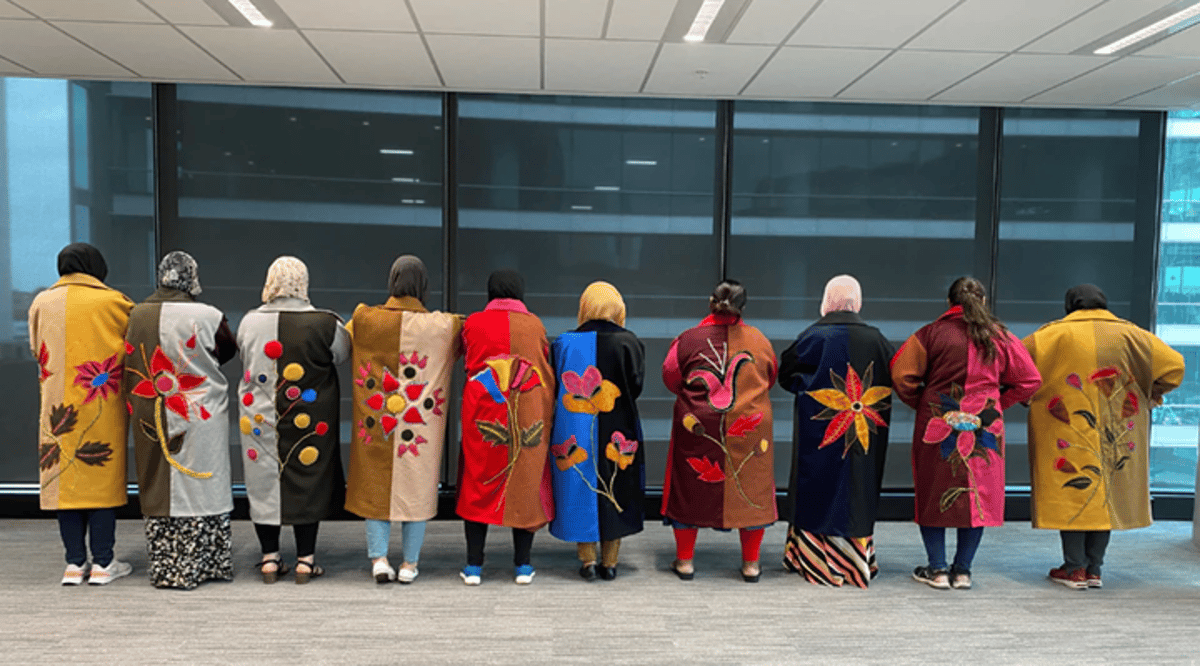
The Social Outfit CEO on Building Commercial Success Through an Ethical Model
•February 4, 2026
0
Companies Mentioned


Why It Matters
The model shows that purpose‑driven fashion can achieve commercial viability and measurable social impact, offering a replicable blueprint for the broader industry.
Key Takeaways
- •Vertically integrated local production reduces lead times.
- •Employs refugee women, paying $2M wages since 2014.
- •Uses donated deadstock fabrics for sustainable inventory.
- •Offers retail and sewing training, boosting employment pathways.
- •Aims to fill Australian fashion skill shortages.
Pulse Analysis
Australian fashion has long wrestled with the tension between sustainability and profitability, often treating ethical sourcing as a peripheral add‑on. The Social Outfit flips that narrative by embedding social impact at the core of its business architecture. By maintaining a fully owned workroom and retail front, the company sidesteps the delays and cost overruns typical of offshore production, delivering a customer experience indistinguishable from mainstream stores while championing a purpose‑first ethos. This hybrid structure positions the brand to meet consumer expectations for speed and quality without compromising its mission.
Operationally, the outfit’s vertical integration enables rapid response to demand: stocked dead‑stock fabrics can be re‑cut and sewn in‑house, turning a missing size into a stocked SKU within two weeks. Parallel to this efficiency, the organization runs two formal training pathways—retail onboarding for migrant workers and an industrial sewing program partnered with TAFE NSW. Since 2014, more than 125 refugees and migrants have earned over $2 million in wages, with 83% reporting their first Australian job through the initiative. The hands‑on contract walkthroughs and external support services illustrate a holistic employment model that builds both skill and confidence.
The broader implication for the sector is profound. As senior seamstresses retire and junior talent pipelines shrink, The Social Outfit’s model offers a scalable solution that couples local production with talent development. By proving that commercial viability, environmental stewardship, and community employment can coexist, the company provides a template for larger fashion houses seeking to diversify supply chains and meet ESG expectations. If replicated, such ecosystems could reshape Australian manufacturing, reduce reliance on offshore factories, and create a new standard where profit and purpose reinforce each other.
The Social Outfit CEO on building commercial success through an ethical model
0
Comments
Want to join the conversation?
Loading comments...