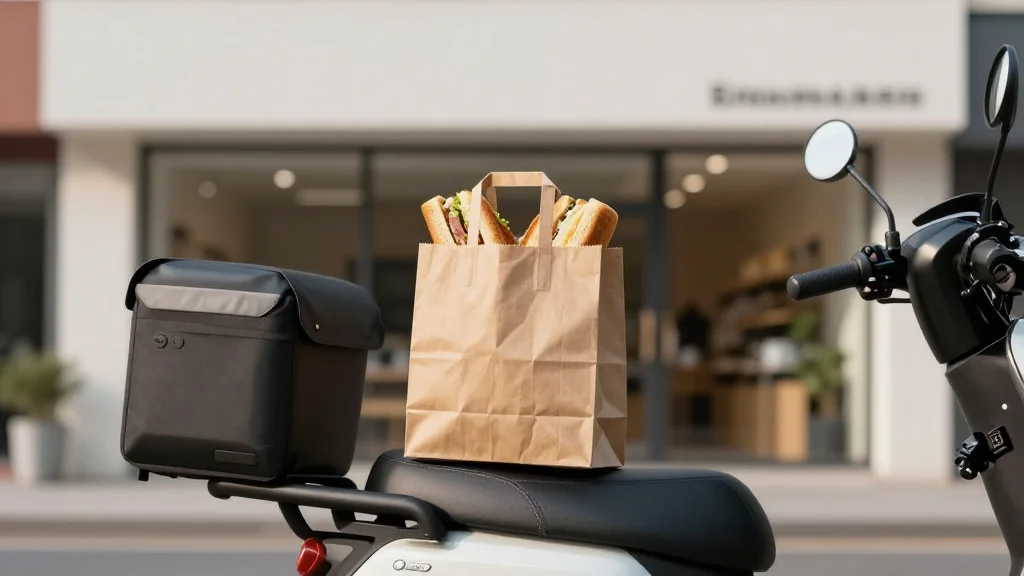
Walmart Launches In‑Store Express Delivery for Subway, Targeting 1,400 Stores by Summer

Companies Mentioned
Why It Matters
The move signals Walmart’s aggressive push into omnichannel fulfillment, blurring the line between grocery and restaurant delivery. By leveraging its massive brick‑and‑mortar footprint, Walmart can offer sub‑30‑minute meals without the high fees that dominate third‑party platforms, giving price‑sensitive consumers a low‑cost alternative. If successful, the model could force other big‑box retailers to integrate food‑service partners into their delivery ecosystems, intensifying competition for companies like DoorDash and Uber Eats and reshaping how quick‑service restaurants think about distribution.
Key Takeaways
- •Walmart launches Subway express delivery in six states, targeting 1,400 stores by summer
- •Orders delivered in 30 minutes or less for a flat fee that matches in‑store pricing
- •Subway has been an in‑store tenant since 2004 and is Walmart’s largest restaurant partner
- •Walmart’s Express Delivery network uses Spark contractors and store staff, with AI assistant Sparky in development
- •Executives cite potential to boost basket size and challenge traditional food‑delivery platforms
Pulse Analysis
Walmart’s entry into restaurant delivery is less about adding a new revenue stream than about reinforcing its core value proposition: low‑cost, ultra‑convenient fulfillment. By folding Subway into its existing Express Delivery infrastructure, Walmart sidesteps the high commission structures that have eroded margins for third‑party platforms. The flat‑fee model, coupled with menu‑price parity, positions Walmart as a price‑leader in a market where consumers are increasingly price‑sensitive after a year of inflationary pressure.
Historically, Walmart’s logistics advantage has been its dense store network and sophisticated inventory systems. Extending that advantage to prepared food leverages the same proximity and real‑time inventory visibility, but it also introduces new operational complexities—temperature control, food safety compliance, and coordination with franchisees. The requirement that Subway franchisees inside Walmart adopt the retailer’s delivery system mitigates some friction but could strain relationships if perceived as an added burden.
Looking ahead, the success of the Subway pilot will likely dictate the pace of further restaurant integrations. Competitors such as Target and Costco have hinted at similar experiments, and a rapid rollout could spark a wave of in‑store food‑service partnerships across the sector. For Subway, the partnership offers a lifeline amid a challenging quick‑service landscape, providing a new distribution channel without the heavy marketing spend required for standalone delivery apps. Ultimately, Walmart’s strategy could redefine the economics of last‑mile delivery, forcing the broader industry to rethink who owns the customer’s doorstep.
Walmart Launches In‑Store Express Delivery for Subway, Targeting 1,400 Stores by Summer
Comments
Want to join the conversation?
Loading comments...