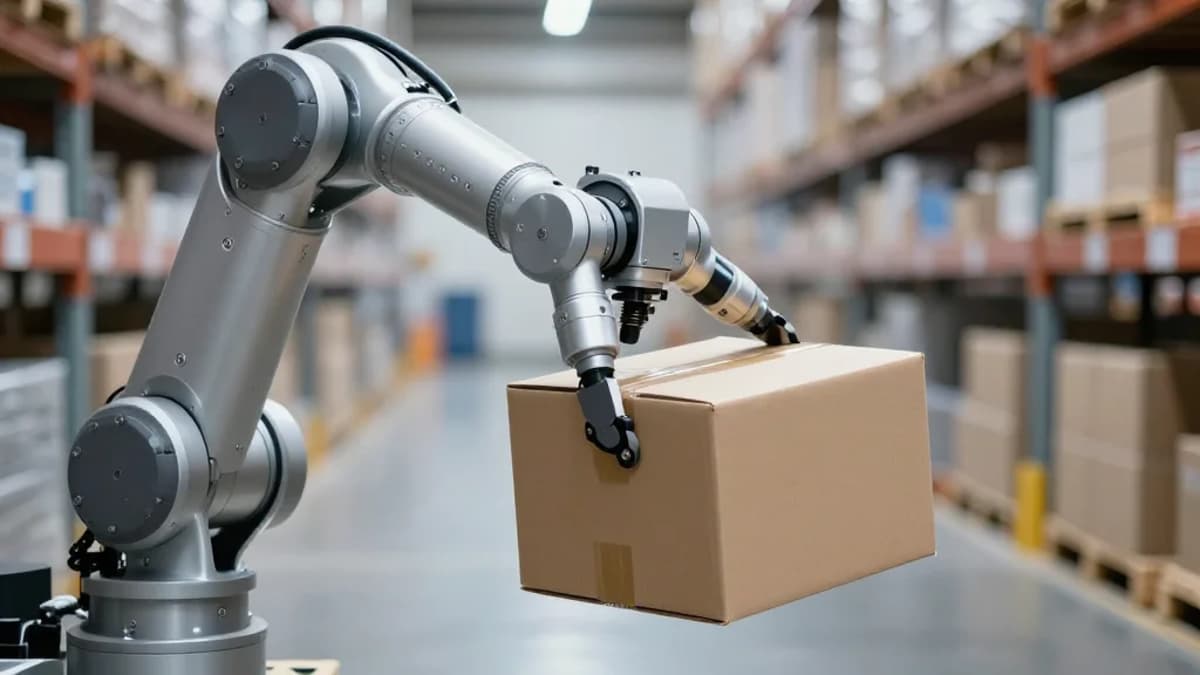
Walmart to Add Automation, Robotics to Louisiana Distribution Center
•February 9, 2026
0
Companies Mentioned


Why It Matters
Doubling capacity and automating processes strengthens Walmart’s supply‑chain efficiency, lowering costs while reshaping its labor model. The move signals a wider industry shift toward high‑tech logistics to meet growing e‑commerce demand.
Key Takeaways
- •Walmart invests $330 million in Opelousas distribution center.
- •Automation will double shipping capacity at the facility.
- •Project part of modernizing all 42 regional centers.
- •Workforce shift toward higher‑skilled automation roles.
- •Over 60% of stores already benefit from automated centers.
Pulse Analysis
Walmart’s $330 million infusion into its Opelousas hub underscores a decisive pivot toward advanced logistics technology. By integrating autonomous forklifts, sensor‑based inventory tracking, and robotic sortation, the retailer aims to compress order‑to‑shelf cycles and boost throughput. This modernization aligns with a broader corporate agenda to upgrade all 42 regional distribution centers, positioning Walmart to handle higher volumes as consumer expectations for rapid delivery intensify.
The operational gains extend beyond speed. Doubling the center’s shipping capacity translates into measurable cost reductions, echoing the 60% of U.S. stores already benefiting from automated freight handling. Moreover, the initiative reshapes Walmart’s labor strategy, moving employees from manual tasks to roles that require technical proficiency in robotics maintenance and data analytics. This upskilling not only mitigates potential job displacement but also cultivates a more resilient workforce capable of managing sophisticated supply‑chain ecosystems.
Industry observers view Walmart’s automation drive as a bellwether for retail logistics. Competitors are accelerating investments in AI‑powered warehousing and last‑mile delivery solutions to keep pace. As the line between brick‑and‑mortar and e‑commerce blurs, retailers that embed scalable, technology‑first distribution networks will secure cost advantages and customer loyalty. Walmart’s phased rollout offers a replicable model, suggesting that the next wave of supply‑chain transformation will be defined by integrated robotics, real‑time data, and a workforce equipped for the digital age.
Walmart to add automation, robotics to Louisiana distribution center
0
Comments
Want to join the conversation?
Loading comments...