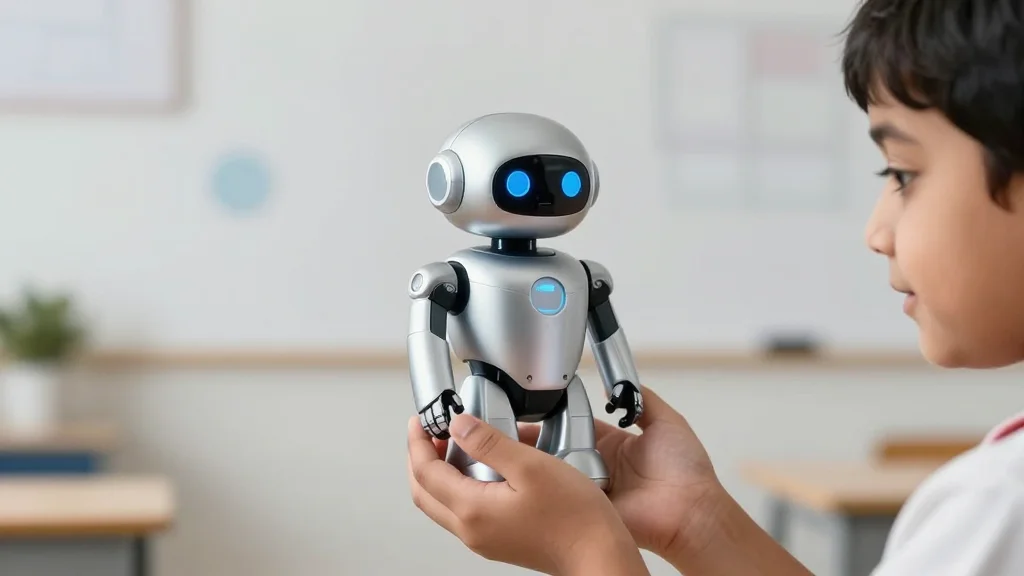
CBSE Mandates AI Integration Across K‑12 Maths and Science Curriculum

Why It Matters
Embedding AI and computational thinking at the K‑12 level reshapes the skill pipeline for a country that produces over 1.5 million engineering graduates annually. By standardizing AI exposure across subjects, CBSE aims to democratize access to future‑ready competencies, reducing the urban‑rural divide that has long characterized Indian education. The directive also creates a sizable market for EdTech firms that can deliver compliant content, teacher‑training solutions and assessment tools. Early movers that align their products with CBSE’s framework could secure long‑term contracts with thousands of schools, while laggards risk being sidelined as the board tightens compliance checks.
Key Takeaways
- •CBSE orders AI and computational thinking integration into maths, science, social studies and languages
- •Curriculum applies to Classes 3‑8 for the 2026‑27 session
- •Schools must run teacher‑training workshops and submit top three student AI projects for national assessment
- •Policy targets over 200,000 affiliated schools, affecting roughly 30 million students
- •EdTech firms see a new $9 billion‑plus market opportunity for AI‑aligned content and tools
Pulse Analysis
CBSE’s AI mandate is more than a curricular tweak; it is a strategic lever to align India’s education system with the country’s broader AI ambition. The government’s National AI Strategy, unveiled in 2023, set a goal of positioning India among the top three AI talent hubs by 2030. By institutionalizing AI concepts at the primary and secondary levels, the board is creating a feeder pipeline that could reduce the current talent gap in AI research and industry.
Historically, curriculum reforms in India have struggled with uneven implementation, especially in under‑resourced districts. The success of this initiative will hinge on the effectiveness of the planned workshops and the availability of low‑cost, offline‑compatible teaching aids. EdTech startups that can bundle AI lessons with minimal hardware requirements—such as smartphone‑based simulations or printable activity kits—will likely dominate the early market.
From a competitive standpoint, global players like Byju's, Unacademy and Vedantu are already piloting AI‑driven modules, but the CBSE directive forces them to align with a standardized framework, potentially leveling the playing field for smaller, niche providers. In the next 12‑18 months, we can expect a wave of partnerships between the board, state education departments and private vendors to co‑create localized content, especially in regional languages. The policy’s long‑term impact will be measured not just by student test scores but by the emergence of a new generation of AI‑savvy innovators who can drive India’s digital economy forward.
CBSE Mandates AI Integration Across K‑12 Maths and Science Curriculum
Comments
Want to join the conversation?
Loading comments...