Microsoft Unveils Seven In‑House AI Models to Boost Azure Enterprise Adoption

Companies Mentioned


Why It Matters
Microsoft’s introduction of proprietary AI models directly addresses a critical pain point for enterprise customers: the high cost and limited control associated with third‑party AI services. By internalizing model development, Azure can offer more predictable pricing, tighter security, and deeper integration with existing Microsoft services, potentially accelerating cloud migration for large organizations. The move also signals a strategic pivot from being a consumer of external AI to a creator, which could reshape the balance of power among the major cloud providers. The quantum chip announcement adds a longer‑term dimension, suggesting Microsoft aims to couple AI workloads with quantum acceleration, a capability that could give early adopters a competitive edge in complex optimization problems. Together, these initiatives could boost Azure’s market share, improve Microsoft’s profit margins, and influence the broader enterprise AI ecosystem, prompting rivals to accelerate their own in‑house model programs.
Key Takeaways
- •Microsoft unveiled seven new in‑house AI models at Build, including the MAI‑Thinking‑1 foundation model.
- •Company claims the new models deliver up to 10× better cost efficiency versus OpenAI’s GPT‑5‑5.
- •Microsoft still owns 27% of OpenAI and holds an exclusive IP license through 2032.
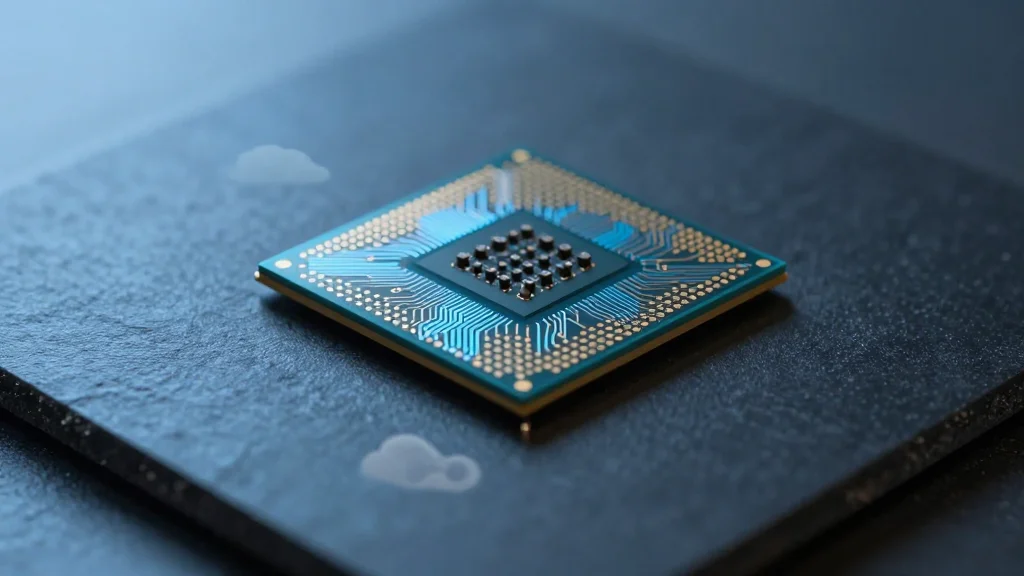
- •Majorana 2 quantum chip introduced with qubits 1,000× more stable, targeting a scalable quantum computer by 2029.
- •In‑house models aim to lower Azure AI licensing costs and improve margins for enterprise customers.
Pulse Analysis
Microsoft’s decision to build its own AI stack reflects a maturation of the cloud AI market. Early in the AI boom, the company leveraged OpenAI’s models to quickly attract developers to Azure, but that strategy left it vulnerable to pricing pressure and competitive encroachment as OpenAI opened its APIs to rivals. By investing in proprietary models, Microsoft is attempting to capture the full value chain—from model training to inference—thereby insulating Azure from external cost shocks and creating a differentiated offering for enterprises that prioritize data sovereignty and cost predictability.
Historically, cloud providers that have owned their core technologies—Amazon’s DynamoDB, Google’s TensorFlow—have been able to bundle services more tightly and extract higher margins. Microsoft’s MAI‑Thinking‑1 could become the Azure equivalent of these platform pillars, especially if it proves superior on benchmark tasks and integrates seamlessly with Azure’s existing AI services like Azure Machine Learning and Cognitive Services. The ten‑fold cost‑efficiency claim is ambitious; real‑world validation will depend on workload diversity and the ability to scale the models without sacrificing accuracy.
The quantum chip debut adds a speculative but potentially transformative layer. If Microsoft can deliver a quantum‑accelerated AI pipeline, it could open new markets in drug discovery, logistics, and financial modeling—areas where enterprise customers are already willing to pay a premium for performance gains. However, the 2029 timeline suggests this is a long‑term play, and short‑term revenue impact will hinge on how quickly the AI models gain traction. Competitors are unlikely to sit idle; AWS and Google Cloud have already announced their own proprietary model families. The next few quarters will reveal whether Microsoft’s dual strategy of AI independence and quantum ambition can translate into measurable market share gains for Azure.
Microsoft Unveils Seven In‑House AI Models to Boost Azure Enterprise Adoption
Comments
Want to join the conversation?
Loading comments...