AI Coach BioCoach Targets 48% Rise in At‑Home Workout Injuries

Companies Mentioned

Why It Matters
At‑home workouts have become a permanent fixture of the fitness landscape, but the rapid adoption of unsupervised exercise has led to a sharp rise in injuries. By delivering biomechanically accurate feedback through a device most people already own, BioCoach promises to lower medical costs, keep users engaged, and broaden access to safe training. Moreover, the technology could democratize high‑quality coaching, narrowing the gap between elite gym environments and home setups. Beyond injury reduction, BioCoach signals a broader trend toward AI‑enhanced health monitoring. If the prototype proves viable, it may spur a wave of similar applications in physical therapy, sports performance and occupational safety, embedding real‑time biomechanics into everyday digital experiences.
Key Takeaways
- •Researchers at Drexel and Michigan State presented BioCoach at CVPR 2026.
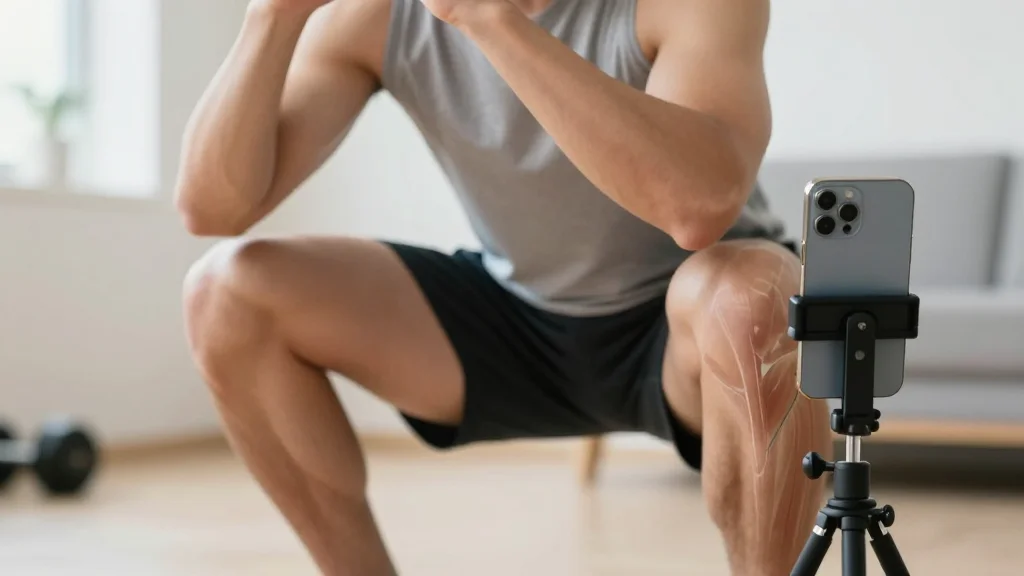
- •System uses a phone camera, 3D CNN and skeleton reconstruction for live feedback.
- •Outperformed competing AI fitness tools, including MIT‑Nvidia’s Stream‑VLM.
- •Aims to address a 48% increase in at‑home exercise injuries reported by the CPSC.
- •Prototype funded by the National Science Foundation, with a consumer app planned for later 2026.
Pulse Analysis
BioCoach arrives at a moment when the home‑fitness market is ripe for disruption. The pandemic forced millions to exercise without professional supervision, creating a demand for technology that can fill the coaching void. Traditional platforms have responded with static video cues or hardware‑bound sensors, but they lack the granular, anatomy‑specific guidance that BioCoach offers. By leveraging existing smartphone hardware, the system sidesteps the cost barrier of dedicated equipment, positioning itself as a scalable solution for both casual exercisers and serious athletes.
Historically, AI in fitness has struggled with the trade‑off between accuracy and accessibility. Early pose‑estimation apps delivered coarse feedback that often missed subtle form errors, limiting user trust. BioCoach’s dual‑stream architecture—combining visual perception with 3D skeletal modeling—represents a technical leap that could set a new benchmark for precision. If the prototype can maintain low latency on consumer devices, it may force incumbents like Apple and Peloton to accelerate their own AI roadmaps, potentially leading to a wave of partnerships or acquisitions.
Looking ahead, the commercial viability of BioCoach hinges on three factors: regulatory clearance for health‑related claims, the ability to monetize through subscriptions or licensing, and the creation of a robust dataset that reflects diverse body types and exercise styles. Success could unlock new revenue streams for fitness app developers and open doors for AI‑driven injury‑prevention tools in allied fields such as physiotherapy and occupational health. Conversely, failure to demonstrate real‑world efficacy could reinforce skepticism about AI’s role in personal training, slowing broader adoption.
AI Coach BioCoach Targets 48% Rise in At‑Home Workout Injuries
Comments
Want to join the conversation?
Loading comments...