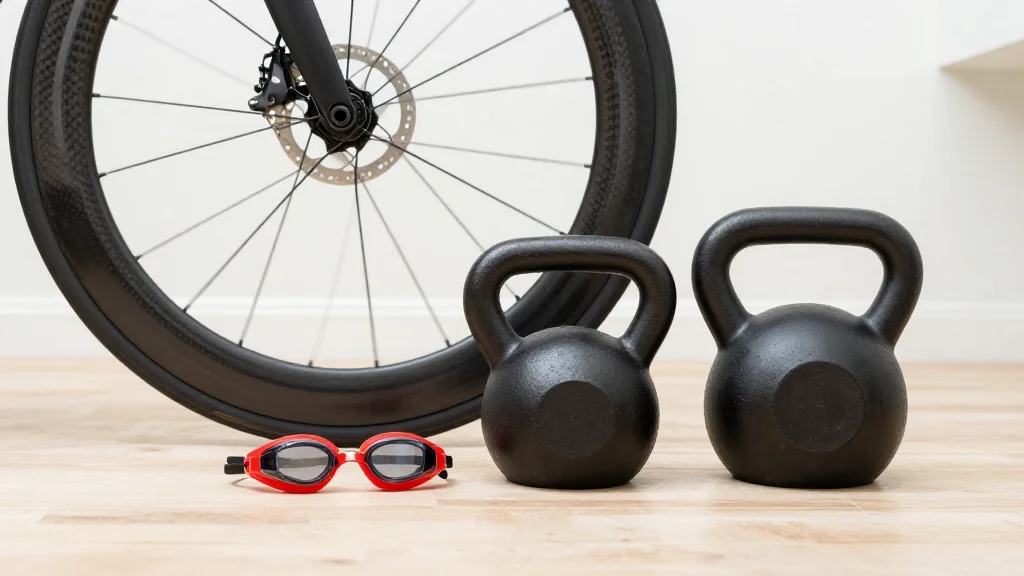
Alex Yee Reveals 20‑Hour Weekly Strength Regimen Ahead of 2028 Olympic Defense

Why It Matters
Yee’s transparent sharing of his strength regimen offers a blueprint for triathletes seeking to bridge the gap between endurance and power. As the sport evolves, the integration of targeted strength work with data analytics could become a standard component of elite training, reshaping how coaches design periodization and injury‑prevention strategies. For the broader fitness community, Yee’s emphasis on functional, sport‑specific movements validates the growing demand for strength programs that enhance performance rather than merely increase muscle mass. The ripple effect extends to equipment manufacturers and wearable tech firms, which stand to benefit from heightened interest in metrics that quantify strength‑related performance. By linking strength outcomes to measurable gains in swim, bike and run efficiency, Yee’s methodology may accelerate product development focused on real‑time feedback, driving innovation across the fitness ecosystem.
Key Takeaways
- •Alex Yee trains >20 hours per week, with strength sessions on Mondays and Wednesdays.
- •Strength work focuses on lower‑leg stiffness, core stability, and swim‑specific power.
- •Yee posted a 2:06:28 marathon in Valencia 2025, attributing gains to his strength program.
- •He uses COROS PACE 4 wearable to track strain, recovery and power output.
- •Yee aims to defend his Olympic triathlon title at the 2028 Los Angeles Games.
Pulse Analysis
Alex Yee’s regimen underscores a pivotal shift in triathlon training: strength is no longer an ancillary activity but a central pillar of performance. Historically, endurance athletes shied away from heavy lifting, fearing it would compromise aerobic capacity. Yee’s data‑backed success, however, illustrates that carefully calibrated strength work can enhance running economy, improve swim propulsion and boost cycling power without sacrificing endurance.
The broader market is responding. Wearable manufacturers are racing to embed strength‑related metrics—such as ground‑contact time and muscle activation—into their platforms, while strength‑training apps are adding triathlon‑specific modules. This convergence creates a feedback loop: athletes demand more precise data, tech firms deliver it, and coaches refine programs accordingly. As more elite triathletes adopt Yee’s model, we can expect a cascade of performance gains that raise the competitive baseline for the sport.
Looking forward, the real test will be how quickly the methodology permeates the amateur ranks. If the data continues to validate Yee’s approach, gyms and training facilities may see a surge in demand for sport‑specific strength coaching, potentially spawning a new niche within the fitness industry. The 2028 Olympic cycle could thus become a watershed moment, not just for triathlon medals, but for the integration of strength science into endurance sports at large.
Alex Yee Reveals 20‑Hour Weekly Strength Regimen Ahead of 2028 Olympic Defense
Comments
Want to join the conversation?
Loading comments...