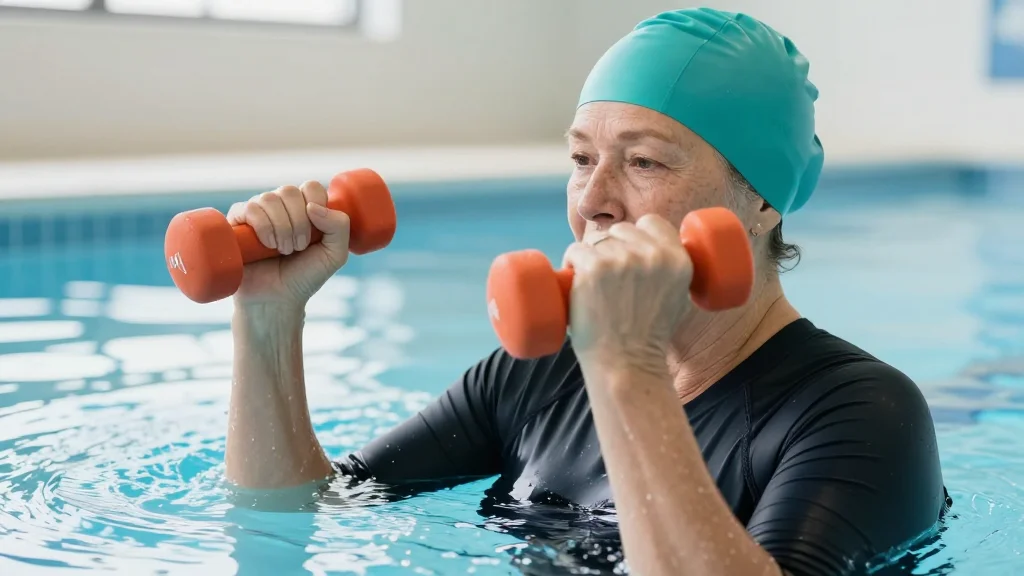
Aquatic Resistance Training Boosts Brain Health in Seniors, Study Finds

Why It Matters
The study bridges a critical gap between physical fitness and brain health, offering a scalable, low‑impact exercise option for an aging population that often faces mobility constraints. By showing that water‑based resistance can boost BDNF and reduce inflammation—two key drivers of neurodegeneration—the research supports a shift toward multimodal wellness programs that address both musculoskeletal and cognitive decline. For insurers and public health planners, the evidence suggests that incorporating aquatic strength classes could lower long‑term care costs by delaying the onset of dementia‑related impairments. Moreover, the trial challenges the prevailing notion that only aerobic activity benefits the brain, expanding the toolkit for clinicians prescribing exercise as medicine. As the senior‑fitness market is projected to exceed $30 billion by 2030, manufacturers of pool equipment, wearable sensors, and specialized training curricula stand to benefit from a new wave of demand driven by scientifically validated health outcomes.
Key Takeaways
- •Randomized trial shows water‑based resistance training increases hippocampal and prefrontal brain volume in seniors
- •Participants exhibited higher circulating BDNF and lower inflammatory markers after 12 weeks
- •Aquatic resistance offers joint‑friendly strength work, suitable for older adults with arthritis
- •Findings suggest a new, evidence‑based tool for combating age‑related cognitive decline
- •Potential market expansion for senior‑focused aquatic fitness programs and related equipment
Pulse Analysis
The BMC Geriatrics study arrives at a pivotal moment when the fitness industry is diversifying beyond traditional gym‑based offerings. Historically, senior‑focused programs have emphasized low‑impact cardio—walking, cycling, or chair‑based aerobics—because of concerns about injury risk. This research flips that script by proving that high‑intensity resistance, when delivered through water, can safely engage the neuromuscular system while delivering neuroprotective benefits. The dual impact on structural brain health and systemic inflammation positions aquatic resistance as a unique convergence point for physical therapy, neurology and preventive medicine.
From a market perspective, the data could accelerate partnerships between health clubs and medical providers. Physical therapists may begin prescribing pool‑based strength sessions as part of post‑operative or chronic disease management plans, while insurers could offer rebates for participation, mirroring existing incentives for treadmill or cycling programs. Companies that produce resistance equipment designed for aquatic environments—such as waterproof dumbbells, cable systems, and sensor‑enabled devices—are likely to see a surge in demand as facilities upgrade to meet evidence‑based standards.
Looking ahead, the next research frontier will be longitudinal studies that track cognitive performance over years, not just brain imaging snapshots. If future trials confirm that the structural gains translate into delayed onset of mild cognitive impairment or dementia, water‑based resistance could become a cornerstone of public health policy for aging societies. For now, the study provides a compelling proof point that fitness innovators can leverage to differentiate their senior offerings and, more importantly, to deliver measurable health outcomes that matter to members, caregivers, and payers alike.
Aquatic Resistance Training Boosts Brain Health in Seniors, Study Finds
Comments
Want to join the conversation?
Loading comments...