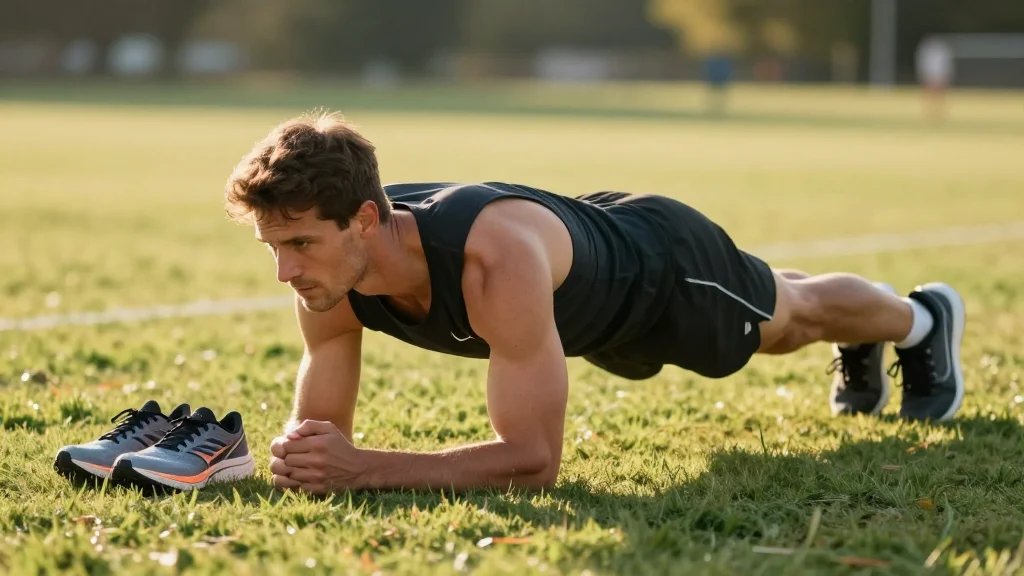
Australian Study Links Weak Core to Slower, Less Efficient Running

Why It Matters
Understanding that core stability directly impacts running economy reshapes training priorities for a sport that sees over 60 million participants worldwide. By quantifying the performance penalty of a weak torso, the study gives coaches a data‑driven reason to allocate training time to core work, potentially reducing injury rates linked to compensatory leg mechanics. For the broader fitness industry, the findings open avenues for product development—wearables that track pelvic tilt, apps that prescribe core‑centric workouts, and certification programs that teach biomechanical assessment—creating new revenue streams while improving athlete outcomes. Moreover, the research challenges the long‑standing narrative that running is solely a lower‑body activity. As endurance events become more competitive and marginal gains matter, integrating core conditioning could be the differentiator between podium finishes and mid‑pack results, influencing everything from elite coaching curricula to recreational running clubs.
Key Takeaways
- •Australian study links weak core to 5‑7% slower running speed under fatigue
- •Core biomechanical changes, not leg fatigue, drove reduced running economy
- •Six elite distance runners wore 3‑D motion sensors during intensive protocols
- •Researchers call for increased torso‑strength training in endurance programs
- •Potential market growth for core‑focused wearables and coaching certifications
Pulse Analysis
The new Australian findings arrive at a moment when the endurance community is re‑evaluating traditional training dogma. Historically, mileage and leg‑strength have dominated periodization models, but the data now suggest that a runner’s torso acts as a biomechanical governor once glycogen stores wane. This aligns with emerging research on the ‘core‑stability cascade,’ where compromised pelvic control forces the lower limbs to compensate, raising oxygen consumption and injury risk.
From a market perspective, the study could accelerate the adoption of integrated training platforms that blend strength, mobility, and running analytics. Companies like Peloton and Zwift have already experimented with strength modules; a scientifically validated link between core health and race performance provides a compelling narrative to market such features to serious runners. Likewise, wearable manufacturers may prioritize inertial measurement units (IMUs) that capture torso rotation, offering real‑time feedback to correct form before fatigue sets in.
Looking ahead, the key question is whether targeted core interventions can not only halt but reverse the performance decline observed in the study. If subsequent trials demonstrate measurable gains, we may see a paradigm shift where core conditioning becomes a prerequisite for elite qualification standards, much like VO2 max testing is today. For now, coaches and athletes have a clear, evidence‑based action item: prioritize torso strength to protect running economy and stay competitive in an increasingly data‑driven sport.
Australian Study Links Weak Core to Slower, Less Efficient Running
Comments
Want to join the conversation?
Loading comments...