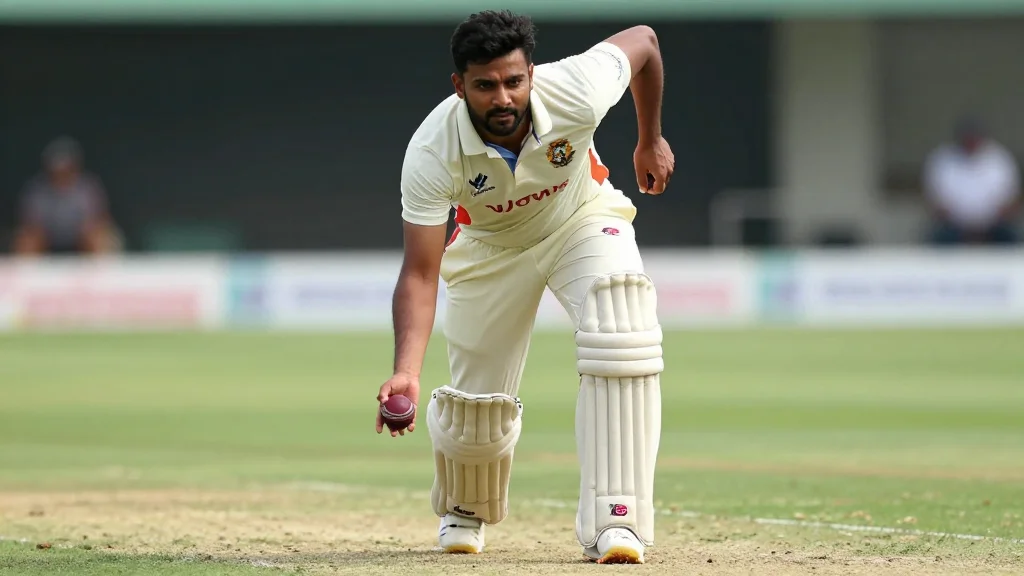
Bhuvneswar Kumar Cuts Body Fat to 14% at 36, Extends IPL Longevity

Companies Mentioned
Why It Matters
Kumar’s transformation spotlights how precise body‑composition management can offset age‑related decline in fast‑bowling, a role traditionally dominated by genetics and raw talent. For the fitness industry, it validates investment in personalized strength‑conditioning programs, nutrition planning and recovery protocols tailored to veteran athletes. Moreover, his durability offers a data point for franchise owners and selectors, suggesting that seasoned players can remain cost‑effective assets when supported by science‑backed conditioning. The story also fuels a broader conversation about longevity in sports that demand explosive power. If a 36‑year‑old pacer can sustain elite output through disciplined fat‑loss and muscle‑gain strategies, other high‑intensity disciplines—from rugby to American football—may adopt similar models, potentially extending careers and reshaping contract negotiations.
Key Takeaways
- •Body‑fat percentage reduced from 19% to 14% while weight stayed constant
- •Maintains strength levels that boost force production and running speed
- •Played 205 IPL matches, the most by any fast bowler in league history
- •Bowled 762.4 overs, outpacing the next‑closest pacer by over 150 overs
- •Daily hour‑long rehab and injury‑prevention routine supports durability
Pulse Analysis
Bhuvneswar Kumar’s fitness overhaul arrives at a moment when professional sports are increasingly data‑driven. Historically, fast bowlers have been the first to bow out as their bodies succumb to repetitive high‑impact stress. Kumar’s case demonstrates that a systematic focus on reducing adipose tissue—thereby preserving lean mass—can mitigate the physiological wear that typically accelerates decline. The 5‑percentage‑point drop in body fat translates into a higher muscle‑to‑fat ratio, which directly supports the kinetic chain required for fast bowling: greater force generation, quicker stride length, and sustained swing control.
From a market perspective, the narrative validates the premium placed on elite conditioning coaches and bespoke nutrition plans. Brands that supply protein supplements, recovery technologies, and wearable monitoring devices stand to benefit as more athletes emulate Kumar’s regimen. Franchise teams may also recalibrate scouting models, valuing longevity potential alongside raw skill, especially in leagues where salary caps make veteran reliability a strategic asset.
Looking forward, the ripple effect could reshape talent pipelines. Younger bowlers might be introduced earlier to strength‑training protocols that emphasize body‑fat management, potentially extending their effective playing windows by several seasons. Conversely, the emphasis on meticulous rehab could raise the bar for medical staff, prompting investments in physiotherapy infrastructure. In sum, Kumar’s story is less a singular anecdote and more a proof point that disciplined, science‑backed conditioning can rewrite the expected career arc for high‑intensity athletes.
Bhuvneswar Kumar Cuts Body Fat to 14% at 36, Extends IPL Longevity
Comments
Want to join the conversation?
Loading comments...