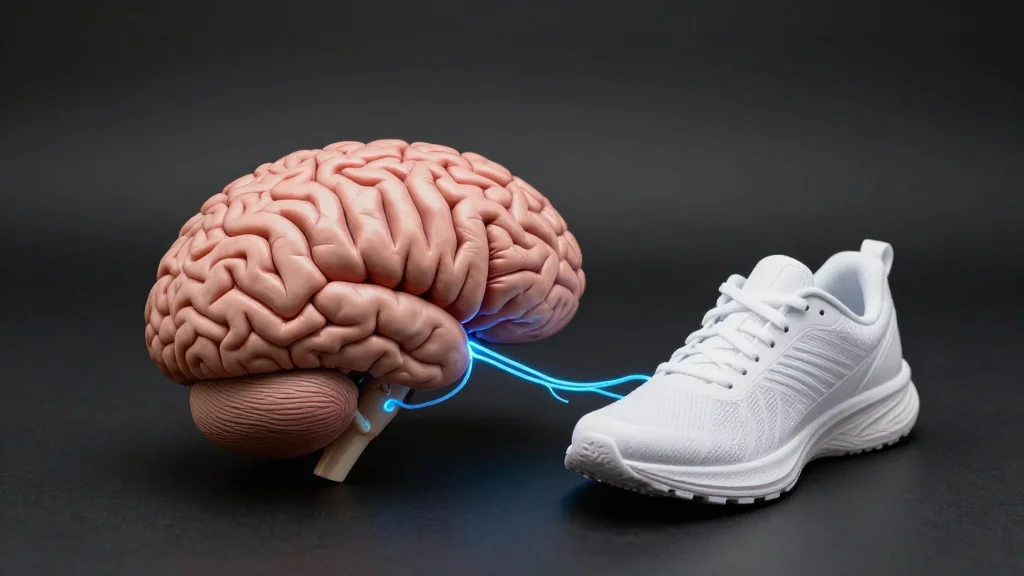
Brain Cells Found to Drive Exercise Endurance, Penn Study Shows

Why It Matters
Understanding that specific hypothalamic neurons can dictate how muscles adapt to training reframes endurance as a brain‑muscle partnership. This insight could lead to novel interventions—drugs, brain‑stimulation protocols, or lifestyle tweaks—that enhance performance without increasing physical load, benefiting athletes, aging populations, and patients recovering from illness. Moreover, the research underscores the importance of central nervous system health in fitness outcomes. If stress, sleep deprivation or neurodegenerative processes impair SF‑1 neuron function, endurance gains may be blunted, suggesting that holistic health approaches are essential for optimal training results.
Key Takeaways
- •Study published in Neuron identifies ventromedial hypothalamus SF‑1 neurons as key drivers of endurance.
- •Genetically silencing these neurons in mice shortens treadmill exhaustion time despite normal oxygen uptake.
- •Researchers include J. Nicholas Betley (UPenn), Erik Bloss (Jackson Lab) and Kevin W. Williams (UT Southwestern).
- •Findings suggest the brain actively coordinates metabolic adaptations, not just peripheral tissues.
- •Future work will test hypothalamic activity in humans and explore neuro‑targeted performance aids.
Pulse Analysis
The discovery that a discrete hypothalamic circuit can dictate endurance reshapes the conventional training narrative, which has long emphasized cardiovascular output and muscle fiber remodeling. Historically, endurance science focused on VO2 max, lactate threshold and mitochondrial biogenesis. By inserting a neural lever into that equation, the Penn team opens a new axis for performance optimization. In the short term, this could spark interest from biotech firms seeking to develop compounds that modulate SF‑1 neuron excitability, mirroring the rapid rise of neuromodulatory drugs in metabolic disease.
From a competitive standpoint, sports science programs may begin integrating neuro‑feedback and brain‑imaging metrics into athlete monitoring platforms. If hypothalamic responsiveness proves predictive of training gains, coaches could tailor volume and intensity based on an athlete’s neural profile, reducing overtraining risk. However, the translational gap remains sizable; mouse hypothalamic circuitry does not map one‑to‑one onto human physiology, and ethical considerations around brain‑targeted performance enhancers will soon surface.
Long‑term, the work could influence public health policy by highlighting mental health and sleep as integral components of physical fitness. As the research community validates the brain‑muscle link in diverse populations, we may see a shift toward integrated wellness programs that address cognition, stress management and metabolic health in tandem with traditional exercise prescriptions. The coming years will reveal whether this neural perspective becomes a mainstream pillar of fitness or remains a niche scientific curiosity.
Brain Cells Found to Drive Exercise Endurance, Penn Study Shows
Comments
Want to join the conversation?
Loading comments...