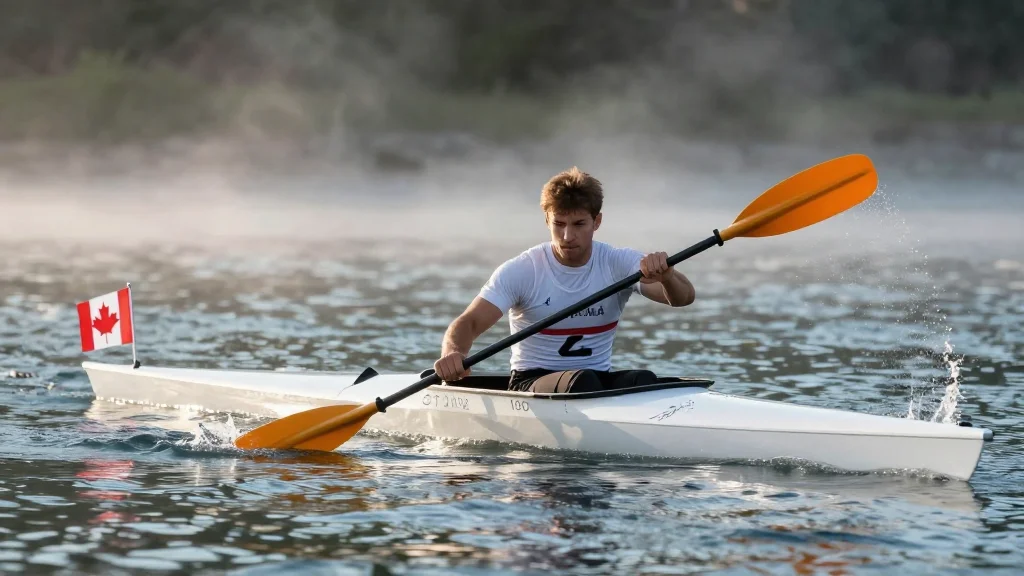
Canoeist Sophia Jensen Sets World Record, Wins World Cup Silver with New Training Regimen

Why It Matters
Jensen’s breakthrough illustrates how individualized training environments can unlock elite performance, challenging the traditional dominance of national team structures in Canadian canoe‑kayak. Her world‑record time not only raises the competitive bar for the women’s C1 500 m but also signals that Canada can field medal‑contending athletes without relying solely on the centralized program. The success may encourage governing bodies to offer more flexible support models, potentially reshaping talent pipelines across the sport. Beyond Canada, Jensen’s story adds to a global trend where athletes leverage regional programs, private funding, and sport‑science innovations to gain a competitive edge. As the 2028 Los Angeles Olympics approach, nations will watch whether decentralized approaches can consistently produce podium finishes, influencing funding allocations and coaching philosophies worldwide.
Key Takeaways
- •Sophia Jensen set a new women’s C1 500 m world record (1:59.75) and won World Cup silver in Szeged.
- •She left Canoe Kayak Canada’s national program to train with Quebec’s provincial team.
- •Jensen received a $20,000 five‑year bursary from the Canadian Olympic Foundation’s Quebec program.
- •Her performance positions her as Canada’s likely sole entrant for the C1 500 m at the 2028 Olympics.
- •The success highlights the potential of decentralized, athlete‑driven training models in elite sport.
Pulse Analysis
Sophia Jensen’s rapid ascent underscores a pivotal shift in high‑performance sport: the rise of athlete‑centric training ecosystems. Historically, Canada’s canoe‑kayak success has been tied to a centralized national program that offers uniform coaching, facilities, and funding. Jensen’s decision to defect to Quebec’s provincial setup—backed by a modest but targeted bursary—demonstrates that focused, personalized environments can produce world‑record outcomes. This mirrors trends in other disciplines, such as track and field, where athletes increasingly negotiate bespoke training arrangements to address mental health and performance plateaus.
From a market perspective, Jensen’s story could catalyze a reallocation of resources within Canoe Kayak Canada. If more athletes replicate her model and achieve comparable results, the federation may be compelled to decentralize funding, expand regional high‑performance hubs, and adopt flexible athlete contracts. Sponsors and private donors, seeing the tangible ROI of targeted bursaries, might also increase direct investment in provincial programs, diversifying the sport’s financial ecosystem.
Looking ahead, the real test will be consistency. Jensen must translate her Szeged performance into podium finishes across the World Cup circuit and, ultimately, the 2028 Olympics. If she does, the narrative will shift from a one‑off breakthrough to a validated pathway, prompting other nations to reconsider the balance between centralized control and athlete autonomy. For Canada, the stakes are high: embracing this hybrid model could sustain its competitive edge in canoe sprint, while resistance could see talent drift toward more adaptable systems abroad.
Canoeist Sophia Jensen Sets World Record, Wins World Cup Silver with New Training Regimen
Comments
Want to join the conversation?
Loading comments...