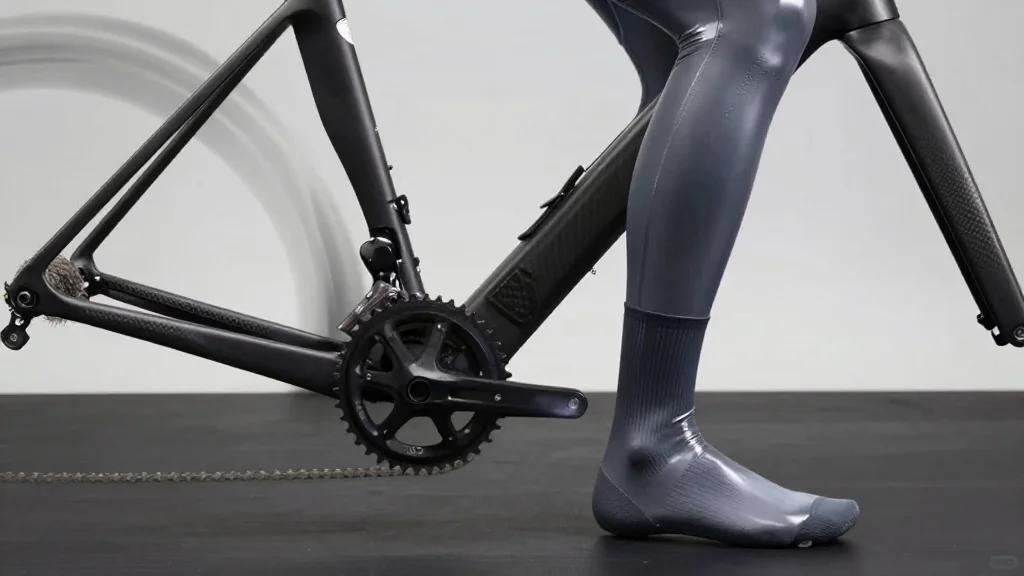
Compressport's Aero Line Promises Up to 12‑Watt Drag Cut for Triathletes

Why It Matters
The Aero line represents one of the few recent attempts to translate wind‑tunnel data into consumer‑facing performance claims, bridging the gap between laboratory engineering and everyday race gear. By quantifying drag reduction in watts, Compressport gives athletes a concrete metric to assess trade‑offs between speed, comfort, and cost, potentially redefining how performance apparel is evaluated in the triathlon market. If the aerodynamic benefits are validated in real‑world conditions, the product could spur a wave of data‑driven apparel development, prompting other manufacturers to invest in similar testing regimes. This shift would elevate the role of scientific validation in product marketing, encouraging athletes to make equipment choices based on measurable performance outcomes rather than brand reputation alone.
Key Takeaways
- •Compressport's Aero range claims up to 12 watts of drag reduction, roughly 1 s/km at 40 km/h.
- •Products include calf sleeves (£70/~$89), Aero Socks 2.0 (£26/~$33), Full Socks Aero (£80/~$102), and a trisuit (£390/~$496).
- •Wind‑tunnel and velodrome testing underpin the aerodynamic claims, according to Arnaud Ménétrier.
- •Ironman champion Sam Laidlow endorses the R2 Aero sleeves for measurable performance gains.
- •Independent field verification is pending, leaving room for athlete scrutiny and competitor response.
Pulse Analysis
Compressport’s Aero launch arrives at a moment when endurance athletes are increasingly data‑savvy, using power meters, heart‑rate variability and even CFD simulations to fine‑tune performance. By anchoring its marketing on a specific wattage reduction, the brand taps into a language that resonates with cyclists and triathletes accustomed to quantifying effort. Historically, aerodynamic apparel claims have been vague—"faster" or "more streamlined"—making it hard for consumers to weigh benefits against price. The Aero line’s explicit 12‑watt figure, if substantiated, could set a new benchmark for transparency.
The strategic use of high‑profile athlete endorsements, particularly from a recent IRONMAN champion, adds credibility but also raises expectations. Early adopters will likely post power‑meter data on platforms like Strava, creating a crowd‑sourced validation loop. Should those data points confirm the claimed savings, Compressport could capture a premium segment and force rivals to adopt similar testing protocols, potentially leading to an industry‑wide escalation in R&D spending on textile aerodynamics.
Conversely, the lack of third‑party verification introduces risk. If field data fall short of laboratory results, the brand may face backlash similar to past controversies where claimed performance gains proved marginal. The upcoming peer‑reviewed studies hinted at by Compressport could mitigate that risk, turning the Aero line into a case study for how scientific rigor can be integrated into consumer sportswear. In any scenario, the launch accelerates the conversation around measurable performance apparel, nudging the market toward a future where every stitch is justified by data.
Compressport's Aero Line Promises Up to 12‑Watt Drag Cut for Triathletes
Comments
Want to join the conversation?
Loading comments...