How 2 Men Smashed Through a Marathon Barrier Long Thought Unbreakable
Companies Mentioned
Why It Matters
Breaking the sub‑two‑hour marathon redefines elite endurance limits, accelerating research into training, nutrition, and footwear technology that will cascade to broader athletic and recreational running markets.
Key Takeaways
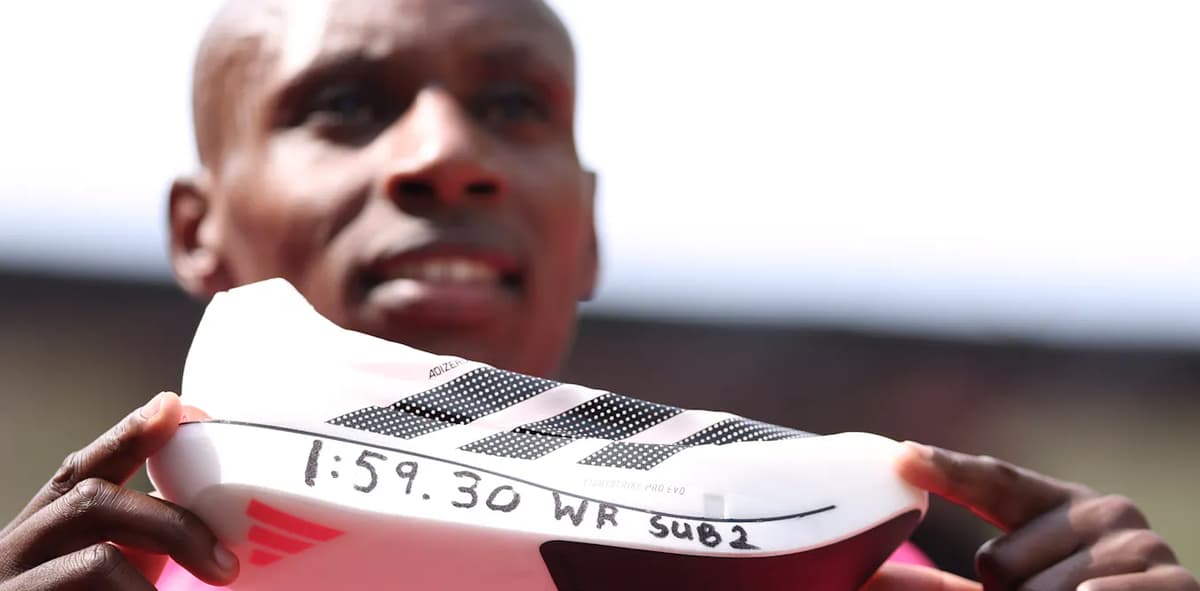
- •Sawe set a 1:59:30 marathon world record, 65 seconds faster
- •Kejelcha ran his debut marathon under two hours, 1:59:41
- •Training volume reached 240 km per week, emphasizing low‑intensity mileage
- •Carbohydrate intake averaged 115 g per hour to sustain pace
- •Adidas Adios Pro Evo 3 shoes weighed under 100 g, boosting economy
Pulse Analysis
The sub‑two‑hour marathon, once a theoretical impossibility likened to climbing Everest, became reality on Sunday in London. Sabastian Sawe’s 1:59:30 finish eclipsed Kelvin Kiptum’s 2023 record by over a minute, while Yomif Kejelcha, in his first marathon, posted 1:59:41. Even the third‑place finisher, Jacob Kiplimo, ran 2:00:28, underscoring the depth of the field. This achievement mirrors Roger Bannister’s 1954 mile breakthrough, signaling a new era where physiological ceilings are being rewritten.
Behind the headline numbers lies a regimen of extraordinary volume and precision. Sawe’s coaching team reported weekly mileage approaching 240 kilometres, predominantly at low intensity—a strategy linked to enhanced aerobic capacity and marathon durability. Nutritionists calibrated a carbohydrate delivery of roughly 115 grams per hour, using drinks and gels to replenish glycogen stores and stave off fatigue during the relentless pace. Such meticulous fueling is essential when the body operates near its maximal oxidative limits, allowing athletes to maintain speed without succumbing to the classic “hitting the wall.”
Equally pivotal was the footwear revolution. Both athletes wore Adidas’ Adios Pro Evo 3, the lightest supershoe on record at under 100 grams. Laboratory data suggest these shoes can improve running economy by about 4%, a marginal gain that translates into minutes over 42 kilometres. Coupled with London’s temperate 13‑17 °C conditions and a fast, flat course, the technology acted as a catalyst rather than a crutch. The convergence of high‑volume training, optimized nutrition, cutting‑edge shoes, and favorable weather illustrates a perfect storm, foreshadowing further erosion of perceived performance limits across endurance sports.
How 2 men smashed through a marathon barrier long thought unbreakable
Comments
Want to join the conversation?
Loading comments...