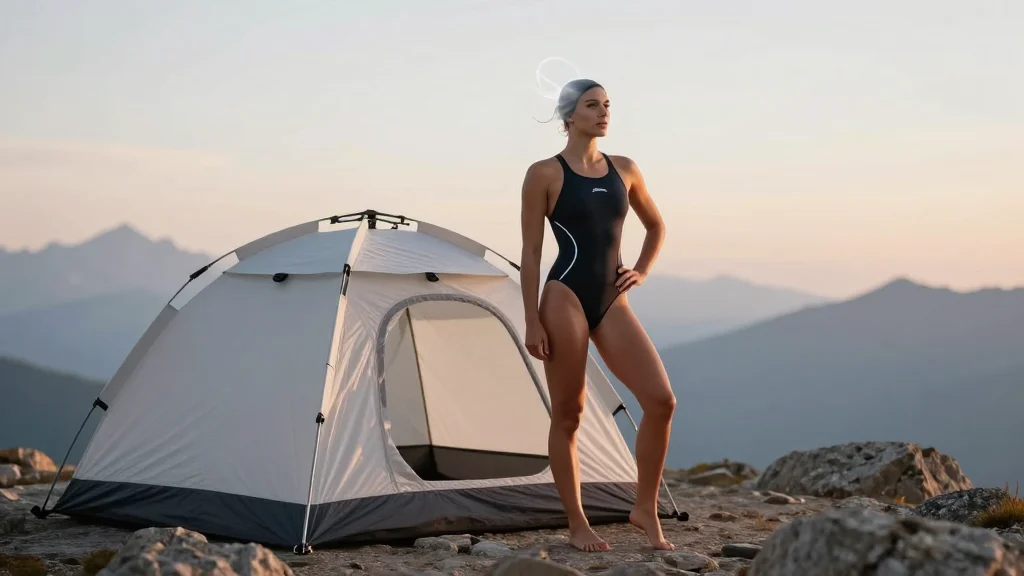
Olympic Swimmer Mollie O’Callaghan Leverages Altitude Tent and Anxiety Coaching to Sharpen Edge

Why It Matters
Mollie O’Callaghan’s approach illustrates how elite athletes are blending cutting‑edge physiology with mental‑skill training to extract incremental performance gains. By demonstrating that a portable altitude tent can deliver measurable aerobic benefits, she challenges the notion that only high‑altitude camps or expensive facilities can provide a competitive edge. Moreover, her candid discussion of anxiety as a "superpower" underscores a cultural shift toward openly addressing mental health in sport, potentially encouraging broader adoption of sports‑psychology resources across the fitness industry. If other swimmers and endurance athletes replicate her model, training centres may see a surge in demand for hypoxic equipment and integrated mental‑coaching programs. This could spur new market opportunities for manufacturers of altitude simulation devices and for firms offering athlete‑focused psychological services, reshaping the economics of elite training.
Key Takeaways
- •Mollie O’Callaghan spent ~300 hours in a portable altitude tent simulating 3,000 m elevation.
- •She logs 12 km of pool swimming daily, split between morning and afternoon sessions.
- •Anxiety management was reframed as a performance asset, with O’Callaghan calling nerves her "superpower."
- •The combined regimen helped her break an Olympic record and win three gold medals at Paris 2024.
- •Her success may drive wider adoption of hypoxic training and sports‑psychology services in elite sport.
Pulse Analysis
Mollie O’Callaghan’s training blueprint reflects a convergence of two trends that have been percolating in high‑performance sport for years: the democratization of altitude training and the mainstreaming of mental‑skill coaching. Historically, only national teams with deep pockets could afford to send athletes to high‑altitude locations like the Andes or the Alps. Portable altitude tents collapse that barrier, allowing individual athletes to simulate hypoxia at home. The data from O’Callaghan’s regimen—300 hours of exposure translating into measurable aerobic improvements—provides a real‑world case study that could accelerate market penetration for manufacturers of such devices.
Equally important is the psychological narrative. For decades, elite athletes were expected to compartmentalise anxiety, treating it as a weakness to be hidden. O’Callaghan’s open admission that nerves are a "superpower" aligns with a broader cultural shift where mental health is no longer taboo. This openness may encourage sports organisations to embed psychologists within training squads, creating a more holistic athlete development model.
From a market perspective, the ripple effects could be significant. Fitness brands may launch consumer‑grade altitude tents marketed to serious amateurs, while sports‑tech firms could integrate biofeedback sensors to track oxygen saturation and stress hormones in real time. Meanwhile, sports psychologists may see increased demand for performance‑focused coaching, prompting new certification pathways and digital platforms. If O’Callaghan’s approach proves replicable across disciplines—running, cycling, even team sports—the fitness industry could witness a wave of hybrid training solutions that blend physiological stressors with mental conditioning, redefining what it means to train for the edge.
Olympic Swimmer Mollie O’Callaghan Leverages Altitude Tent and Anxiety Coaching to Sharpen Edge
Comments
Want to join the conversation?
Loading comments...