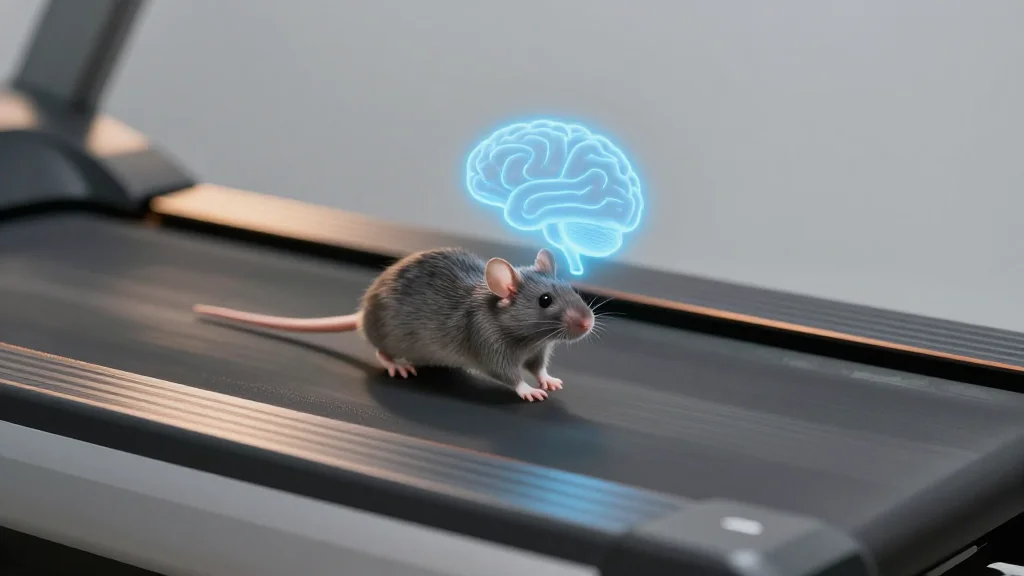
Post‑Exercise Brain Signal Found to Gate Fitness Gains in Mice Study

Why It Matters
The discovery that a specific hypothalamic signal governs endurance adaptations reframes how scientists and trainers think about exercise efficacy. By highlighting a neural bottleneck, the work opens avenues for interventions—pharmacological, behavioral, or technological—that could boost the post‑exercise signal and unlock greater performance gains. Beyond elite sport, the findings could impact public health by offering explanations for the wide variability in how people respond to standard activity recommendations. If future research confirms a human analog, fitness guidelines may evolve to incorporate strategies that support optimal brain signaling after workouts, such as targeted recovery protocols or stress‑reduction techniques.
Key Takeaways
- •SF1 neurons in the hypothalamus activate for ~1 hour after running
- •Blocking the signal for 15 minutes eliminated 3 weeks of endurance gains
- •Artificially boosting the signal produced gains beyond normal training
- •Regular running doubled excitatory synapse density on SF1 neurons
- •Human relevance remains untested; potential for personalized exercise prescriptions
Pulse Analysis
The study injects a neurocentric perspective into a field traditionally dominated by muscle‑centric models. Historically, adaptations have been attributed to mechanical load, metabolic stress, and hormonal cascades. By demonstrating that a discrete brain circuit can gate these downstream processes, the research suggests that the central nervous system may be the master regulator of plasticity. This aligns with emerging work on brain‑derived neurotrophic factor (BDNF) and its role in exercise‑induced cognition, hinting at a broader, integrated neuro‑muscular adaptation network.
From a market standpoint, the findings could spark interest among biotech firms developing neuromodulation devices or nutraceuticals aimed at enhancing post‑exercise recovery. Companies that specialize in wearable neurofeedback may see an opportunity to create products that monitor hypothalamic activity or proxy signals (e.g., heart‑rate variability) to ensure the critical window is not compromised. However, the translational gap is sizable; human hypothalamic imaging is still invasive and costly, and any pharmacologic manipulation would need rigorous safety validation.
Looking ahead, the key question is whether the SF1 pathway can be safely leveraged in humans. If future trials confirm a comparable mechanism, we may witness a shift toward "brain‑first" training protocols, where the timing of nutrition, sleep, and stress‑management interventions is synchronized with neural recovery windows. Such a paradigm could redefine periodization, making the post‑exercise hour as strategically important as the workout itself.
Post‑Exercise Brain Signal Found to Gate Fitness Gains in Mice Study
Comments
Want to join the conversation?
Loading comments...