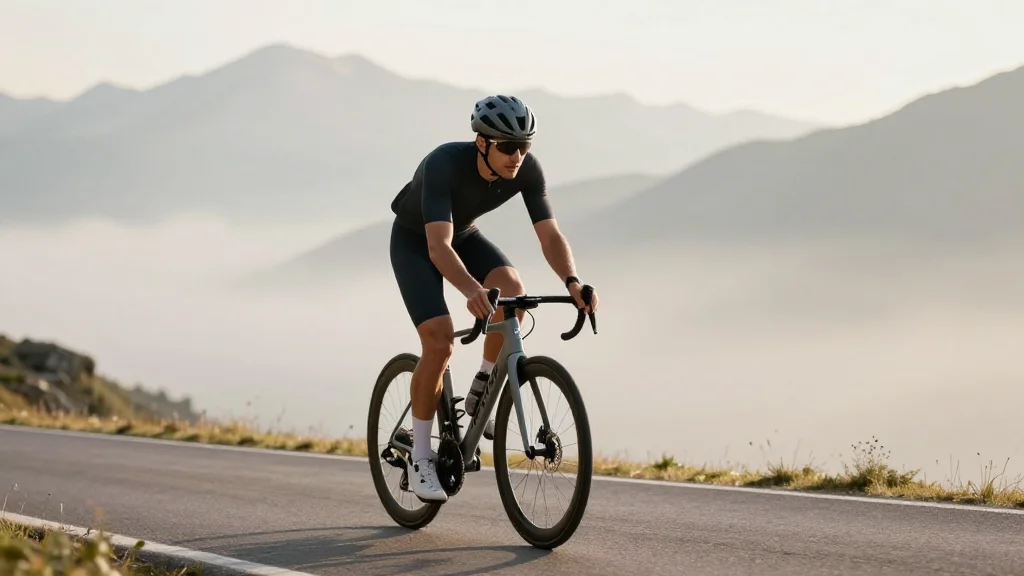
Remco Evenepoel Posts 86‑km Strava Ride, Signals Tour De France Prep

Why It Matters
Evenepoel’s Strava ride does more than confirm his training status; it offers a data point for the evolving science of elite endurance preparation. By opting for altitude camps over a traditional warm‑up race, he embraces a model that prioritises physiological adaptation while minimising race‑day fatigue and injury risk. If successful, this approach could influence how WorldTour teams structure their pre‑Grand Tour calendars, potentially reshaping the commercial value of preparatory races. The public nature of the ride also democratizes elite training insights, allowing coaches, sports scientists, and serious amateurs to benchmark against a world‑class athlete. This transparency may accelerate the diffusion of high‑performance methodologies across the broader cycling ecosystem, raising the overall standard of training and competition.
Key Takeaways
- •Remco Evenepoel logged an 86 km Strava ride on Sunday, his first since April 27.
- •The ride covered 1,552 m of climbing, averaging 31.8 km/h and peaking at 82.3 km/h on descents.
- •Evenepoel’s revised prep skips the Tour Auvergne‑Rhône‑Alpes in favour of altitude training camps.
- •Juan Ayuso also returned to training, aiming for a podium and planning to race the Tour Auvergne‑Rhône‑Alpes.
- •Mikel Landa’s Tour de France participation remains uncertain after a pelvic fracture.
Pulse Analysis
Evenepoel’s decision to broadcast his altitude‑focused training marks a strategic pivot that could reverberate through the WorldTour. Historically, riders have used late‑season stage races as both fitness tests and publicity platforms. By abandoning that model, Evenepoel signals confidence in controlled, high‑altitude environments to deliver the same physiological gains without the tactical noise of competition. This shift aligns with a broader trend in endurance sports where data‑rich platforms like Strava are becoming extensions of an athlete’s performance dossier.
From a market perspective, the move may diminish the commercial allure of traditional warm‑up races, pressuring organizers to innovate their value proposition—perhaps by offering more altitude‑specific courses or integrating advanced telemetry for teams. Conversely, teams that continue to race may gain a competitive edge in race‑craft, suggesting a bifurcation in preparation philosophies that could lead to divergent performance outcomes on the Tour.
Looking ahead, the real test will be how Evenepoel’s altitude regimen translates into race results. If he contends for the yellow jersey, the model could become a blueprint for future Grand Tour hopefuls, prompting a cascade of altitude‑camp investments and a re‑evaluation of the race calendar’s role in elite preparation. Coaches and sports scientists will be watching closely, ready to adapt training periodisation frameworks to accommodate this emerging paradigm.
Remco Evenepoel Posts 86‑km Strava Ride, Signals Tour de France Prep
Comments
Want to join the conversation?
Loading comments...