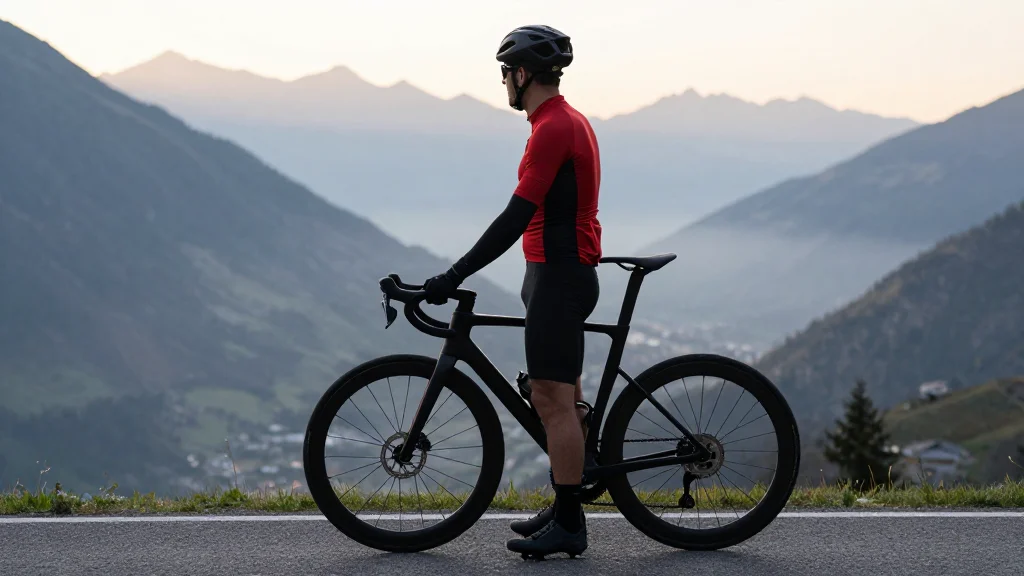
Remco Evenepoel Skips 69 Days of Racing to Arrive Fresh for Tour De France

Companies Mentioned
Why It Matters
Evenepoel’s 69‑day racing hiatus challenges the long‑standing paradigm that elite cyclists need a final competitive tune‑up before the Tour de France. By prioritizing recovery and targeted training over race sharpness, the move underscores the growing influence of sports‑science and individualized performance planning in endurance sports. If successful, it could encourage other top riders to rethink their season calendars, potentially diminishing the strategic importance of traditional lead‑up races like the Dauphiné and reshaping sponsorship and broadcast revenue models tied to those events. The decision also highlights a tension between physiological optimization and the experiential benefits of racing against peers. While data‑driven training can fine‑tune power output and endurance, real‑world race conditions test tactical acumen, team dynamics, and mental resilience. The outcome of Evenepoel’s approach will provide a high‑profile case study for coaches, sports scientists, and governing bodies as they balance these competing priorities in the evolving landscape of professional cycling.
Key Takeaways
- •Remco Evenepoel will skip all races for 69 days before the Tour de France, starting July 4 in Barcelona.
- •His last race was a third‑place finish at Liège‑Bastogne‑Liège; the team plans a May altitude camp and specific training blocks.
- •The move departs from the traditional use of the Dauphiné as a final preparation race for Tour contenders.
- •Historical precedents: Jonas Vingegaard and Tadej Pogačar used the Dauphiné before their Tour victories.
- •If successful, Evenepoel’s strategy could prompt a shift toward longer recovery periods and data‑driven training across the sport.
Pulse Analysis
Evenepoel’s decision arrives at a crossroads where cycling’s traditional race‑centric preparation meets a data‑rich, individualized training era. Over the past decade, teams have invested heavily in power meters, physiological modeling, and altitude simulation, yet the calendar has remained largely unchanged. By opting out of the Dauphiné, Evenepoel signals confidence that controlled variables—altitude exposure, power‑targeted intervals, and recovery protocols—can substitute for the unpredictable stressors of a race. This confidence is bolstered by his recent form: a podium at Liège‑Bastogne‑Liège and a strong start to the season suggest his baseline fitness is already at a high level.
From a competitive standpoint, the move could force rivals to reassess risk‑reward calculations. Riders who continue to race may gain tactical sharpness and real‑time feedback on the Tour route, but they also risk fatigue and injury. If Evenepoel arrives in Barcelona with a measurable power advantage, especially on climbs, it could validate a new preparation template that prioritizes physiological peaks over race experience. Conversely, a sub‑par performance would reinforce the value of race‑based conditioning, especially for disciplines like the team time trial where coordination under pressure is critical.
Commercially, the Dauphiné and similar lead‑up events have relied on star participation to attract viewers and sponsors. A trend of top contenders opting out could erode their marketability, prompting organizers to innovate—perhaps by offering more lucrative appearance fees or integrating controlled training showcases. For teams, the financial calculus may shift toward investing in high‑altitude camps and advanced analytics platforms rather than traditional race logistics. In sum, Evenepoel’s 69‑day hiatus is more than a personal preparation choice; it is a bellwether for how elite cycling may balance science and sport in the next competitive cycle.
Remco Evenepoel Skips 69 Days of Racing to Arrive Fresh for Tour de France
Comments
Want to join the conversation?
Loading comments...