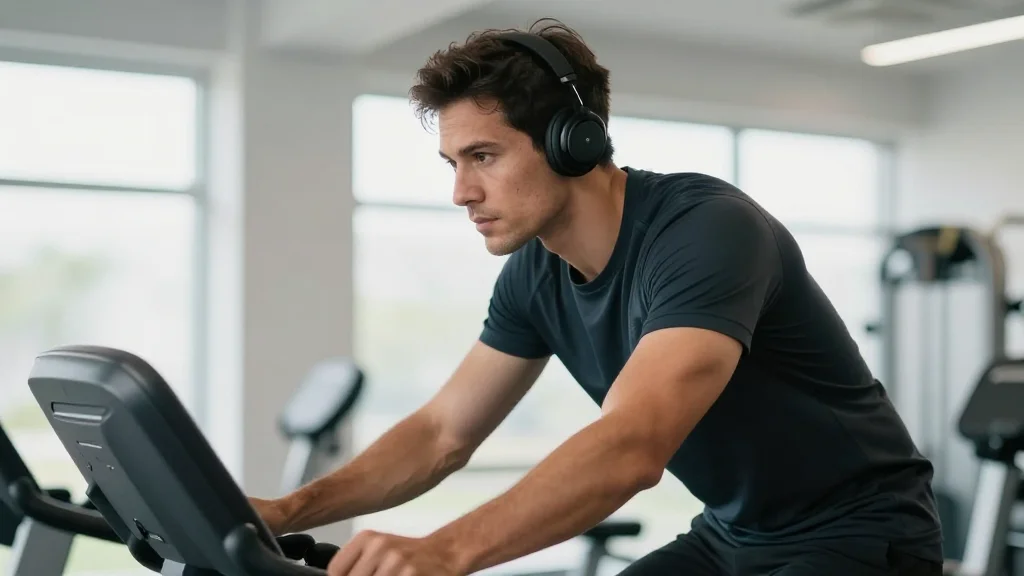
Self‑Selected Music Boosts High‑Intensity Endurance by 20% in New Study

Why It Matters
The study highlights a non‑pharmacological lever—personal music choice—that can meaningfully extend workout duration without additional physiological load. In an industry where marginal gains drive product development, a free, user‑controlled factor that improves adherence and training volume could reshape how gyms and digital platforms design engagement strategies. Moreover, the research underscores the importance of perceived effort in performance, reinforcing the growing emphasis on mental‑fitness integration. If replicated at scale, the insight could influence equipment manufacturers to embed seamless music‑selection interfaces, and inspire wearable makers to integrate mood‑based playlist recommendations. Such ecosystem shifts would blur the line between entertainment and training, potentially expanding the market for audio‑focused fitness solutions.
Key Takeaways
- •Self‑selected music added an average six minutes to a 30‑minute high‑intensity cycling session (≈20% endurance boost).
- •Heart‑rate and other physiological markers remained unchanged, indicating a perceptual rather than physical effect.
- •Study involved 29 recreationally active adults completing two identical cycling bouts at ~80% peak effort.
- •Researchers attribute the benefit to distraction and mindset shift, not to increased fitness capacity.
- •Future multi‑site trials will test the effect in older adults, elite athletes, and other exercise modalities.
Pulse Analysis
The endurance lift reported by the University of Jyväskylä team arrives at a moment when the fitness industry is aggressively mining data to personalize experiences. Historically, performance gains have been pursued through equipment upgrades, nutrition, and training periodization. This study re‑centers the conversation on a behavioral tweak that costs nothing but can be scaled instantly through existing streaming platforms.
From a market perspective, the finding dovetails with the rise of audio‑centric fitness apps such as Peloton's soundtrack integration and Spotify's workout playlists. Companies that can algorithmically match music tempo and user preference to exercise intensity may capture a new revenue stream, especially if they can demonstrate measurable performance outcomes. The research also challenges the assumption that high‑intensity interval training (HIIT) must be endured in silence to maximize physiological stress; instead, it suggests that mental framing can preserve intensity while extending duration.
Looking ahead, the key question is durability: will the 20% boost persist as users habituate to music, or will novelty wear off? Longitudinal data will be essential to determine whether the perceived effort reduction translates into lasting fitness improvements. If subsequent trials confirm the effect across demographics, we could see a paradigm shift where personalized audio becomes a standard component of training prescriptions, akin to warm‑up routines or hydration protocols.
Self‑Selected Music Boosts High‑Intensity Endurance by 20% in New Study
Comments
Want to join the conversation?
Loading comments...