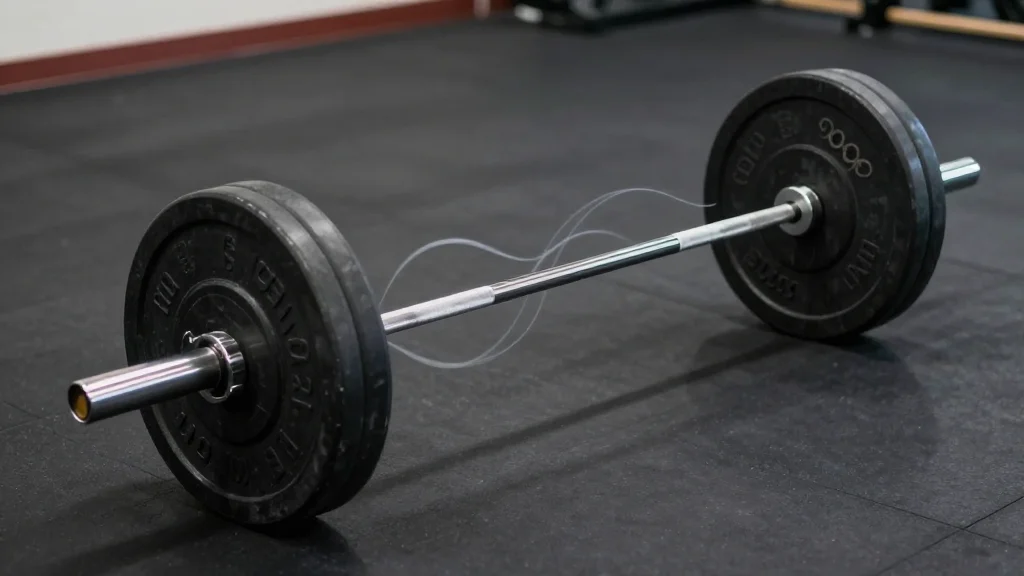
Study Finds Barbell ‘Whip’ Crucial to Olympic Weightlifting Performance

Why It Matters
Understanding the barbell’s whip bridges a gap between biomechanics and equipment engineering, offering a concrete variable that coaches can manipulate to improve lift efficiency. For the broader fitness market, the findings could trickle down to power‑lifting gyms and CrossFit boxes, where bar selection often hinges on feel rather than data. Manufacturers that adopt the research may gain a competitive edge, while athletes who learn to sync with bar vibrations could see measurable performance lifts. Beyond elite sport, the study highlights how subtle mechanical properties of everyday fitness gear can influence outcomes. As data‑driven training becomes mainstream, equipment designers are likely to integrate acoustic and vibrational testing into product development, raising the overall standard of strength‑training tools.
Key Takeaways
- •Graduate researcher Joshua Langlois presented findings at the ASA 190th meeting (May 11‑15).
- •Barbell sleeve geometry has a larger impact on vibrational behavior than steel alloy or coating.
- •Lifters can add upward acceleration by timing their pull with the bar’s natural oscillation.
- •Modal analysis of multiple bars under identical loads provided baseline data for performance questions.
- •Future work will link vibrational signatures to actual competition lift results.
Pulse Analysis
The barbell whip study arrives at a moment when marginal gains dominate elite sport. Historically, weightlifting performance has been attributed to athlete technique, strength, and training periodization. This research adds a third pillar: equipment dynamics. By quantifying how sleeve design alters the bar’s natural frequencies, Langlois provides a scientific basis for what coaches have long described anecdotally as “the feel” of a bar.
If manufacturers respond by standardizing sleeve geometry or offering performance‑graded bars, we could see a new product segment akin to the rise of competition‑grade shoes in track and field. Such a shift would force governing bodies to revisit equipment regulations, potentially redefining what constitutes a “fair” competition. Meanwhile, coaches who integrate vibro‑acoustic profiling into athlete assessments could gain a tactical advantage, especially in tightly contested weight classes where a single kilogram decides medals.
Long‑term, the research may democratize high‑performance insights. As testing equipment becomes more affordable, regional gyms could adopt bar‑whip diagnostics, allowing recreational lifters to fine‑tune their technique. The ripple effect could raise baseline strength standards across the fitness industry, reinforcing the notion that precision engineering is as vital to lifting as nutrition and programming.
Study Finds Barbell ‘Whip’ Crucial to Olympic Weightlifting Performance
Comments
Want to join the conversation?
Loading comments...