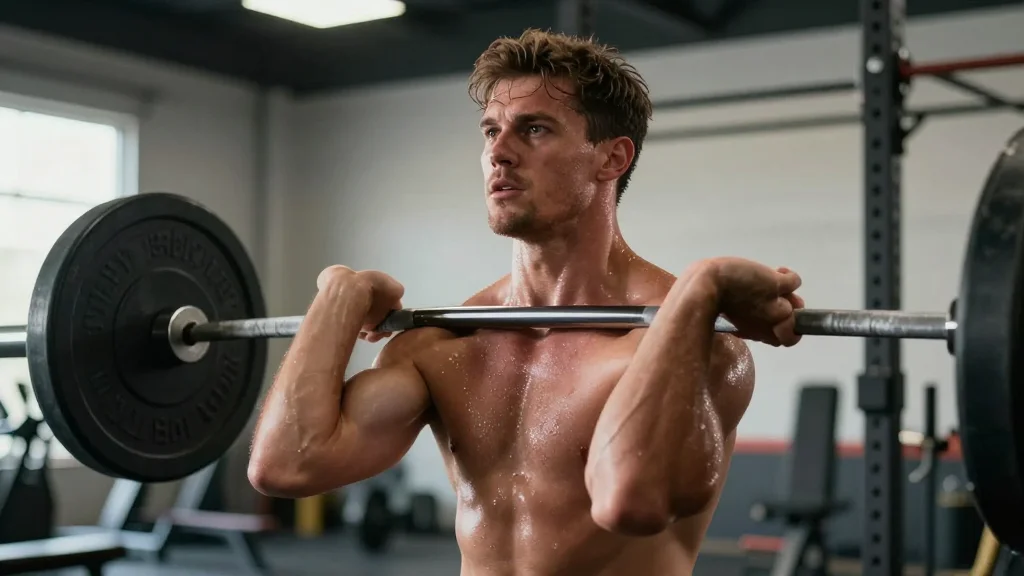
Study Finds Pre‑Lift Hype Boosts Maximal Strength

Why It Matters
The discovery that pre‑lift emotional arousal can boost maximal strength challenges the conventional separation of mental and physical training. For the fitness industry, it opens a new frontier where coaches might design integrated programs that blend psychological conditioning with traditional strength work. If adopted widely, such approaches could accelerate performance gains, reduce plateaus, and potentially lower injury risk by ensuring athletes are mentally primed before heavy loads. Beyond elite sport, the insight could influence everyday fitness routines, physical therapy, and even workplace wellness programs. By teaching individuals how to harness focused excitement or motivation, practitioners may help a broader population achieve better health outcomes with the same amount of physical effort.
Key Takeaways
- •Scientists confirm that emotional arousal before a lift can increase maximal strength.
- •Adrenaline and dopamine spikes improve focus and muscle recruitment.
- •Study suggests mental activation works alongside physical warm‑ups.
- •Experts warn that excessive hype may affect technique or safety.
- •Future research will test different motivational cues across sports.
Pulse Analysis
The link between mindset and strength is not entirely new—athletes have long used music, chants, and visualization to get ‘in the zone.’ What sets this study apart is its attempt to quantify the physiological cascade that follows emotional arousal and tie it directly to measurable lifts. Historically, strength training has been dominated by periodization models that prioritize load, volume, and recovery. Introducing a mental‑activation variable could force a rethink of periodization, adding a new axis for coaches to manipulate.
From a market perspective, the findings could spur a wave of products and services aimed at optimizing pre‑lift hype. Wearable tech that monitors heart rate variability or dopamine proxies, audio platforms delivering tailored motivational tracks, and even virtual‑reality environments designed to trigger arousal are plausible next steps. Companies that can blend neuroscience with fitness coaching may capture a niche that bridges the gap between sports psychology and traditional gym equipment.
Looking ahead, the key question is scalability. If the effect size is modest, elite athletes may adopt hype protocols while the average gym‑goer sees little benefit. Conversely, if future trials confirm a robust, repeatable boost, we could see a paradigm shift where mental preparation becomes a mandatory part of every strength session. The industry will be watching upcoming peer‑reviewed publications and real‑world trials to gauge whether hype moves from a curiosity to a core training principle.
Study Finds Pre‑Lift Hype Boosts Maximal Strength
Comments
Want to join the conversation?
Loading comments...