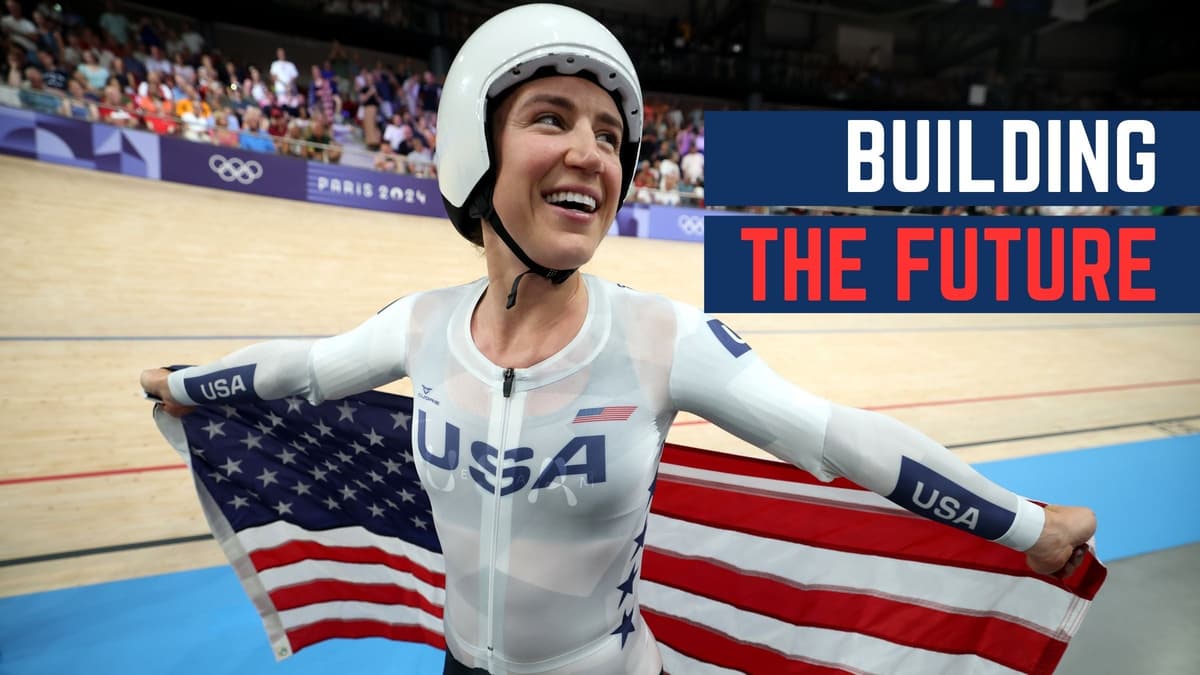
This American Olympic Champion Is on a Mission to Fix the Future of Female Performance
Companies Mentioned
Why It Matters
The tool addresses a critical gender gap in sports science, offering evidence‑based, individualized training for elite female athletes. Its adoption could reshape coaching, product development, and investment priorities across the growing women’s sports market.
Key Takeaways
- •Faulkner built an AI dashboard integrating menstrual cycles, hormones, and training data
- •The system helped her achieve a 20‑minute power personal best at Pan‑AM
- •She partnered with AI platform Sanity to expand the tool to teammates
- •Female sports science currently under‑represents women, with only 8% female‑only studies
Pulse Analysis
The disparity between male‑centric research and female physiology has long hampered elite women’s performance. While wearable tech and data analytics are commonplace, most training models still rely on studies conducted almost exclusively on men. Industry analysts note that less than a quarter of sports‑science publications list a female author, and fewer than one‑third of study participants are women, leaving a vacuum that AI can help fill. By embedding menstrual cycle phases, hormonal fluctuations, sleep patterns, and heat stress into a single dashboard, Faulkner’s system offers a prototype for data‑driven, gender‑specific coaching.
Faulkner’s “Kristen System” leverages her computer‑science background and a decade of personal performance logs to translate complex physiological signals into actionable metrics such as power output, training load, and recovery windows. The platform’s early success—a 20‑minute power personal best at the Pan‑AM Championships—demonstrates how individualized AI can translate nuanced data into tangible gains. Her partnership with Sanity, an AI‑computing provider, expands the system’s processing power and positions it for team‑wide deployment at EF Education‑Oatly, potentially creating a scalable model for other women’s squads.
If adopted broadly, gender‑focused AI tools could reshape the economics of women’s sport. Sponsors and equipment manufacturers would gain granular insights to design products tailored to female athletes, while coaches could fine‑tune periodized plans that respect hormonal cycles. However, Faulkner cautions that rigorous validation is essential; flawed algorithms could mislead athletes and erode trust. As the market for women’s performance technology matures, investors are likely to prioritize platforms that combine scientific rigor with transparent data governance, setting a new standard for inclusive sports innovation.
This American Olympic Champion Is on a Mission to Fix the Future of Female Performance
Comments
Want to join the conversation?
Loading comments...