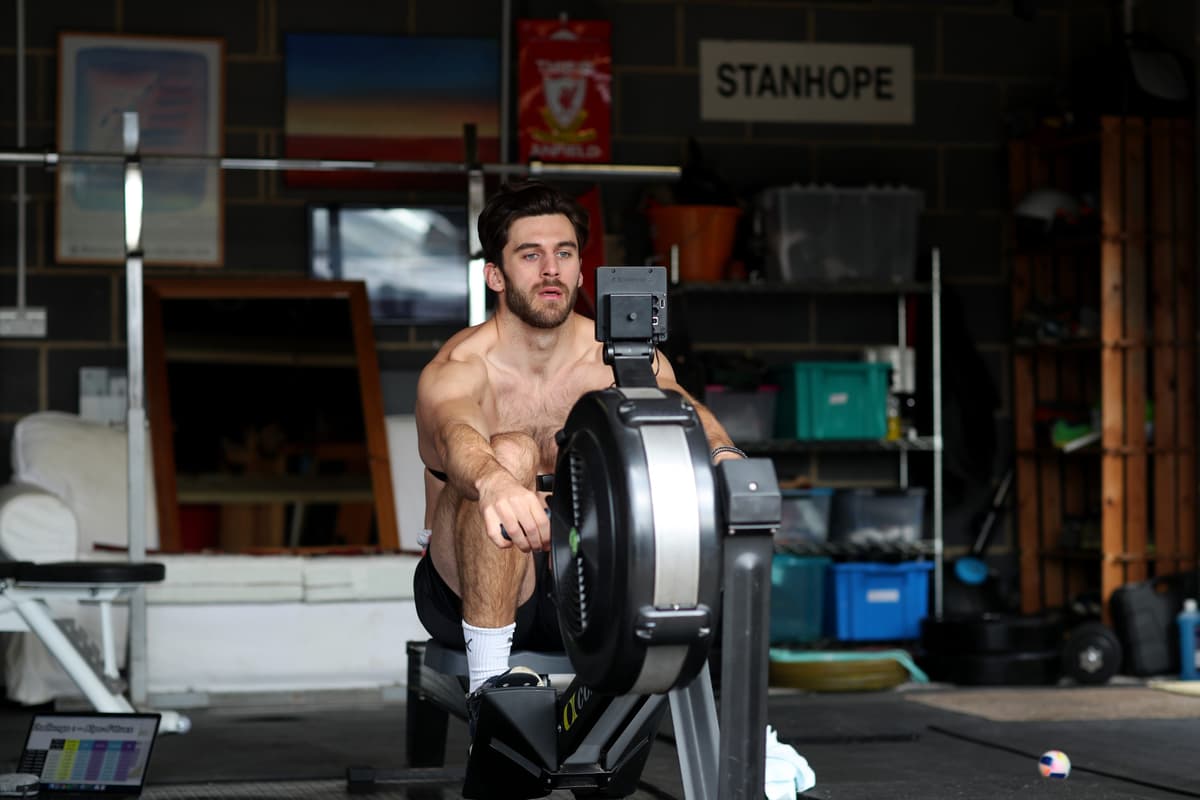
Want to Crush Steep Climbs? Rowing Might Be the Missing Link in Your Cycling Training.
Why It Matters
By supplementing bike training with rowing, cyclists can develop leg power and endurance without additional joint stress, leading to faster, more sustainable climbs and reduced injury risk.
Key Takeaways
- •Rowing engages 80% of body muscles, boosting overall cycling fitness
- •Core activation from rowing improves bike handling on steep gradients
- •Low‑impact cardio preserves joints while raising aerobic capacity for long climbs
- •Pro cyclists like Kristen Faulkner credit rowing for their climbing power
- •Structured rowing intervals mimic hill repeats, enhancing leg power and endurance
Pulse Analysis
In recent years elite and amateur cyclists have turned to cross‑training to fill gaps that pure bike miles cannot address. While strength‑training, yoga and spin classes have become commonplace, the rowing machine remains a surprisingly effective yet overlooked tool. Its ability to simulate the full‑body effort of a climb makes it a natural complement to road training, especially for riders seeking to improve power on steep gradients without adding extra mileage. As more pros, from Olympic champion Kristen Faulkner to former WorldTour rider Georgie Howe, tout rowing’s impact, gyms are seeing a surge in “erg” sessions among cyclists.
The erg’s value lies in its biomechanics. A proper rowing stroke recruits the quads, hamstrings, glutes, core, and upper‑back in a coordinated motion that mirrors the pedal push and pull of a hill climb. Because the movement is low‑impact, it spares the knees and hips while still delivering high‑intensity cardiovascular stimulus, raising VO₂ max and lactate threshold. Strengthening the posterior chain and core also translates to better bike posture, reducing back fatigue and allowing riders to maintain aerodynamic positions longer.
Integrating rowing into a periodized cycling plan is straightforward. Beginners can start with 5‑10 minutes of steady rowing to master technique, then progress to interval blocks that replicate hill repeats—such as five‑minute high‑resistance rows followed by one minute of easy recovery, repeated three times, or 20‑second sprint bursts with short rests. Coaches increasingly prescribe these sessions during base and build phases to develop leg power without overloading the musculoskeletal system. As the cycling community embraces data‑driven cross‑training, rowing is poised to become a staple in the athlete’s toolbox.
Want to Crush Steep Climbs? Rowing Might Be the Missing Link in Your Cycling Training.
Comments
Want to join the conversation?
Loading comments...