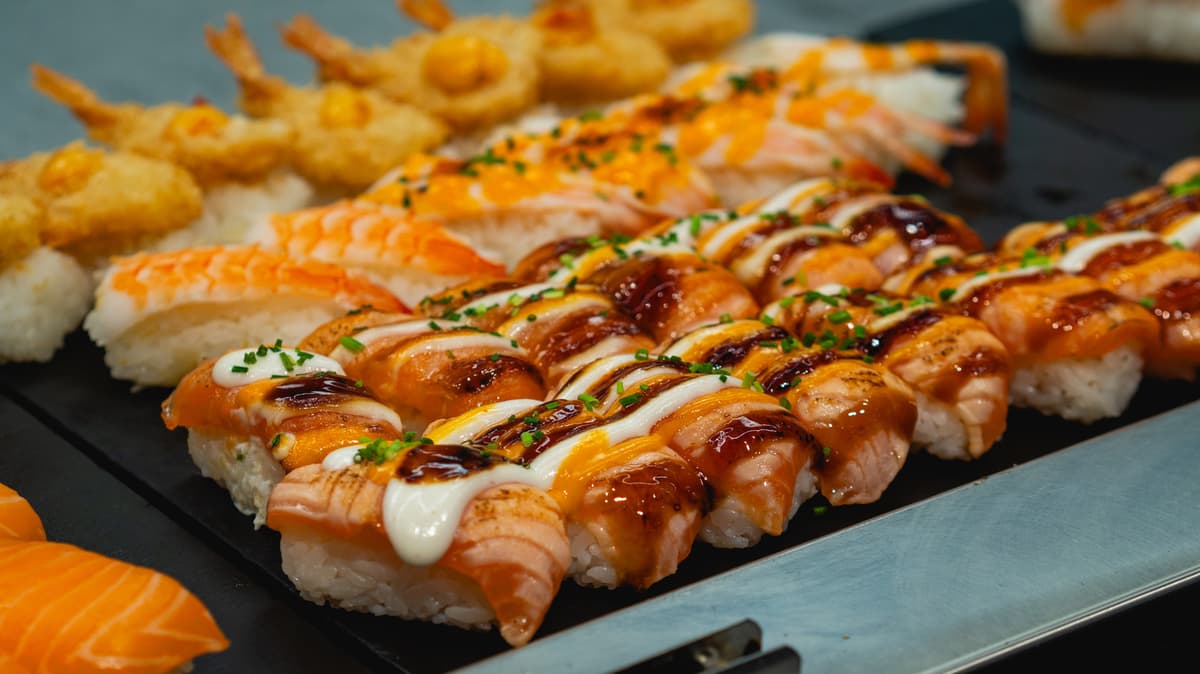
10 Of The Most Expensive All-You-Can-Eat Sushi Buffets In America
Why It Matters
High‑priced AYCE sushi signals growing consumer willingness to pay for premium seafood experiences, reshaping the upscale casual dining segment and prompting restaurants to differentiate through quality and exclusivity.
Key Takeaways
- •Sushi Sato’s Premium AYCE costs $78, featuring king salmon and unagi.
- •Seven Sushi & Robata’s top tier $57 includes blue‑fin tuna.
- •Kumo Sushi’s Diamond tier $65 offers A5 wagyu sushi and ramen.
- •AYCE prices span $43 to $78 across major U.S. cities.
- •Extra charges often apply for premium sashimi or bottomless drinks.
Pulse Analysis
All‑you‑can‑eat sushi has evolved from budget‑friendly buffets to a niche for affluent diners seeking restaurant‑grade quality without reservation constraints. The price premium stems from sourcing ultra‑fresh, often imported, fish such as blue‑fin tuna and A5 wagyu beef, as well as the labor‑intensive training of itamae chefs who can spend a decade mastering knife work and rice seasoning. Restaurants offset these costs by offering tiered menus, limited‑time specials, and add‑on options like bottomless sake, turning the buffet model into a high‑margin, experience‑driven offering.
Geographically, the most expensive AYCE venues cluster in coastal and metropolitan hubs where affluent clientele expect both variety and authenticity. In Washington, D.C., Sushi Sato commands $78 for a premium spread that includes miso‑black cod and steak, while Los Angeles’ Here Fishy Fishy blends sushi burritos with traditional nigiri at $55 plus a sashimi surcharge. The West Coast also sees competitive pricing, as 888 Sushi & Robata in Las Vegas offers over 200 dishes for $48, leveraging its casino‑adjacent foot traffic. Meanwhile, Kumo Sushi in Georgia pushes the envelope with a $65 Diamond tier featuring A5 wagyu sushi, illustrating how regional markets adapt the AYCE concept to local taste preferences and spending power.
For the restaurant industry, these high‑ticket buffets illustrate a shift toward experiential dining where volume meets luxury. Operators can achieve economies of scale by standardizing prep while still delivering premium ingredients, and the tiered pricing structure encourages upselling of add‑ons such as premium sashimi plates or unlimited beverage packages. As consumers continue to prioritize quality and novelty, more establishments are likely to experiment with hybrid models—combining traditional sushi bar service with buffet freedom—to capture a share of the growing upscale casual market.
10 Of The Most Expensive All-You-Can-Eat Sushi Buffets In America
Comments
Want to join the conversation?
Loading comments...