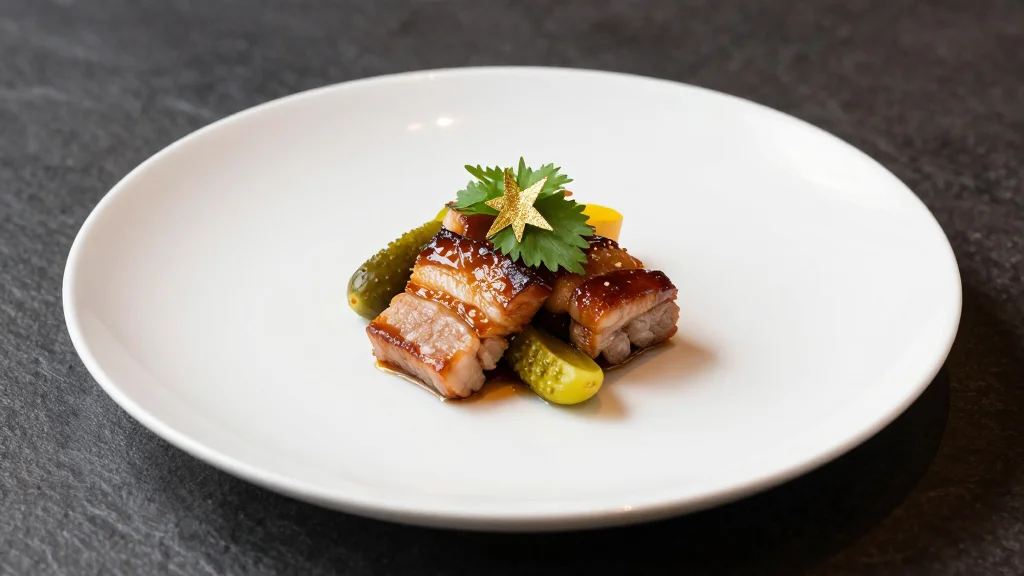
Camille Earns First Michelin Star for Vietnamese Cuisine in the U.S.

Companies Mentioned
Why It Matters
Camille’s Michelin star validates Vietnamese cuisine as a contender in the high‑end restaurant arena, encouraging investors and culinary schools to allocate resources toward similar ventures. It also offers a platform for Vietnamese American chefs to showcase their heritage on a global stage, potentially reshaping consumer expectations of what fine dining can encompass. The recognition may also influence supply chains, as demand for premium Vietnamese ingredients—such as rau răm and specialty fish sauces—rises among upscale establishments. This could benefit both domestic growers and international exporters, creating new market dynamics that extend beyond the plate.
Key Takeaways
- •Camille in Orlando receives its first Michelin star, the inaugural star for a U.S. Vietnamese restaurant.
- •Chef Tung Phan blends French technique with Southern Vietnamese flavors, citing personal memory as inspiration.
- •Signature dish includes an espuma of pho that merges traditional broth with modern culinary methods.
- •The award reflects a growing trend of ethnic cuisines achieving fine‑dining recognition in the United States.
- •Phan plans future expansions and seasonal menus that will deepen the restaurant’s farm‑to‑table focus.
Pulse Analysis
Camille’s ascent to Michelin status underscores a pivotal moment where culinary authenticity and innovation intersect. Historically, Michelin’s focus has skewed toward European traditions, but the guide’s recent diversification mirrors broader consumer shifts toward global flavors. Phan’s background—a Vietnamese immigrant raised in Iowa, a former break‑dancer, and a Le Cordon Bleu graduate—embodies the hybrid identity that modern diners crave: a story that is both rooted and avant‑garde.
From a market perspective, the star is likely to catalyze a wave of upscale Vietnamese concepts, especially in cities with strong diaspora communities. Restaurants may now feel justified in allocating capital toward premium ingredients and sophisticated techniques, knowing that critical acclaim is attainable. However, the challenge will be maintaining cultural integrity while scaling; over‑commercialization could erode the very authenticity that earned the star.
Looking forward, the Michelin Guide’s endorsement may prompt other rating bodies and food media to broaden their coverage of Vietnamese gastronomy, creating a feedback loop that elevates the cuisine’s profile. For investors, Camille’s success offers a template: combine a compelling personal narrative, meticulous technique, and strategic sourcing to differentiate in a crowded fine‑dining market. The next few years will reveal whether this milestone sparks a sustained movement or remains an isolated triumph.
Camille Earns First Michelin Star for Vietnamese Cuisine in the U.S.
Comments
Want to join the conversation?
Loading comments...