Chef Aiden Byrne Debuts LI~LY, a Contemporary Fine‑Dining Spot in a 400‑Year‑Old London Building

Why It Matters
LI~LY’s debut illustrates how a well‑executed concept can quickly ascend the hierarchy of culinary accolades, reshaping expectations for new fine‑dining openings in major cities. The restaurant’s blend of historic architecture with avant‑garde cuisine offers a template for leveraging cultural heritage to create distinctive, high‑value experiences that attract both critics and affluent diners. The early recognition also signals a shift in the competitive dynamics of London’s upscale dining market, where chefs are increasingly expected to deliver not only innovative dishes but also compelling narratives tied to place. LI~LY’s success may encourage more restaurateurs to invest in heritage properties, driving a wave of adaptive reuse that enriches the city’s culinary landscape while preserving its architectural legacy.
Key Takeaways
- •Chef Aiden Byrne and wife Sarah opened LI~LY in a 400‑year‑old timber‑clad building on King Street, London
- •LI~LY earned three AA rosettes and a spot in the 2025 Michelin Guide within weeks of opening
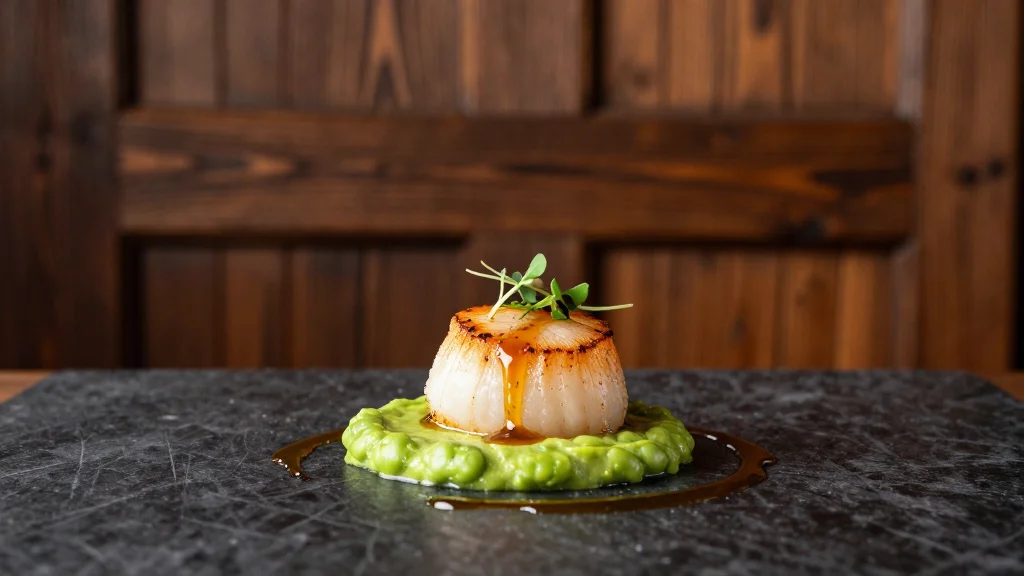
- •Menu features inventive pairings like cured scallop with bergamot sweetcorn macaron and chicken‑fat brioche
- •Pork loin is cooked for over five hours using a griddle‑then‑barbecue technique; fennel relish ferments for five days
- •Reservations are filling weeks ahead, and the team aims for a fourth AA rosette and a Michelin star in the next guide cycle
Pulse Analysis
LI~LY’s meteoric rise underscores a broader industry trend where culinary credibility can be accelerated through strategic branding and location choices. Historically, restaurants have taken years to accumulate accolades; Byrne’s ability to secure three AA rosettes and a Michelin Guide entry almost immediately suggests that critics are rewarding narrative cohesion as much as food quality. The heritage building provides a visual hook that differentiates LI~LY from the flood of minimalist glass‑box venues, while the menu’s emphasis on terroir‑based pairings taps into consumer demand for authenticity and story‑driven dining.
From an investment perspective, LI~LY demonstrates that capitalizing on underutilized historic assets can yield high returns in the premium segment. The rapid fill‑rate of reservations indicates strong market appetite, which could translate into robust revenue streams and justify higher price points. Competitors may respond by seeking similar heritage sites or by accelerating their own award‑pursuit strategies, potentially intensifying the race for limited Michelin and AA recognitions.
Looking forward, the restaurant’s quarterly menu rotations and focus on local sourcing position it to adapt to shifting supply chains and consumer preferences, especially as sustainability becomes a decisive factor for diners. If LI~LY secures a Michelin star in the next cycle, it will cement its status as a benchmark for new‑entry excellence, influencing how future chefs plan openings, allocate marketing budgets, and negotiate with heritage property owners. The case of LI~LY suggests that the convergence of historic ambience, innovative cuisine, and swift critical endorsement can reshape the competitive calculus of London’s fine‑dining ecosystem.
Chef Aiden Byrne Debuts LI~LY, a Contemporary Fine‑Dining Spot in a 400‑Year‑Old London Building
Comments
Want to join the conversation?
Loading comments...