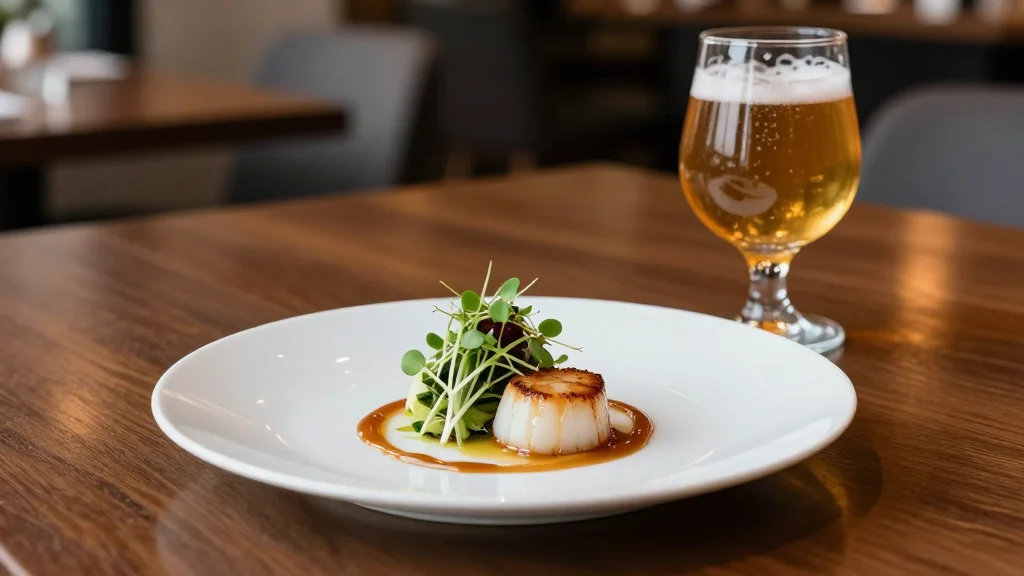
Chicago's Moody Tongue Becomes World’s Only Michelin‑Starred Brewery

Why It Matters
The Michelin star awarded to Moody Tongue’s Dining Room challenges long‑standing assumptions about what constitutes fine dining, positioning craft beer as a legitimate pairing partner for haute cuisine. This breakthrough could inspire a wave of brewery‑restaurant hybrids, prompting investors to fund similar concepts and prompting culinary schools to incorporate beer‑pairing curricula. For consumers, the recognition expands dining options beyond wine‑centric experiences, offering a novel way to explore flavor through fermented malt. It also reinforces Chicago’s status as a hub for culinary innovation, potentially boosting tourism and local economic activity tied to high‑end food and beverage sectors.
Key Takeaways
- •Moody Tongue’s Dining Room receives a Michelin star, the first for any brewery worldwide.
- •The 28‑seat venue offers a dozen‑course tasting menu paired with on‑site brewed beers.
- •Chef‑brewmaster Jared Rouben brings experience from Goose Island and Per Se to the concept.
- •Food critics praise the menu; beer reviews are mixed, with an 81/100 rating on BeerAdvocate.
- •The accolade may spark a new wave of brewery‑restaurant hybrids in the fine‑dining market.
Pulse Analysis
Moody Tongue’s Michelin star is less a surprise than a logical extension of the craft beer movement’s maturation. Over the past decade, breweries have invested heavily in branding, design, and experiential spaces, blurring the line between drinking and dining. By marrying a rigorous tasting menu with a brewery’s production capabilities, Moody Tongue leverages vertical integration to control flavor from grain to plate, a competitive advantage that traditional restaurants lack.
Historically, Michelin has been slow to recognize non‑wine beverage pairings, but the guide’s recent expansion into diverse culinary formats—taquerias, ice‑cream shops, and now breweries—reflects a broader shift toward inclusivity. This move could pressure other Michelin‑starred establishments to reconsider their beverage programs, potentially elevating craft beer’s status in the fine‑dining hierarchy. For brewers, the star offers a powerful marketing lever, differentiating them in a saturated market and justifying premium pricing.
Looking forward, the sustainability of this model hinges on consistent beer quality that matches the culinary standards set by the kitchen. If Moody Tongue can close the gap between its food accolades and beer reviews, it may set a replicable template for other breweries. Conversely, a decline in beer perception could expose the fragility of relying on a single Michelin star to drive business. Investors and restaurateurs will watch closely as the next guide is published, gauging whether this crossover is a fleeting novelty or the start of a lasting paradigm shift in the food and beverage industry.
Chicago's Moody Tongue Becomes World’s Only Michelin‑Starred Brewery
Comments
Want to join the conversation?
Loading comments...