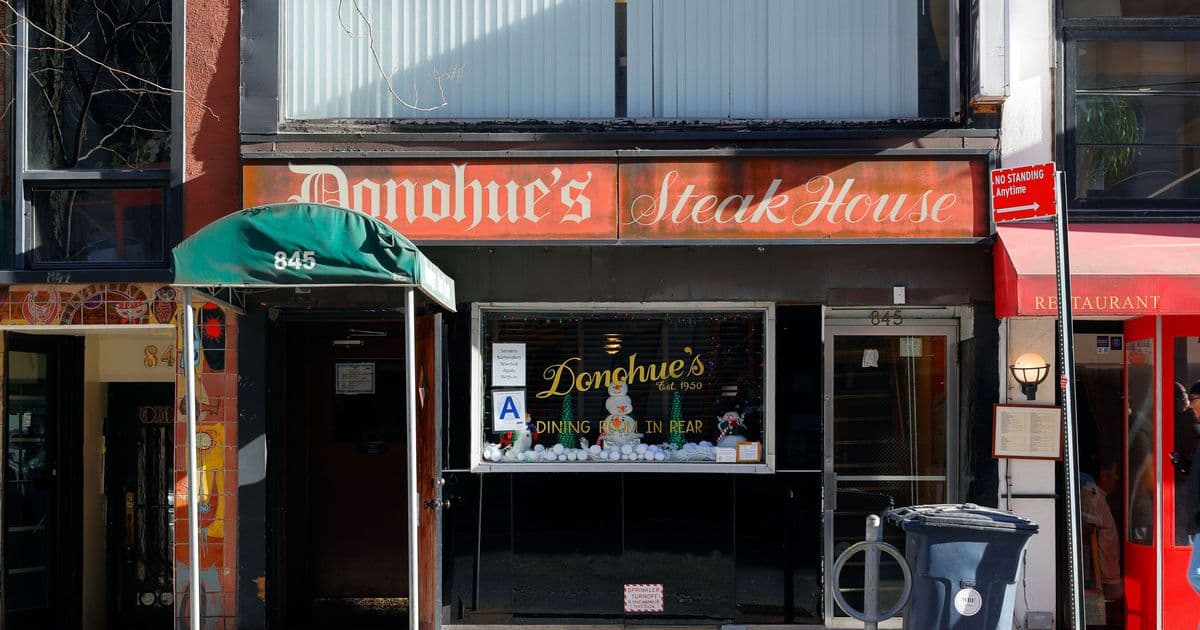
Donohue’s Steak House Will Close in June
Why It Matters
The shutdown underscores the pressure on historic, family‑owned New York eateries from real‑estate dynamics and owner lifestyle choices, while showing how legacy brands can pivot to suburban markets.
Key Takeaways
- •Donohue’s closes June after 76 years; lease renewal declined
- •Owner expands brand to Westhampton Beach, plans Long Island location
- •Interior may be sold; Frenchette Group among potential buyers
- •Icon attracted politicians, financiers, and Hollywood stars for decades
Pulse Analysis
The impending closure of Donohue’s Steak House marks the end of one of Manhattan’s most enduring culinary time capsules. Founded in 1950, the restaurant has survived multiple generations, offering a mid‑century ambiance that attracted a roster of power brokers—from David Rockefeller to Supreme Court Justice Anthony Kennedy. Its black‑paneled booths, checkerboard floor and classic comfort menu created a sanctuary for New Yorkers seeking an unpretentious, yet refined, dining experience. The decision to shutter the Lexington Avenue location reflects not only the owner’s personal desire for a different pace of life but also the broader challenges of maintaining legacy leases in a city where real‑estate pressures are relentless.
Rather than simply walking away, Maureen Donohue‑Peters is leveraging the Donohue’s brand in the suburbs, a strategic shift that mirrors a growing trend among iconic city eateries. The successful launch of Donohue’s East in Westhampton Beach demonstrates that the restaurant’s core appeal—its nostalgic décor and comfort food—translates well beyond Manhattan’s dense urban fabric. By planning an additional Long Island outpost, the family is positioning the brand to capture affluent suburban diners who value the same old‑school service without the high overhead of a Manhattan lease. This pivot also opens revenue streams that can sustain the brand’s heritage while reducing exposure to volatile city rents.
The broader implication for New York’s dining landscape is clear: historic institutions must adapt or risk extinction. As landlords push for higher rents and owners prioritize lifestyle considerations, many beloved establishments face similar crossroads. Potential buyers of Donohue’s interior, such as the Frenchette Group, highlight a niche market for preserving iconic interiors, yet the willingness to retain the space’s soul remains limited. For industry observers, Donohue’s story serves as a case study in balancing heritage preservation with pragmatic business evolution, signaling that the future of classic New York restaurants may increasingly lie outside the city’s traditional borders.
Donohue’s Steak House Will Close in June
Comments
Want to join the conversation?
Loading comments...